
LONDON, July 6, 2026, 10:04 BST
- Lloyds gained 0.33% to trade at 115.40p/115.45p, less than 0.3% from its 115.70p high for the year.
- Lloyds analysts say a leverage-rule shift could bring £30 billion in extra gilt demand, a lot less than Barclays’ £150 billion call.
- The Bank of England will release its Financial Stability Report on July 7. Investors are watching for updates on bank capital rules and issues around gilt-market plumbing.
- The timing around motor-finance redress is still uncertain after some parts of the FCA scheme were put on hold due to legal challenges.
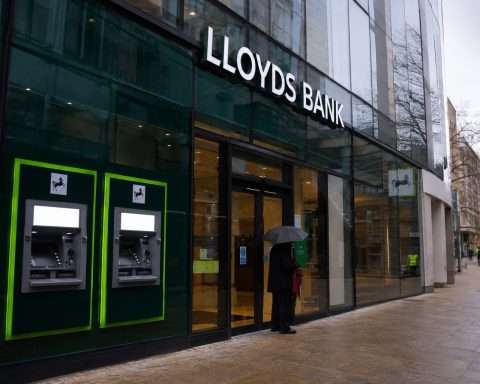
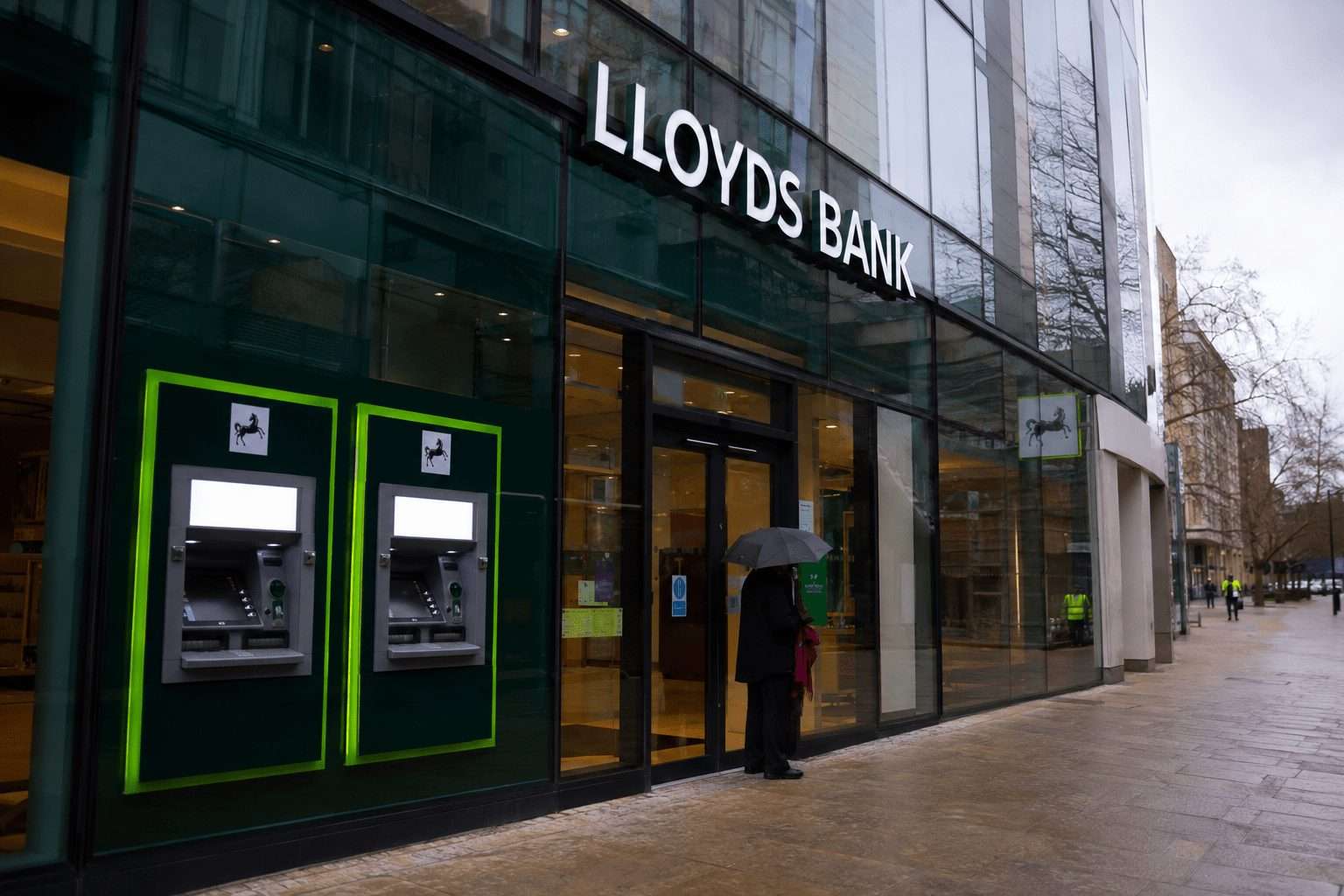
Lloyds Banking Group plc LON:LLOY ticked up in London on Monday, closing in on a new one-year high. Investors were looking past the Halifax brand news, focusing instead on whether the Bank of England’s leverage-rule review might let banks own more UK government bonds. London Stock Exchange trading is open 8:00 to 16:30. AJ Bell prices lagged by at least 15 minutes.
Lloyds was quoted at 115.40p/115.45p on AJ Bell, up 0.38p, or 0.33%, after touching 115.70p. The share sits just 0.22% under its year high, ahead of NatWest (LON:NWG) and HSBC (LON:HSBA) on that score. Barclays (LON:BARC) was also close to its high.
| Company | Bid/offer | Day move | Year high | Gap to year high | Market value |
|---|---|---|---|---|---|
| Lloyds Banking Group plc LON:LLOY | 115.40p/115.45p | up 0.33% | 115.70p | off 0.22% | £67.09 bln |
| Barclays PLC (LON:BARC) | 524.60p/524.80p | up 0.48% | 526.535p | off 0.33% | £70.74 bln |
| NatWest Group PLC (LON:NWG) | 682.80p/683.00p | flat | 705.40p | off 3.18% | £54.36 bln |
| HSBC Holdings plc (LON:HSBA) | 1,459.00p/1,459.40p | up 0.55% | 1,590.00p | off 8.21% | £250.30 bln |
Bank of England is looking into leverage rules again after making earlier changes to capital requirements. An update is slated for its Financial Stability Report on Tuesday. Reuters said banks claim the leverage ratio, set a bit above 3.25% of assets, can put them off holding gilts.
Lloyds faces a smaller number than Barclays, but it’s still big for stock watchers. Barclays said a gilt carve-out might force UK banks to buy up to £150 billion more gilts, with average yields down 20 basis points. Lloyds’s fixed-income team, Karim Henide and Sam Hill, see gilt demand rising by £30 billion and say that could drop government debt-interest bills by at least £1 billion a year. They said “supporting the bid for gilt issuance” is now on the Treasury’s radar. Reuters
| Leverage-rule estimate | Barclays view | Lloyds analysts’ view |
|---|---|---|
| Extra bank demand for gilts | Up to £150 bln | About £30 bln |
| Annual UK debt-interest saving | £2.5 bln | At least £1 bln |
| Policy point | Exempt unencumbered gilts | Demand gain smaller, still counted |
Lloyds shareholders are watching the current buyback alongside the policy talks. The bank bought 5 million shares on July 3, paying a volume-weighted average price of 114.2565p. Those shares are set to be cancelled. The buyback comes as part of a programme tied to Lloyds’ 2025 results plan, which includes up to £1.75 billion in repurchases and up to £3.9 billion in total capital returns.
The BoE move means a clearer equity signal. Changing the rule does not shift loan demand on its own, and the BoE hasn’t said gilts get special treatment. Still, an easier leverage rule might force investors to rethink how they look at capital headroom for a bank cutting its share count.
Some ex-regulators aren’t on board. David Aikman, who worked at the BoE and is now with the National Institute of Economic and Social Research, told Reuters that loosening the rules would be like “tak[ing] the batteries out of the fire alarm.” He said gilts can still drop in value and that slacker leverage limits could connect banks and the government’s balance sheet even more. Reuters
Lloyds shares stayed near their highs as the group logged a £2.0 billion statutory pretax profit for the first quarter, up 33% from last year. Underlying net interest income climbed 8% to £3.57 billion. Banking net interest margin came in at 3.17%. Return on tangible equity stood at 17.0% and CET1 ratio was 13.4%.
| Lloyds Q1 2026 measure | Reported figure |
|---|---|
| Statutory pretax profit | £2.0 bln |
| Underlying net interest income | £3.57 bln |
| Banking net interest margin | 3.17% |
| Return on tangible equity | 17.0% |
| CET1 ratio | 13.4% |
| 2026 underlying NII guidance | Above £14.9 bln |
| 2026 ROTE guidance | Above 16% |
Motor finance is still the obstacle for leverage. The FCA said the Upper Tribunal has paused parts of its motor-finance redress plan. Legal challenges are set for Dec. 14-18, 2026 or Feb. 16-26, 2027. Companies don’t have to pay or calculate redress while the pause lasts, but must keep working on other rules that stay in force.
Lloyds and other banks didn’t contest the FCA redress plan last week, Reuters said, but some firms raised concerns about whether the scheme might enable payouts without any actual losses. Daniel Gore of Withers said the challenge could turn into a “ferocious fight for every compensation percentage point.” Reuters
Key dates are close. The Bank of England’s Financial Stability Report lands July 7. Lloyds will share updates on its strategy and first-half numbers with results July 30.