
CAPE CANAVERAL, Florida, February 2, 2026, 08:17 (EST)
- At Kennedy Space Center, NASA is conducting a full countdown and fueling rehearsal in preparation for the Artemis II moon mission
- On Monday night, the test will load super-cold liquid oxygen and hydrogen before running through a simulated launch window
- A successful run is crucial before NASA can announce a crewed launch date, which won’t be before Feb. 8
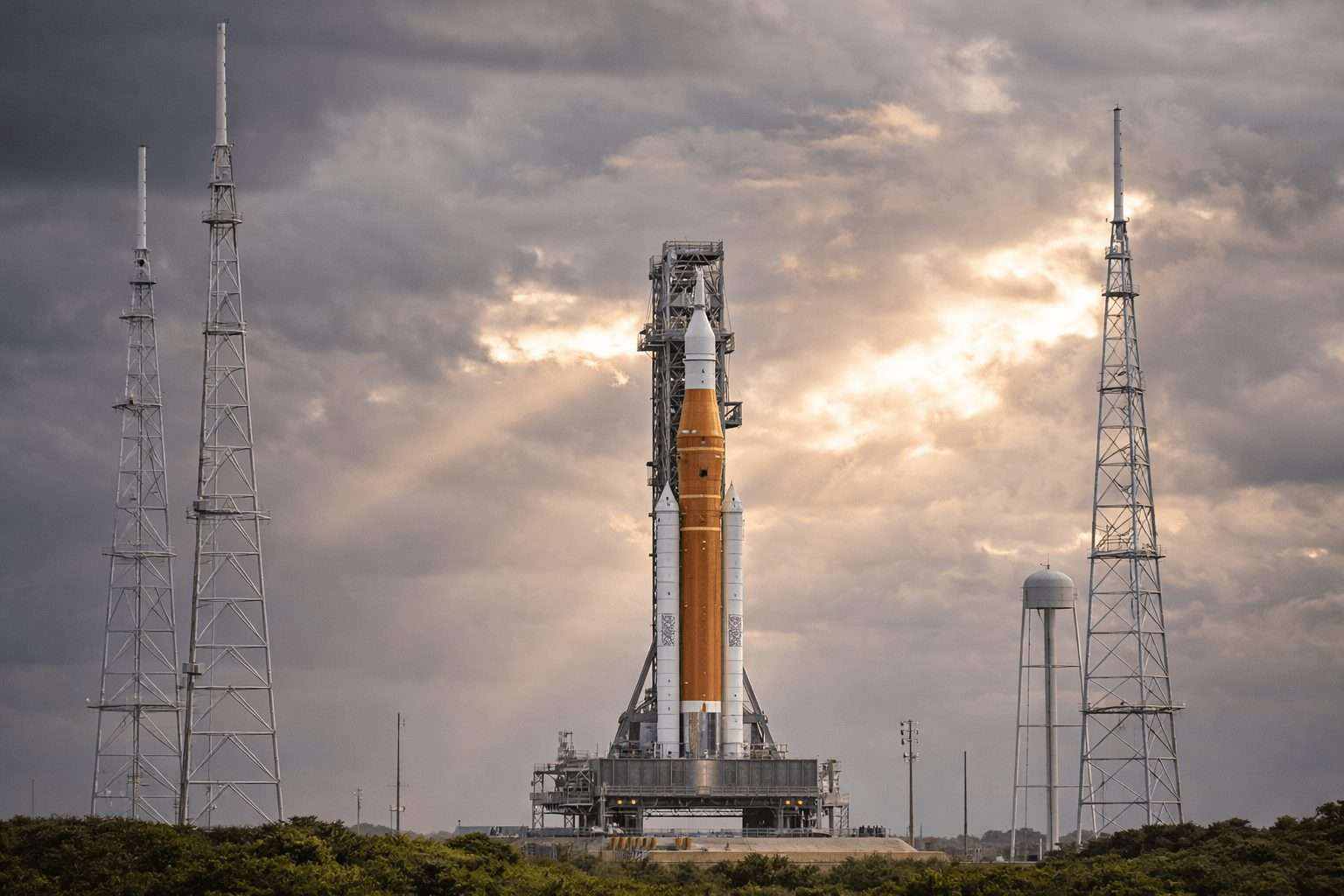
NASA pushed forward with the countdown for a full fueling rehearsal of its Artemis II moon rocket at Launch Pad 39B in Florida on Monday, despite freezing temperatures that had slowed activity at the pad and squeezed the schedule.
The so-called wet dress rehearsal serves as the final major pad test before a launch attempt—essentially, a launch day without ignition. Its purpose is to identify leaks and timing issues. NASA requires this test to go smoothly before moving forward with flying four astronauts around the Moon.
Timing is crucial since lunar launch windows open briefly, dictated by the Earth-Moon alignment and lighting conditions. Any further delay would push the first crewed Artemis mission even later on the schedule, leaving hardly any wiggle room.
NASA kicked off the 49-hour countdown Saturday night, starting a simulated launch window at 9 p.m. EST on Feb. 2 that runs until about 1 a.m. on Feb. 3, the agency reported. The rehearsal includes scheduled holds, a countdown recycle following a simulated scrub—a canceled launch attempt—and a complete draining of the propellant tanks before the team analyzes data and sets the official launch date.
NASA reported early Sunday that teams kept a close eye on the rocket overnight despite cold temperatures and strong winds. They powered up the core stage around L-minus 39 hours and 30 minutes. This stage will be fueled with over 700,000 gallons of liquid oxygen and liquid hydrogen. Meanwhile, Orion has remained powered for days in the chill as engineers prepare to charge its flight batteries.
Fuel loading is the real pressure test. Spaceflight Now reported that propellant flow is scheduled to begin just after 11 a.m. Monday, with the core stage and the Interim Cryogenic Propulsion Stage — the upper stage — expected to be fully loaded and switched to “replenish” mode by about 4:30 p.m., topping off any boil-off. Launch director Charlie Blackwell-Thompson highlighted upgrades following hydrogen leaks and other issues before the SLS’s 2022 debut. Still, any new hiccup could push Artemis II past its last three planned February launch dates: Feb. 8, 10, and 11. Spaceflightnow
Artemis II is set to be a roughly 10-day mission, taking four astronauts on a lunar orbit in the Orion spacecraft, Space.com reported. NASA’s initial launch window is from Feb. 8 to 11, with backup windows planned for March and April, the site noted.
Artemis II is set to carry NASA astronauts Reid Wiseman, Victor Glover, and Christina Koch, along with Canadian Space Agency astronaut Jeremy Hansen, on a lunar flyby. Should the mission launch, it will mark humanity’s first trip near the Moon since Apollo 17 back in 1972.
NASA will provide separate public video coverage throughout the tanking process and share updates as the countdown progresses. Afterward, they’ll drain the propellant and assess the situation before setting a launch date.