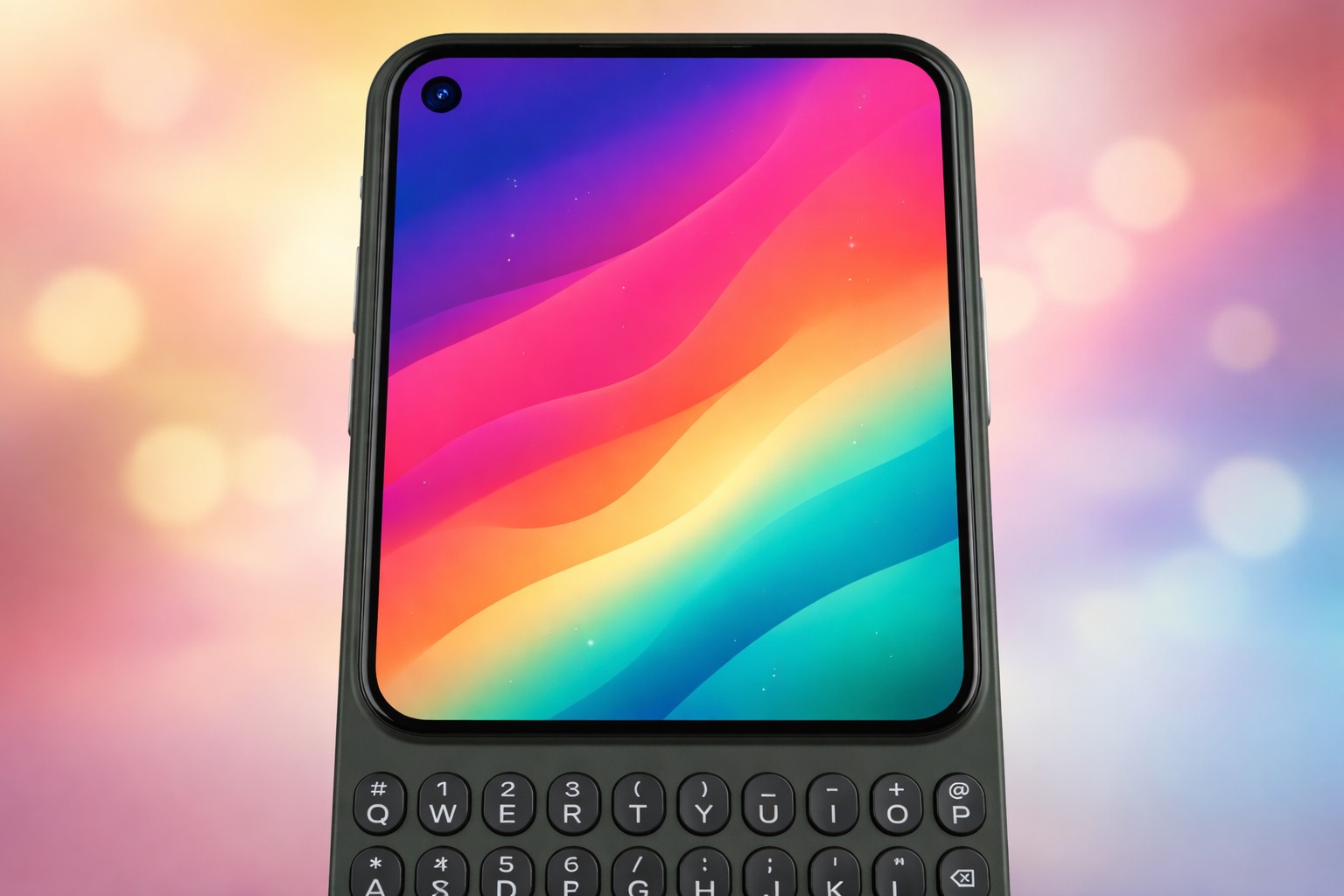
January 3, 2026 — The physical smartphone keyboard is officially making another run at relevance. Clicks Technology — best known for its QWERTY keyboard cases — has announced two new products aimed at people who want to type more, scroll less, and stay reachable without getting trapped in feeds: the Clicks Communicator (a compact Android phone with a built‑in keyboard) and the Clicks Power Keyboard (a magnetic, slide‑out keyboard that also works as a small wireless charging power bank). [1]
Both devices are slated to appear at CES 2026 in Las Vegas (Jan 6–9) — a sign that Clicks is positioning this as more than nostalgia, and more like a broader push for “purpose‑built” mobile hardware. [2]
The big picture: Clicks is betting on “communication hardware,” not just accessories
Clicks says it has already shipped more than 100,000 keyboard products to customers in 100+ countries, and it’s using that momentum to expand beyond phone‑specific cases into standalone devices and cross‑platform accessories. [3]
Coverage on January 3 has focused on the same core idea: the Communicator is designed around messaging and quick response, and the Power Keyboard is built to make any MagSafe/Qi2 device feel a little more like the era when keyboards were central to mobile productivity. [4]
Clicks Communicator: a “second phone” built to keep you connected (without the doomscroll)
The Clicks Communicator is being positioned as a companion phone — something you can carry alongside a flagship smartphone when you want a smaller device that prioritizes communication, triage, and responsiveness. In Clicks’ framing, it’s for the growing “two‑phone lifestyle” (work/personal, travel, privacy, or simply healthier boundaries). [5]
Importantly, this isn’t a feature phone: it runs Android 16 and has its own cellular connection, so it can operate independently. The “less distracting” piece is largely driven by design choices (small screen + hardware keys) and a minimalist software experience — not the absence of smartphone capabilities. [6]
What makes it different: Signal Light + Prompt Key, designed for “glanceable” priority
Clicks’ signature hook is a Signal Light built into the phone’s side‑mounted Prompt Key. The company says it’s designed to surface important messages without demanding constant screen attention — and that users can assign colors and patterns to specific people, groups, or apps. [7]
The Prompt Key also doubles as a voice‑input control:
- Press and hold to dictate a message, release to send (in supported contexts). [8]
- Outside of text fields, the same key can start a voice recording. [9]
- Clicks says it’s designed as a platform for future “Prompt Key” integrations, including potential AI‑powered tools (though those are described as forward‑looking). [10]
Clicks has also partnered with Niagara Launcher to co‑develop a streamlined home experience where messages from apps like Gmail, Telegram, WhatsApp, and Slack can be curated directly on the home screen for quicker triage. [11]
Hardware highlights: keys first, plus the “old‑school” features people miss
On January 3, additional reporting also called out details that underline why Clicks is leaning into the BlackBerry comparison: this is a compact device built around physical interaction, not just an accessory bolted onto a modern slab. [12]
Here are the headline features (based on company details and early coverage):
- Android 16 with 5 years of security updates. [13]
- Global connectivity support (unlocked) including 5G. [14]
- A compact ~4-inch OLED display (reported as 4.03-inch OLED by The Verge). [15]
- 4,000mAh silicon‑carbon battery and wireless charging. [16]
- 256GB storage plus microSD expansion up to 2TB. [17]
- 50MP main camera (with OIS) and 24MP front camera. [18]
- NFC (Google Pay), Wi‑Fi 6, and Bluetooth 5.4. [19]
- A 3.5mm headphone jack (yes, really). [20]
- A touch‑sensitive keyboard that can scroll through lists/pages; The Verge says it can act like a trackpad. [21]
- A fingerprint sensor in the spacebar, per The Indian Express. [22]
- A tactile hardware kill switch that can be configured for airplane mode and other behaviors. [23]
- Interchangeable back covers for customization. [24]
If there’s a unifying theme, it’s that Clicks is deliberately re‑introducing “lost” phone features — not because they’re trendy, but because they’re practical for people who spend their day responding, writing, and coordinating. [25]
Pricing and release date: $499 list price, $399 early bird with reservation
Clicks says the Communicator will launch at a special price of $499 and come in Smoke, Clover, and Onyx. [26]
To get the lower early price, Clicks is offering reservations before February 27:
- $199 reservation deposit to lock a $399 early‑bird price, or
- $399 paid in full, with two additional back covers included. [27]
Shipping is expected later in 2026 (described as “later this year” in the company announcement and coverage). [28]
Clicks Power Keyboard: a slide‑out keyboard that snaps on magnetically — and charges your phone
Alongside the Communicator, Clicks also unveiled the Power Keyboard, designed to work across a much broader ecosystem than model‑specific keyboard cases.
The core idea is simple: it’s a pocket keyboard that attaches to a phone with a MagSafe or Qi2 magnetic connection, connects over Bluetooth, and includes a 2,150mAh battery that can wirelessly top up a phone. [29]
Key capabilities highlighted in early coverage and the company announcement include:
- MagSafe/Qi2 attachment and the ability to use it with many existing cases. [30]
- Multiple slider positions to fit different phone sizes; usable in portrait or landscape. [31]
- Works as a keyboard for tablets, smart TVs, and AR/VR, replacing awkward on‑screen typing where text entry is painful. [32]
- A design that can also function over Bluetooth without being physically attached (useful if your phone is propped up on a stand). [33]
- A dedicated number row and directional keys, aimed at faster entry of numbers and documents. [34]
- Customization through the Clicks app (iOS and Android) for settings like key behavior and backlighting. [35]
Notebookcheck reports Clicks says the Power Keyboard can be paired to multiple devices and switched via a shortcut, and that its battery allocation can be tuned through the companion app (including keeping capacity reserved for keyboard usage). [36]
Power Keyboard price and availability: $79 early bird, $109 later — shipping in spring 2026
Clicks says pre‑orders began January 2 with:
- $79 early‑bird pricing
- $109 MSRP after the pre‑order period [37]
Availability is expected in spring 2026, and Clicks says it will also be shown at CES 2026 in Las Vegas. [38]
Why this matters: the return of “intentional” mobile design (and the end of one‑size‑fits‑all phones)
The timing is notable. In recent years, “digital wellbeing” has largely been treated as a software problem — focus modes, app limits, screen‑time dashboards. Clicks is making a different argument: that some of the biggest pain points of modern smartphones (constant interruptions, endless typing on glass, always‑on feeds) can be eased with hardware choices.
Clicks’ co‑founder Michael Fisher (MrMobile) summed up that positioning in the company announcement: “At a time when everything is fighting for our attention, your phone should excel at helping you take action, not feeding distraction.” [39]
Whether the Communicator becomes a true niche hit or stays a curiosity, it’s arriving at a moment when more people are experimenting with separating communication from consumption — and looking for devices that do one thing well instead of everything constantly. [40]
What to watch next at CES 2026
Clicks says it will offer briefings and hands‑on demos during CES week (including the ShowStoppers press event on January 6). That’s likely when we’ll learn the most important real‑world answers:
- How good the keyboard feels for long messages and email
- Whether the “Signal Light” genuinely reduces screen‑checking
- How well the Niagara‑based experience works day‑to‑day
- Whether the Power Keyboard’s ergonomics make sense on large phones and in landscape mode [41]
![Blackberry Mercury Trailer CES 2017 [Blackberry Android with Physical QWERTY Keyboard]](https://www.bez-kabli.pl/news/wp-content/plugins/wp-youtube-lyte/lyteCache.php?origThumbUrl=https%3A%2F%2Fi.ytimg.com%2Fvi%2FkkatV8gJNgo%2F0.jpg)
References
1. www.globenewswire.com, 2. www.globenewswire.com, 3. www.globenewswire.com, 4. indianexpress.com, 5. www.globenewswire.com, 6. www.theverge.com, 7. www.globenewswire.com, 8. www.globenewswire.com, 9. www.globenewswire.com, 10. www.globenewswire.com, 11. www.globenewswire.com, 12. indianexpress.com, 13. www.globenewswire.com, 14. www.globenewswire.com, 15. www.theverge.com, 16. www.globenewswire.com, 17. www.globenewswire.com, 18. www.globenewswire.com, 19. www.globenewswire.com, 20. www.globenewswire.com, 21. www.globenewswire.com, 22. indianexpress.com, 23. www.globenewswire.com, 24. www.globenewswire.com, 25. www.globenewswire.com, 26. www.globenewswire.com, 27. www.globenewswire.com, 28. www.globenewswire.com, 29. www.globenewswire.com, 30. www.globenewswire.com, 31. www.globenewswire.com, 32. www.globenewswire.com, 33. www.theverge.com, 34. www.globenewswire.com, 35. www.globenewswire.com, 36. www.notebookcheck.net, 37. www.globenewswire.com, 38. www.globenewswire.com, 39. www.globenewswire.com, 40. www.theverge.com, 41. www.globenewswire.com