Published: January 6, 2026
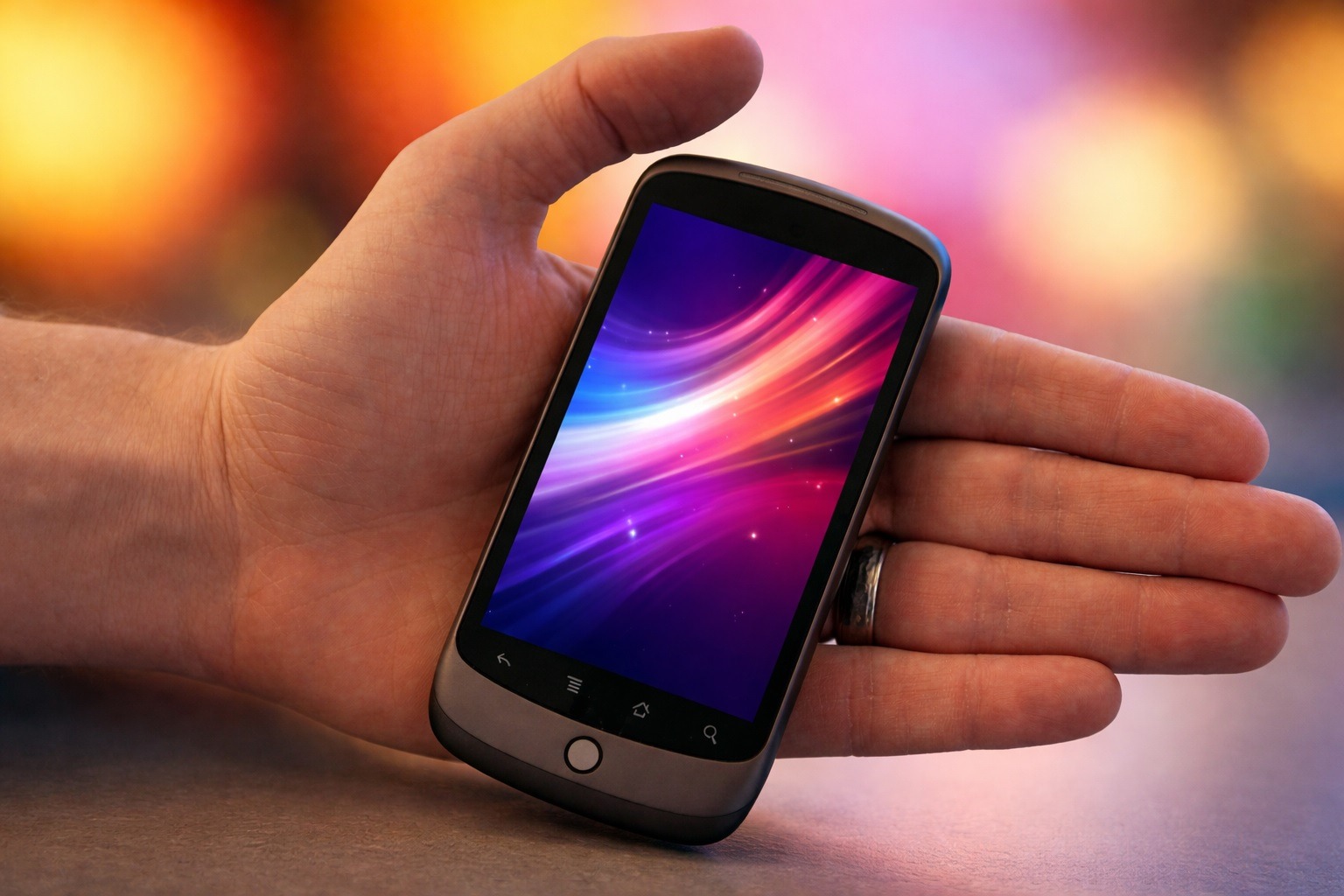
Sixteen years ago this week, Google tried something bold: it put its name on a phone. The Nexus One, built by HTC and released on January 5, 2010, wasn’t just another Android handset—it was Google’s early attempt to define what Android should feel like when the software isn’t buried under carrier bloat and manufacturer “skins.” 1
Today, as CES 2026 gets underway in Las Vegas, the tech world is once again watching Google’s ecosystem evolve in real time—this time through AI-first phones, ambitious foldables, and Android XR. The headlines look futuristic, but the underlying idea is familiar: set a standard, then let the rest of the industry race to meet it. 2
What to know
- The Nexus One helped establish the blueprint for “pure Android,” rapid updates, and unlocked hardware sold without heavy carrier customization. 1
- At CES 2026, foldables are pushing into new shapes—tri-fold phones, and even prototype crease-free foldable displays are drawing crowds. 3
- Google is using the Las Vegas Sphere to spotlight Android XR, signaling that Android’s next frontier may be headsets and glasses as much as phones. 4
The Nexus One, 16 years later: why it still matters
In 2010, Android was still young—and messy. Different manufacturers were experimenting with their own interfaces, carriers had enormous influence over software, and updates could arrive slowly (or not at all). The Nexus One arrived as a statement: a phone designed and marketed as a Google Nexus device, with a “plain” Android experience meant to show developers and consumers what Android could be at its best. 1
The hardware—once considered cutting-edge—now reads like a time capsule: a 3.7-inch AMOLED display at 480×800, a 1GHz Snapdragon, and features like a trackball that feels almost quaint in 2026. 1
And yet, the reason people still talk about the Nexus One isn’t nostalgia for a smaller screen. It’s what the phone represented: Google’s first serious bid to shape the Android experience end-to-end.
A phone designed to fight fragmentation
The Nexus One wasn’t just “another HTC phone with Google branding.” It was positioned as the reference experience—the cleanest version of Android Google could ship at the time (Android 2.1 “Eclair” originally, with official updates later). 1
It also introduced consumer-friendly features that made Android feel more capable than a web browser with apps:
- Voice-to-text transcription (still a core smartphone behavior today)
- A second microphone for dynamic noise suppression
- Voice-guided turn-by-turn navigation built into the broader Google services push 1
Those aren’t niche bullet points—they’re the beginnings of a theme that now dominates smartphone marketing in 2026: phones as always-on assistants, not just cameras and screens.
The “unlocked phone” experiment that arrived too early
One of the Nexus One’s most overlooked impacts wasn’t technical—it was commercial.
Google sold the device SIM-unlocked and offered carrier-compatible variants (including versions for T-Mobile US and AT&T compatibility) through an online store, before later closing the web-store approach and shifting toward partner distribution. 1
That direct-to-consumer, “buy it unlocked” strategy looks normal today. In 2010, it was a radical bet against the subsidy-and-contract model that defined the era.
By August 2010, the Nexus One also took on a second life: it became Google’s official Android Developer Phone, meaning registered Android developers could buy it unlocked and use it to test “plain vanilla” Android without third-party interfaces. 5
That developer-first idea—one clean baseline device, built to validate the platform—echoes through Android history. It’s the philosophical ancestor of everything from the Nexus program that followed to Google’s modern Pixel approach.
From Nexus to 2026: the “Google standard” never really went away
Google no longer sells a Nexus phone. But the company never stopped trying to define the default Android experience:
- First through Nexus partnerships
- Then through Pixel hardware and software integration
- And now, increasingly, through AI services (Gemini) and new form factors (XR)
If the Nexus One’s core purpose was to show what Android could be when Google is in the driver’s seat, CES 2026 suggests that the “driver’s seat” is expanding beyond phones.
CES 2026: foldables and Android XR feel like the next chapter
CES has always been a show of extremes—concept cars, prototype TVs, ambitious gadgets. But this year, the mobile story is unusually coherent: bigger screens, smarter software, and new ways to interact.
Reuters has framed CES 2026 as a stage where AI and next-gen devices (including self-driving tech and advanced chips) are competing for attention, and it’s spilling directly into mobile computing. 6
Here are the mobile and Android-adjacent announcements and developments shaping today’s narrative.
Today’s Android and mobile headlines — January 6, 2026
1) Samsung Display’s “crease-free” foldable OLED prototype turns heads
A visible crease has been the trade-off for foldables—until now, maybe.
At CES 2026, Samsung Display showed a foldable OLED panel with no visible crease, according to reporting from The Verge. The panel was described as an R&D concept, and it was reportedly removed from the booth after appearing in a side-by-side setup against a Galaxy foldable. 7
Why it matters: if crease-free screens can move from prototype to production, foldables become easier to sell as true “premium” devices—because the compromise is no longer on display every time you open the phone.
2) Galaxy Z TriFold: the “phone that becomes a tablet” goes more official
Samsung’s Galaxy Z TriFold is one of the clearest expressions of the foldable future: a multi-panel device that expands into a 10-inch main screen while keeping a phone-sized cover display. 3
Samsung says the TriFold features:
- A 10.0-inch main display and 6.5-inch cover display
- A 5,600 mAh three-cell battery system
- A customized Snapdragon 8 Elite platform
- A 200MP camera system
- And a notable productivity push: standalone Samsung DeX designed for this form factor 3
This is where the Nexus One comparison gets interesting: Nexus tried to standardize Android’s software feel; TriFold-class devices are trying to standardize Android’s screen ambition—and to make the phone a credible “do everything” computer.
3) Clicks Communicator: Android 16, physical keyboard, and “anti-distraction” positioning
Not every 2026 phone trend is about bigger screens.
The Verge highlights the Clicks Communicator, a compact device with:
- A 4.03-inch OLED
- A physical BlackBerry-style keyboard
- 5G connectivity
- A headphone jack
- And Android 16, positioned as a “daily driver alternative” focused on essential apps and fewer distractions 8
This is a reminder that the smartphone market still contains a counter-current: people who want less device, not more—especially when AI and infinite feeds threaten to turn phones into attention traps.
4) Google puts Android XR in the spotlight on the Las Vegas Sphere
Google is using the Las Vegas Sphere to promote Android XR during CES 2026, with messaging focused on “Gemini on Android XR.” 9to5Google describes the promo as showcasing XR use cases like creating in 3D space, exploring virtual environments, gaming, and immersive content—essentially treating XR as the next “Android category,” not a side project. 4
If Nexus One was Google’s early hardware “flag in the ground,” Android XR is a new one: Android’s identity expanding into headsets and (eventually) glasses.
5) Samsung’s 2026 AI goal: 800 million Galaxy AI devices, powered largely by Gemini
Even outside hardware form factors, the biggest shift since 2010 is obvious: AI is now the platform.
Reuters reports Samsung plans to double its mobile devices equipped with Galaxy AI features to 800 million units in 2026, and that many of these AI features are powered by Google’s Gemini. 9
That’s a scale story—and it’s directly connected to what Nexus tried to do: pull Android toward a common baseline. In 2026, that baseline may be less about the launcher and more about the assistant.
6) January Android security patch guidance points to the 2026-01-05 patch level
For readers who prefer “practical today” over prototypes: Google’s Android Security Bulletin for January 2026 includes guidance that device makers should set the patch string level to 2026-01-05 (alongside a separate patch level). 10
As always, real-world Android health isn’t just about shiny hardware—it’s about whether devices stay supported and secure, a challenge that Nexus tried to address by modeling timely updates.
What Nexus One would recognize in 2026—and what it wouldn’t
If you dropped a Nexus One into CES 2026, it would be overwhelmed by foldable hinges and AI demos. But it would also recognize familiar priorities:
What’s the same:
- Google still pushes a “reference” experience—now through Pixel, and increasingly through Gemini-driven features
- Android is still balancing freedom (many devices, many ideas) with consistency (a shared platform story) 1
What’s changed:
- The most important battleground is no longer the homescreen—it’s the assistant layer, the AI tools, and the ecosystem that follows you from phone to watch to car to headset 4
- Hardware experimentation is back in a big way: tri-folds, crease-free panels, minimalist phones with keyboards—all in the same week 3
The takeaway for 2026 buyers and Android fans
The Nexus One anniversary matters because it marks an inflection point: the moment Google decided Android needed a “north star” device.
CES 2026 suggests we’re in another inflection point—where the north star isn’t a single phone, but a set of directions:
- Bigger, more flexible hardware (tri-folds and better foldable displays)
- Smarter software that leans heavily on AI
- And a wider definition of Android, stretching into XR and beyond
Sixteen years later, the industry is still chasing the same question Nexus One raised in 2010: What should an Android device be when the platform is at its best? 1