Honor’s Robot Phone has surfaced in prototype form at CES 2026, featuring a fold-out robotic gimbal camera arm designed for smoother, AI-tracked video. Here’s what we know today—and what’s still unanswered. [1]
CES hasn’t officially opened its show floors yet (the event runs Jan. 6–9 in Las Vegas), but the pre-show press previews are already delivering the kind of “only at CES” hardware you can’t unsee. [2]
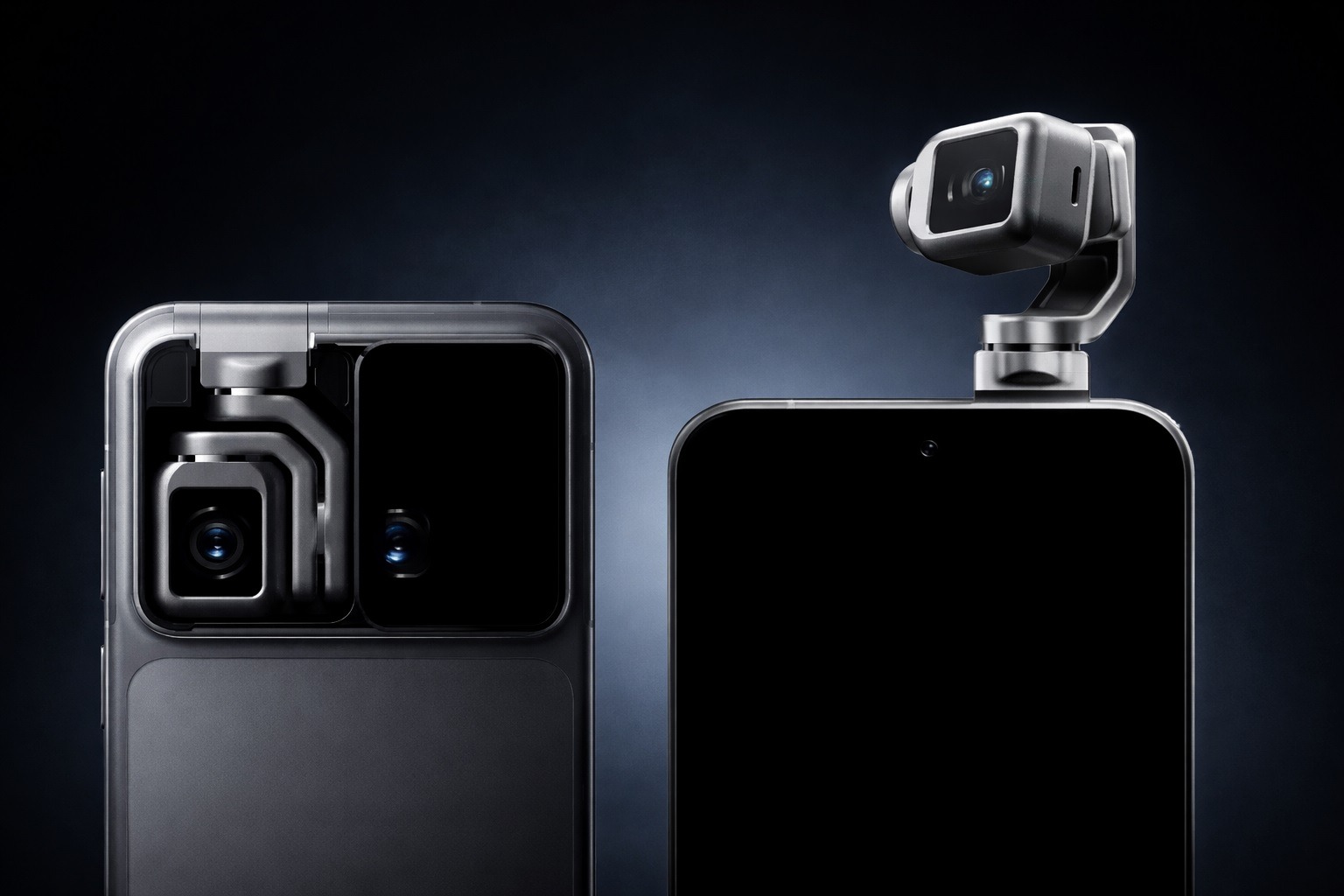
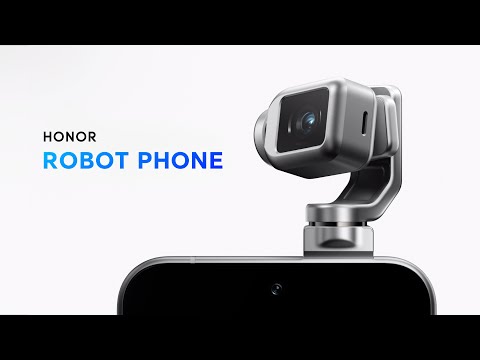
One of the strangest—and most talked-about—devices making the rounds today is Honor’s Robot Phone: a smartphone prototype that replaces the usual fixed rear camera bump with a fold-out, robotic gimbal camera arm aimed at capturing steadier video and more flexible angles without external gear. [3]
And crucially, this is no longer just a CGI teaser. Multiple outlets have now seen physical hardware in person at CES 2026—though “seen” is doing a lot of work here, because the phone is still very much a work-in-progress. [4]
What is the Honor Robot Phone?
At its core, the Robot Phone is built around a single big idea: make the camera module move like a small robot—not with a pop-up lens or a rotating flip module, but with an articulated arm that extends from the rear housing and positions the camera for different shots. [5]
Honor’s own marketing frames the concept as an AI-forward “robotic” device that can act like a personal camera—something with the “brain” of AI and the “mobility” of a robot, rather than a passive slab with sensors. [6]
In a year when CES organizers and major exhibitors are again leaning hard into AI everywhere—from robots and wearables to mobility and health tech—the Robot Phone fits neatly into a broader theme: AI that escapes the screen and starts moving the physical world. [7]
The headline feature: a fold-out robotic gimbal camera arm
Here’s what the current reporting consistently points to:
- The camera sits on a gimbal-style mount attached to an arm that unfurls from the back of the phone. [8]
- Honor is aiming for Steadicam-like stability, using the physical movement of the module—paired with sensor feedback—to counter motion for smoother video. [9]
- The arm design also implies more than stabilization: it could enable subject tracking, dynamic framing, and using the main camera for higher-quality selfies at different angles. [10]
This is an important distinction in a market where “gimbal camera” branding has sometimes meant enhanced optical stabilization rather than a truly external, moving camera head. Honor is (at least in concept) pushing toward something closer to a built-in pocket gimbal—except it’s integrated into the phone body. [11]
What reporters saw at CES 2026 on Jan. 5
Today’s CES 2026 coverage paints a consistent picture: the Robot Phone is real hardware—but not yet a real product experience.
- It’s a prototype you can look at, not necessarily use. At least one reporter described only being allowed to see it (not touch it), with the fold-out gimbal camera not operational during the preview. [12]
- Another report says the arm wasn’t functioning and had to be unfolded manually by a staff member, and that the unit shown wasn’t a working device. [13]
- Android Authority’s first-look likewise notes that while the concept appears increasingly “locked in,” key specs and full functionality are still being finalized—and the phone hasn’t been demonstrated freely in action. [14]
That combination—flashy hardware you can’t fully test yet—might sound familiar to anyone who’s watched ambitious mobile concepts over the last decade. But this time, Honor is insisting it intends to ship something beyond a showpiece.
A design that solves one problem… and raises five more
Even without a full demo, the current hands-on impressions highlight several real-world implications.
1) The “where does it go?” question
A fold-out arm needs a home, and early looks suggest the Robot Phone must dedicate a large portion of its internal volume to stow the mechanism. In other words: this likely isn’t going to be a slim phone. [15]
Android Authority also notes a sliding shutter-like cover intended to close over the opening and protect the arm/camera when it’s stowed—an acknowledgment that moving parts are only as good as the protection around them. [16]
2) Durability and repairability
A robotic arm on a phone immediately invites questions about:
- drops,
- dust and grit,
- long-term wear,
- and repair costs.
Digital Trends explicitly compares the durability concerns to the short-lived era of pop-up camera phones, where moving mechanisms were exciting but raised longevity and serviceability issues. [17]
3) Heat and ventilation
Android Authority points out visible ventilation holes on the prototype and raises the question of heat management—particularly because high-end video capture and real-time tracking can already push conventional phones hard. Adding motors and extra sensors may only increase thermal pressure. [18]
4) Battery life and weight
No hard numbers yet—but any motorized system has power costs, and extra mechanical hardware typically means extra mass. The industry has learned that even small changes to weight distribution can affect comfort for one-handed use and longer filming sessions.
5) Water resistance (the unspoken spec)
IP ratings matter to mainstream buyers. A moving camera arm with a physical opening is not impossible to seal—but it’s not trivial, either. This is one of the “unknowns” that will likely determine whether the Robot Phone can move from viral curiosity to something people will carry daily.
Software and AI: the real differentiator might not be the gimbal
A gimbal can stabilize footage. That’s useful. But the Robot Phone’s bigger bet seems to be that AI + robotics can change how people shoot.
Android Authority reports that Honor is thinking beyond stabilization with features like:
- placing the phone down while the gimbal camera continues to follow you, and
- “AI-powered fit check” ideas (suggesting creator-focused, lifestyle-oriented capture modes). [19]
Honor’s official framing leans into this narrative too, pitching the Robot Phone as a device that can “transform into your personal camera,” powered by AI. [20]
The big question is whether this becomes genuinely useful automation (like reliable subject tracking and hands-free framing) or drifts into gimmick territory. That answer will depend on how well Honor integrates:
- motion tracking,
- stabilization,
- autofocus performance,
- and responsive control (manual and automatic),
into something creators can trust.
When is the Robot Phone launching?
Honor’s Robot Phone appears to be on a two-stage timeline:
- CES 2026 (now): early hardware previews, limited demo access. [21]
- MWC Barcelona 2026: a fuller launch moment, with expectations of a working version.
Multiple reports point to MWC 2026 in March as the next major milestone, with at least one outlet saying that’s when the phone should appear “in full working order.” [22]
MWC Barcelona 2026 is scheduled for March 2–5, 2026. [23]
Will you actually be able to buy it—and where?
This is where today’s reporting gets especially specific: Honor has reportedly told at least one journalist that the Robot Phone is not just a concept, and that after its full launch at MWC it will go on sale—but only in China. [24]
Digital Trends also cautions that even if Honor shows a fully working device at MWC, that doesn’t automatically guarantee mass production or broad global availability, noting the possibility of a China-limited release and pointing out Honor’s limited presence in certain markets (including the U.S.). [25]
Why this matters: smartphone design is getting weird again
Smartphones have been stuck in a familiar loop: flatter rectangles, bigger sensors, better computational photography, incremental improvements. Against that background, the Robot Phone is a rare attempt to change the rules with physical movement—almost like a pocket camera rig fused into a phone.
It also lands at CES 2026 as AI and robotics continue to dominate the broader consumer tech conversation, with major outlets highlighting robotics and AI as core themes across the show floor. [26]
If Honor can make the Robot Phone durable, reliable, and genuinely useful, it could:
- reduce the need for external gimbals for casual creators,
- enable better hands-free filming,
- and open up new shooting angles without tripods or extra gear.
If it can’t, it may still serve a purpose: pushing the industry to experiment again, even if the first iteration is niche.
What to watch next
Between now and MWC Barcelona 2026, these are the make-or-break questions:
- Does the robotic arm work smoothly and quietly in real demos? [27]
- How good is the stabilized video compared with top flagship phones plus software stabilization? [28]
- Can it track subjects reliably without awkward “robot lag”? [29]
- What happens when it takes a drop? [30]
- Is it repairable at a sane cost? [31]
- Will it stay China-only, or expand later? [32]
For now, the Robot Phone is the most “CES” kind of phone story: tangible enough to prove it exists, unfinished enough to spark debate, and ambitious enough to make the rest of the smartphone world feel a little stale.
References
1. www.digitaltrends.com, 2. www.cta.tech, 3. www.androidauthority.com, 4. www.digitaltrends.com, 5. www.androidauthority.com, 6. www.honor.com, 7. www.reuters.com, 8. www.digitaltrends.com, 9. www.androidauthority.com, 10. www.digitaltrends.com, 11. www.findarticles.com, 12. www.theverge.com, 13. www.digitaltrends.com, 14. www.androidauthority.com, 15. www.androidauthority.com, 16. www.androidauthority.com, 17. www.digitaltrends.com, 18. www.androidauthority.com, 19. www.androidauthority.com, 20. www.honor.com, 21. www.digitaltrends.com, 22. www.digitaltrends.com, 23. www.mwcbarcelona.com, 24. www.theverge.com, 25. www.digitaltrends.com, 26. apnews.com, 27. www.digitaltrends.com, 28. www.androidauthority.com, 29. www.digitaltrends.com, 30. www.digitaltrends.com, 31. www.digitaltrends.com, 32. www.theverge.com