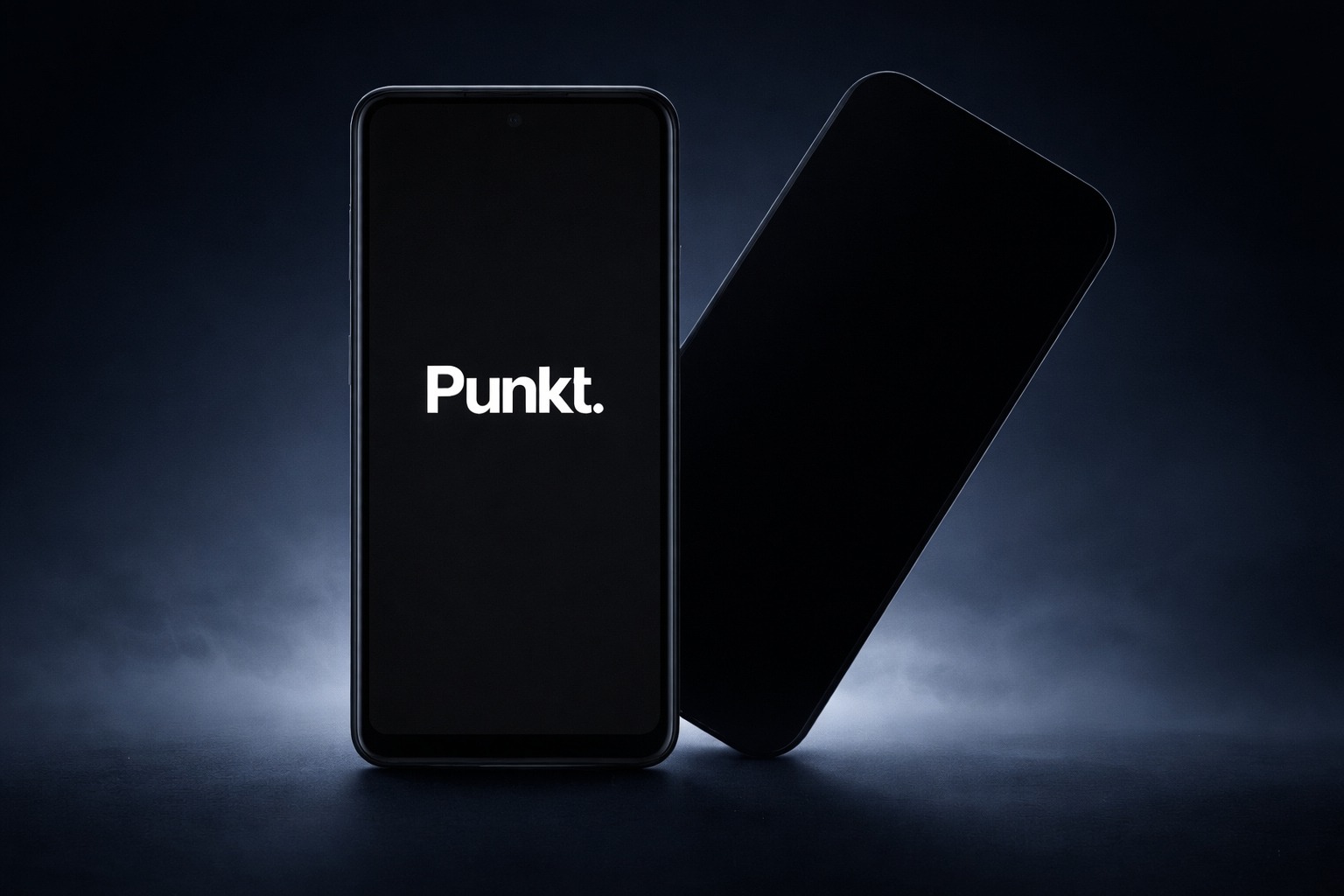
Jan. 3, 2026 — As privacy concerns collide with the reality that modern phones run on data-driven business models, Swiss tech brand Punkt is taking a different bet at the start of 2026: a premium Android-based smartphone that’s assembled in Germany, splits your digital life into two separate “zones,” and funds ongoing privacy features through a paid software subscription instead of advertising and tracking. [1]
The result is the Punkt MC03, announced ahead of CES 2026 in Las Vegas and positioned as a “smarterphone” for people who want full smartphone capability without surrendering everything to Big Tech defaults. [2]
Quick highlights: what’s new today about the Punkt MC03
- Price: $699 / €699 / CHF 699 (region dependent) [3]
- Where it’s made: assembled at Gigaset’s Bocholt, Germany facility (a major positioning point versus Asia-based assembly) [4]
- Core concept: two environments — Vault (locked-down) + Wild Web (more open) [5]
- OS:AphyOS (Android 15 / AOSP 15-based), built around privacy controls and reduced tracking [6]
- Subscription: first year included, then a recurring fee to keep AphyOS services/features fully active [7]
- Availability: Europe deliveries expected end of January; North America “Spring 2026” [8]
Why the MC03 matters in 2026: “Pay for privacy” goes mainstream
Most smartphones are sold as hardware, but monetized through services, app ecosystems, and data collection. Punkt’s pitch flips that: it argues that if you want a phone that doesn’t track, profile, or monetize you, the business model has to change — meaning you pay money rather than paying with your data. [9]
That philosophy is also why this phone is getting attention across tech coverage today: it’s not just a new handset, it’s a new kind of phone pricing structure—hardware cost plus ongoing OS/service funding. [10]
Hardware: a modern spec sheet (and a direct response to MC02 criticism)
Punkt’s previous smartphone attempt, the MC02, was widely seen as a privacy-first concept that asked buyers to accept too many hardware compromises. The MC03 is designed to remove some of those obvious weak points, especially the display and overall responsiveness. [11]
Punkt MC03 specs at a glance
Based on current reporting and retailer spec summaries, the MC03 includes:
- 6.67-inch 120Hz OLED display [12]
- MediaTek Dimensity 7300, 8GB RAM [13]
- Removable 5,200mAh battery (rare in 2026, and a key “intentional tech” talking point) [14]
- IP68 dust/water resistance [15]
- Cameras: 64MP main + 8MP ultrawide, plus a 32MP front camera [16]
- 30W wired + 15W wireless charging, microSD support [17]
No, it’s not chasing “flagship killer” bragging rights. But it’s now competitive enough that the privacy pitch doesn’t feel like it comes with an immediate usability penalty. [18]
The real story: AphyOS and the “Vault vs Wild Web” split
The MC03 runs AphyOS, created by Apostrophy and built on Android Open Source Project (AOSP) 15 (Android 15). It’s designed to remove or reduce the kinds of background services and tracking layers that come with mainstream Google-centric Android builds. [19]
Vault: the “trusted apps only” space
Punkt’s official framing describes Vault as a protected enclave where only trusted, Punkt-approved apps run by default, with a calmer interface intended to keep you focused. [20]
A major MC03 change highlighted in today’s coverage is Proton’s deeper presence inside the Vault—alongside Threema for secure messaging. Punkt says Proton Mail, Calendar, Drive, VPN, and Pass are available within the Vault environment to minimize tracking and exposure. [21]
Wild Web: your “normal smartphone” zone — with stricter controls
“Wild Web” is the second environment: a more open area where you can install the apps you actually need, but with visible privacy controls intended to limit data flows, permissions, and background behavior. [22]
Punkt is essentially productizing what many privacy-conscious users already try to do manually: keep banking, communications, and identity-sensitive tools in a “clean” space—and everything else in a more disposable one. [23]
App access: two app stores, and “no Play Store” by default
If you’re wondering whether this is a “normal Android phone,” the answer is: yes and no.
Punkt says the MC03 offers two app stores:
- A curated privacy-friendly store vetted by AphyOS and Punkt
- Optional access to “widely available” apps, activated only when the user chooses [24]
Coverage also emphasizes that Google Play Store isn’t installed by default, intentionally—pushing users toward privacy-centric defaults and a more controlled app experience. [25]
Built-in privacy tools: VPN, Data Ledger, and even a “Carbon Reduction” view
Beyond the Vault/Wild Web structure, today’s reporting highlights several built-in system tools:
- Digital Nomad VPN: integrated into the OS (not “just another app”) [26]
- Ledger / Data Ledger: app-level controls and monitoring for permissions and data behavior [27]
- Carbon Reduction (inside Ledger): a view designed to show the energy impact of apps and rein in background activity [28]
Punkt also claims AphyOS removes tracking/profiling tech, hidden apps, and bloatware—and uses hardened code supported by a “bank-grade Secure Element.” (As with any security claim, the real-world story will depend on audits, transparency, and update quality over time.) [29]
The subscription: what you get, how much it costs, and what happens if you stop paying
This is the part that will define the MC03 conversation at CES: AphyOS is subscription-funded.
What’s included in the first year
Multiple outlets and Punkt’s own materials state that the MC03 includes 12 months of AphyOS service with the phone purchase. [30]
What it costs after that
Pricing is reported differently depending on billing and region, but the picture is consistent:
- Punkt’s product information lists renewal pricing around $11.99/month, or $9.99/month billed yearly, with multi‑year bundles available. [31]
- Punkt’s own announcement also cites a “monthly” starting point and notes discounted 3‑year and 5‑year bundles. [32]
What the subscription actually funds
AphyOS positioning is explicit: the subscription is meant to pay for ongoing OS development, security updates, privacy services, and supporting infrastructure without relying on advertising or data collection. [33]
If you cancel
This is one of the most unusual parts of Punkt’s approach: if you stop subscribing, the phone doesn’t instantly stop working—but features and privacy services gradually deactivate. Punkt says the device ultimately reverts toward “a device running AOSP.” [34]
That’s a bold line in the sand for 2026—and it’s likely to be the most debated aspect of the MC03, even among people who love the idea of subscription-funded privacy. [35]
Updates and longevity: 3 OS upgrades, 5 years of security patches
Punkt’s stated update posture for the MC03 is more ambitious than many midrange phones:
- The Verge reports three OS upgrades and five years of security updates. [36]
- Digitec similarly notes feature updates for three years and security updates for five years. [37]
That matters because “privacy phones” only stay private if they stay patched.
Availability: when and where you can buy it
As of today’s coverage:
- Pre-orders are live
- Europe deliveries are expected end of January 2026
- North America / U.S. availability is expected Spring 2026 [38]
Who should consider the Punkt MC03 — and who shouldn’t
The MC03 makes sense if you:
- Want a smartphone, but do not want Google services as the default operating layer [39]
- Like the idea of separating your phone into a trusted zone and an everything-else zone [40]
- Prefer paying money for privacy rather than relying on ad-based ecosystems [41]
- Care about European assembly and a more “sovereign” hardware narrative [42]
You may want to skip it if you:
- Need full Google Play Services compatibility for banking, transit passes, or enterprise apps that require GMS (Punkt’s approach is deliberately different here) [43]
- Don’t want an OS model where core privacy services depend on a continued subscription [44]
What to watch at CES 2026
As the MC03 gets shown on the CES floor, the big questions for buyers won’t be about megapixels. They’ll be about reality checks:
- How seamless is the “Vault/Wild Web” split in daily use? [45]
- How well does app compatibility work without a default Play Store setup? [46]
- Does the subscription feel fair once you factor in multi-year ownership? [47]
- Will Punkt and Apostrophy deliver on the promised update runway? [48]
For now, the MC03 stands out as one of the clearest examples yet of a privacy-first thesis gaining confidence: if you want an independent, secure mobile experience, you may have to pay for it—openly, transparently, and every month. [49]

References
1. www.theverge.com, 2. 9to5google.com, 3. www.theverge.com, 4. www.theverge.com, 5. www.punkt.ch, 6. www.theverge.com, 7. www.theverge.com, 8. 9to5google.com, 9. 9to5google.com, 10. www.theverge.com, 11. www.theverge.com, 12. 9to5google.com, 13. 9to5google.com, 14. 9to5google.com, 15. 9to5google.com, 16. 9to5google.com, 17. 9to5google.com, 18. www.androidauthority.com, 19. www.theverge.com, 20. www.punkt.ch, 21. www.punkt.ch, 22. www.punkt.ch, 23. www.androidauthority.com, 24. www.punkt.ch, 25. 9to5google.com, 26. www.punkt.ch, 27. www.punkt.ch, 28. www.punkt.ch, 29. www.punkt.ch, 30. www.theverge.com, 31. www.punkt.ch, 32. www.punkt.ch, 33. 9to5google.com, 34. www.punkt.ch, 35. www.androidauthority.com, 36. www.theverge.com, 37. www.digitec.ch, 38. www.punkt.ch, 39. 9to5google.com, 40. www.punkt.ch, 41. 9to5google.com, 42. www.theverge.com, 43. 9to5google.com, 44. www.punkt.ch, 45. www.androidauthority.com, 46. 9to5google.com, 47. www.theverge.com, 48. www.theverge.com, 49. 9to5google.com