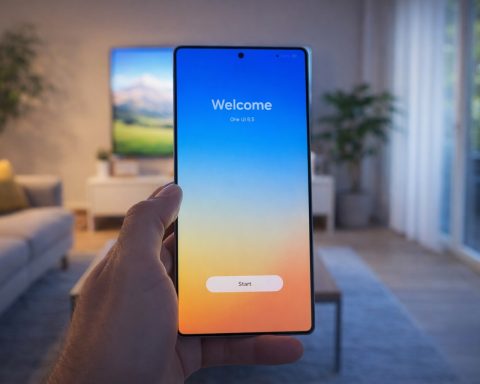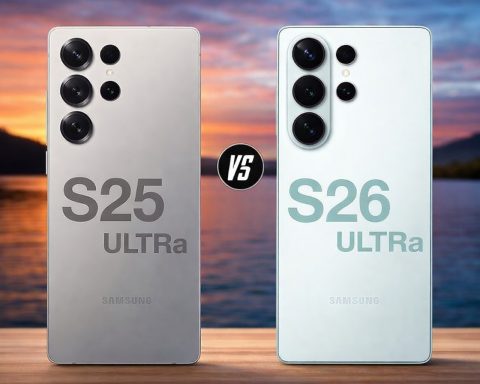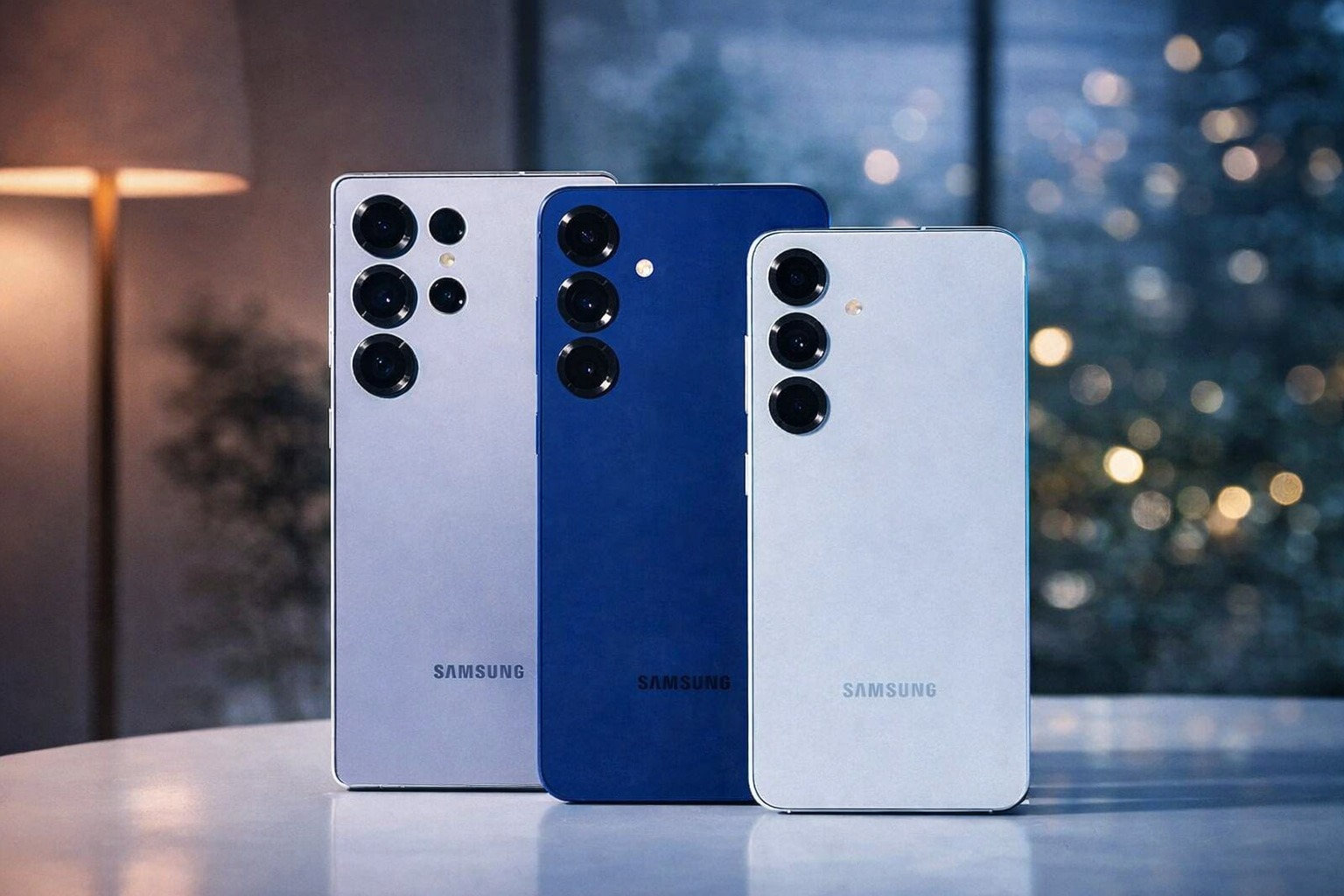
A wave of One UI 8.5 leaks suggests Samsung’s Galaxy S26 Ultra could debut a “Privacy Display” that dims the screen from side angles, with quick toggles and smart automation.
Samsung’s next flagship wave is already being shaped by software leaks—and the biggest surprise isn’t a new camera sensor or faster chip. Instead, multiple reports published over the last 48 hours point to a new “Privacy Display” feature coming with One UI 8.5 and the Galaxy S26 series, designed to make your screen harder to read from side angles—the classic “shoulder surfing” scenario on trains, planes, cafés, and office hot desks. [1]
What’s new today: a leak wave turns a rumor into something you can see
The Privacy Display feature has been rumored for a while, but what changed this week is that leakers claim they’ve found it presented inside Samsung’s own Tips app, complete with a demo animation showing how it behaves when someone views the phone from the side. [2]
TechRadar’s roundup of the latest One UI 8.5 discoveries frames it as part of a broader set of privacy and AI upgrades—while emphasizing that these features appear hidden in beta code, not officially released yet. [3]
Key highlights (based on current leaks)
- Side‑angle dimming: screen appears normal head‑on, darker from off‑angles. [4]
- Controls in Settings + Quick Settings: a dedicated toggle and a quick panel switch are both referenced. [5]
- Automation triggers: conditions may enable it automatically depending on app, notifications, or location/context. [6]
Everything here should still be treated as unconfirmed until Samsung announces it—but there’s now far more detail than a vague rumor.
What “Privacy Display” is supposed to do (and why it matters)
At the simplest level, the leaked descriptions say Privacy Display reduces readability from side angles while keeping the screen clear for the person looking straight at it. The intended benefit is obvious: if you’re checking a bank balance, replying to work messages, or pulling up a boarding pass in a crowded area, people next to you see a dimmed/obscured view rather than full clarity. [7]
This is the same problem that physical privacy screen protectors try to solve, but the leak story is that Samsung wants to make it built-in, toggleable, and in some cases automatic. [8]
How it may work in One UI 8.5: toggles, settings, and smart conditions
Across the reports, the UI details are surprisingly consistent:
1) Where you’ll find it
- Settings app → Display section is repeatedly cited as the home for the feature. [9]
- A Quick Settings toggle is also referenced, suggesting Samsung wants you to turn it on/off as easily as Wi‑Fi or Do Not Disturb. [10]
2) The animation: “normal head‑on, dim from angles”
Both SammyGuru and Android Authority describe an animation showing the phone readable head‑on, but darkened when viewed from the sides (including top/bottom angles as well). [11]
NotebookCheck goes further, calling it an “official render animation” discovered in Samsung’s own app content, with brightness shifting based on the viewing angle. [12]
3) The automation angle: “Conditions For Turning On”
This is where One UI 8.5 could move beyond a simple on/off switch.
SamMobile reports that Privacy Display can be enabled manually, but also configured via a “Conditions For Turning On” section—and may tie into Modes and Routines (Samsung’s built-in automation system) so the phone can enable the feature in specific situations, such as being away from home or office. [13]
Other reports add more examples of triggers:
- Turning on automatically based on which app is open or a notification pop‑up. [14]
- Enabling based on scenario/context (NewsBytes describes it as software-controlled and condition-based). [15]
- BGR mentions the leak suggesting automatic behavior depending on app, notifications, and even when entering sensitive credentials (like passcodes/PIN). [16]
If accurate, that last point is important: it suggests Samsung is thinking beyond “privacy mode” as a manual feature and toward privacy as a contextual, system-level behavior.
Is this really software—or new OLED hardware too?
One of the most interesting details in today’s reporting is the suggestion that Privacy Display may require a newer generation OLED panel.
SamMobile explicitly says the feature likely needs a newer OLED panel from Samsung Display and connects it to “Flex Magic Pixel”—a technology Samsung Display showcased at Mobile World Congress in early 2024. [17]
Crucially, Samsung Display itself has publicly described Flex Magic Pixel as a viewing-angle-adjusting OLED technology that makes a screen “not visible to the person next to it,” and notes it can pair with AI-driven context detection (for example, recognizing a public environment when running a banking app). [18]
That combination—specialized viewing-angle control + software intelligence—matches the spirit of what One UI 8.5 leaks are hinting at.
What this could mean in practice
If Privacy Display is tied to hardware like Flex Magic Pixel:
- It may be more effective than typical “dim the sides” tricks because the panel itself is designed for directional visibility.
- It might be limited to specific models (for example, Galaxy S26 Ultra first), at least initially. Several reports say that’s possible, and even SamMobile notes it’s unclear whether all S26 models will get it. [19]
If it’s mostly software:
- It could roll out more broadly, potentially even to older devices—though there’s no indication Samsung plans that.
Right now, the safest reading is: the UI and behavior are leaking first, while the hardware dependency is still an open question.
Why this matters more than a novelty: privacy protection you’ll actually use
Privacy features often fail because they add friction. A physical privacy protector is “always on,” which can mean:
- dimmer display even when you don’t want it,
- reduced viewing angles for you when sharing a photo with a friend,
- and sometimes a hit to color/contrast.
Multiple outlets argue Samsung’s approach aims to keep the benefits while removing the downsides:
- Digital Trends highlights the flexibility of disabling it when not needed and avoiding permanent dimming. [20]
- NewsBytes similarly emphasizes the “software-controlled” nature compared to always-on screen protectors. [21]
If Samsung gets the automation right—turning it on only in high-risk situations—Privacy Display could become one of those features people stop thinking about because it “just happens,” like adaptive brightness (but for privacy).
Galaxy S26 vs iPhone 17: the display race shifts toward privacy
BGR’s coverage frames Privacy Display as a potential differentiator against Apple’s iPhone 17 lineup—especially because it’s not simply a UI trick, but may require new display tech. [22]
There’s also broader context around display priorities:
- MacRumors reported in 2025 that Apple’s previously rumored anti-reflective, scratch-resistant coating for iPhone 17 Pro models was no longer planned, citing manufacturing scale challenges. [23]
- BGR notes Samsung has pushed display changes aggressively year after year and points to glare-reduction efforts on recent Galaxy generations as part of that trend. [24]
To be clear: Apple and Samsung are tackling different “screen problems” (durability, reflections, brightness, privacy). But if Privacy Display ships as leaked, Samsung would have a very visible feature that Apple doesn’t currently advertise as part of iPhone 17’s display story.
When could Privacy Display launch?
Timing is always the hardest part of leak coverage, but today’s reports cluster around an early‑2026 window:
- TechRadar says One UI 8.5 is in beta and is expected to drop alongside the Galaxy S26 phones “sometime in February.” [25]
- BGR suggests the Galaxy S26 lineup is expected to be unveiled “next month” (relative to early January reporting). [26]
- TechRadar also cautions that Privacy Display is not live yet in One UI 8.5 and appears hidden in beta code for now. [27]
So, as of January 3, 2026, the most responsible takeaway is: the feature appears to be real in software references, but it’s not confirmed, not publicly enabled, and still subject to change before launch.
What to watch next (the questions leaks haven’t answered)
If you’re deciding whether this is a meaningful Galaxy S26 upgrade, these are the missing details that matter:
- Which models get it?
Ultra-only would make sense if the OLED panel requirement is real, but leaks aren’t definitive. [28] - How aggressive is the dimming/filtering?
Too weak and it won’t stop shoulder-surfing; too strong and it harms normal viewing. - Will it work system-wide and with third‑party apps?
NewsBytes suggests system-wide coverage (notifications, quick settings, supported apps), but the exact rules aren’t yet clear. [29] - Battery and brightness tradeoffs
Any approach that alters brightness/angle behavior could have power implications—especially if it’s enabled frequently. - How smart are the “conditions”?
If Modes and Routines integration is real, it could be a standout implementation—privacy that adapts to place, time, and app type. [30]
Bottom line
The most credible “today” story isn’t that Samsung is merely adding another toggle—it’s that One UI 8.5 leaks are now showing a complete Privacy Display concept: a feature surfaced inside Samsung’s own UX education tools, with a clear demo animation, quick controls, and hints of automation. [31]
If it arrives as described—and especially if it’s backed by next-gen OLED tech like Flex Magic Pixel—the Galaxy S26 could turn a niche accessory category (privacy protectors) into a built-in flagship feature, right as the smartphone display race shifts from “brighter and tougher” to “smarter and more private.” [32]

References
1. www.androidauthority.com, 2. sammyguru.com, 3. www.techradar.com, 4. sammyguru.com, 5. sammyguru.com, 6. www.sammobile.com, 7. www.newsbytesapp.com, 8. www.newsbytesapp.com, 9. sammyguru.com, 10. sammyguru.com, 11. sammyguru.com, 12. www.notebookcheck.net, 13. www.sammobile.com, 14. sammyguru.com, 15. www.newsbytesapp.com, 16. www.bgr.com, 17. www.sammobile.com, 18. www.samsungdisplay.com, 19. www.sammobile.com, 20. www.digitaltrends.com, 21. www.newsbytesapp.com, 22. www.bgr.com, 23. www.macrumors.com, 24. www.bgr.com, 25. www.techradar.com, 26. www.bgr.com, 27. www.techradar.com, 28. www.sammobile.com, 29. www.newsbytesapp.com, 30. www.sammobile.com, 31. sammyguru.com, 32. www.samsungdisplay.com