LONDON, Jan 17, 2026, 15:28 GMT
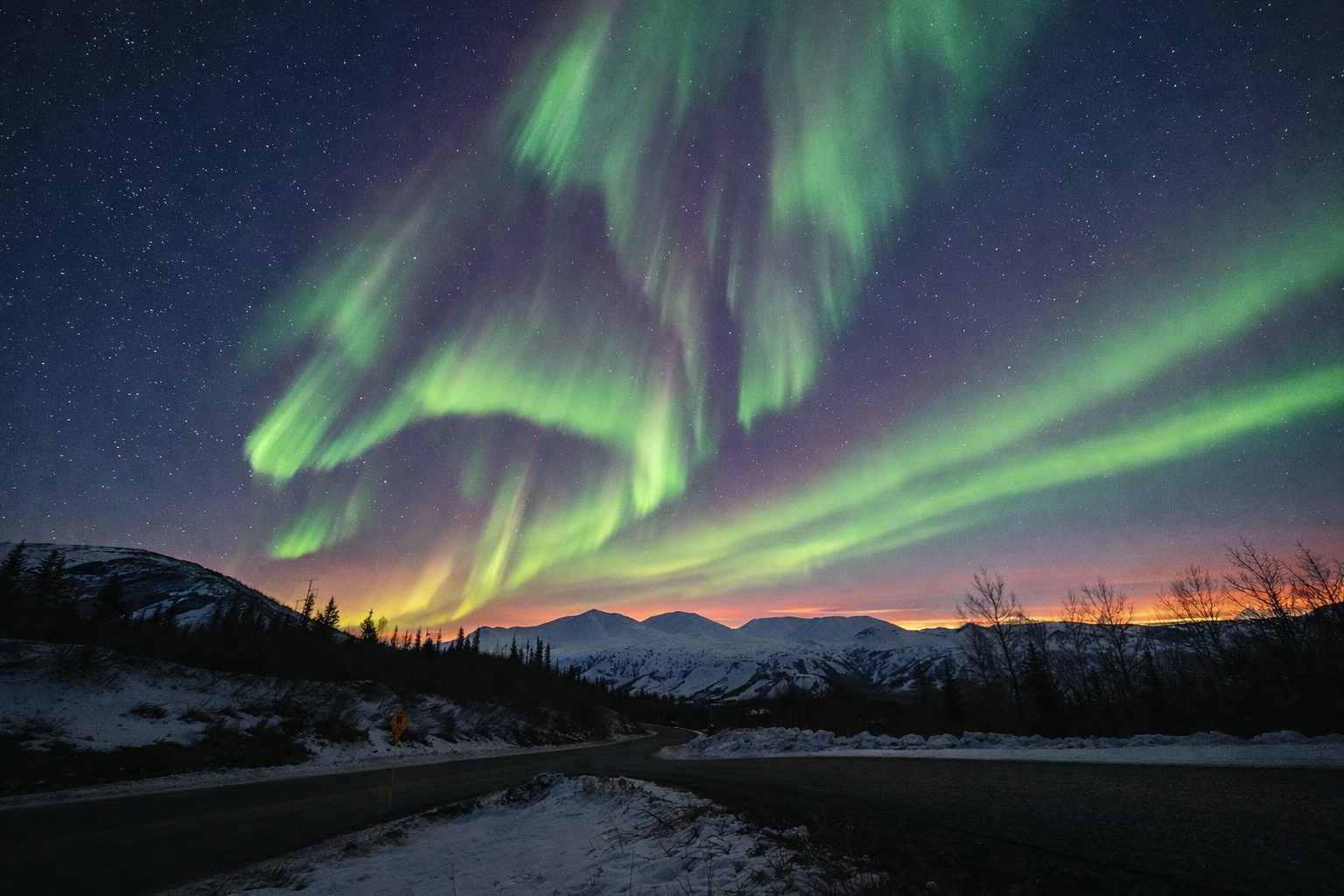
The night sky tonight could include a brief run of northern lights in parts of northern Britain and the northern United States, as space weather forecasters tracked a rise in geomagnetic activity through the weekend. Britain’s Met Office said coronal hole fast winds may boost the auroral oval, with a chance of sightings reaching northern Scotland if skies clear. 1
The timing is good for anyone planning a late look. The moon is down to about 1% illumination ahead of Sunday’s new moon at 19:52 GMT, when the lunar disk slips close to the sun and leaves darker skies. “The moon does not emit its own light but reflects that of the sun,” said Giuseppe Donatiello, an Italian amateur astronomer and astrophotographer, in a Space.com Q&A. 2
Auroras form when charged particles from the sun ride Earth’s magnetic field into the upper atmosphere and collide with gases, producing light at high latitudes. They can come and go in minutes, which is why forecasters and skywatchers focus on narrow windows instead of a whole night. 3
NOAA’s Space Weather Prediction Center said in its latest three-day outlook that the greatest observed three-hour Kp in the past 24 hours hit 5, and the greatest expected value through Jan. 19 is 5.33, both at the G1 level on NOAA’s scale. It also said minor geomagnetic storms are expected on Jan. 17-18 due to a “positive polarity coronal hole,” and noted R1 radio blackouts were observed in the past day. 4
Coronal holes are regions of open magnetic field on the sun that can send out faster solar wind for days as the sun rotates. NOAA says large coronal holes near the solar equator are watched closely because their high-speed streams can drive G1 to G2 geomagnetic storming when they reach Earth. 5
In the United States, Space.com said NOAA’s latest aurora view line put 15 states fully or partly in range, from Alaska across the northern tier to New York, with the best window flagged from 1 a.m. to 7 a.m. EST (0600-1200 GMT). The site pointed readers to consumer apps such as “My Aurora Forecast & Alerts” and “Space Weather Live” for location-based alerts. 6
Forecasters often talk in Kp, a global index from 0 to 9 that tracks geomagnetic disturbance in three-hour blocks, and in NOAA’s G-scale, where G1 corresponds to Kp 5 and the numbers climb with intensity. It is a blunt tool for planning a drive, but it gives a quick sense of whether the auroral oval might expand toward lower latitudes. 7
For observers on the ground, the practical advice is old and not glamorous: find a dark place away from streetlights, keep an open view of the northern horizon, and give your eyes time to adapt. NOAA’s viewing guide also notes cameras can pick up faint auroral glow that is hard to see at first glance. 8
If the aurora fizzles, the rest of the sky will not be empty. EarthSky said Jupiter remains the standout evening planet, while Saturn sits low in the west after sunset; Venus, Mercury and Mars are close to the sun this month and hard to spot. 9
But even with a forecast, visibility can disappoint. The Met Office’s aurora guidance notes that cloud cover can wipe out a display entirely and that higher Kp improves odds only “subject, of course,” to local skies and light pollution. 10
Forecasts can shift again before nightfall, especially when solar wind conditions change quickly. For many places, the difference between “nothing” and a visible arc can come down to timing, clear air and a bit of luck.