NEW YORK, February 23, 2026, 14:27 EST — Regular session
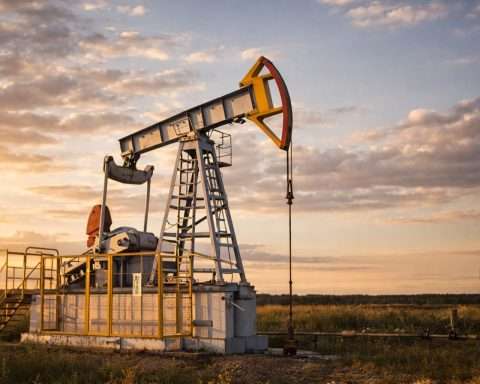
Oil prices eased on Monday but held near a six-month high as traders looked ahead to U.S.-Iran nuclear talks and weighed fresh uncertainty around U.S. tariffs. Brent crude futures were down 37 cents, or 0.52%, at $71.39 a barrel by 12:44 p.m. ET, while U.S. West Texas Intermediate fell 27 cents, or 0.41%, to $66.21. “More open to talking about their nuclear program,” said Phil Flynn, an analyst at Price Futures Group, pointing to signals from Tehran. (Reuters)
The pullback comes after a sharp rally that is starting to change the math on inflation. A Reuters columnist noted Brent is now only about 2% cheaper than a year ago, after being down almost 30% year-on-year in early January — a shift driven by “base effects”, the year-on-year comparison that feeds into inflation data. Gregory Daco, chief economist at EY Parthenon, estimates a sustained $10 rise in oil adds up to 0.2 percentage point to annual U.S. inflation, and Atlanta Fed President Raphael Bostic said a reversal would be “super concerning”. (Reuters)
At the same time, traders are struggling to read demand. The U.S. Supreme Court voided most of last year’s tariffs in a 6-3 ruling, and President Donald Trump has floated a new global levy while officials look for ways to keep broader duties in place. European Central Bank President Christine Lagarde said investors “want to know the rules of the road” before they commit cash. (Reuters)
U.S. Customs and Border Protection said it will halt collections of tariffs imposed under the International Emergency Economic Powers Act at 12:01 a.m. EST on Tuesday, after the Supreme Court said the duties were illegal. The agency told shippers it will deactivate the related tariff codes and offered no details on refunds for importers. (Reuters)
On the supply side, Iran has signalled it is ready to trade nuclear concessions for sanctions relief and recognition of its right to enrich uranium, a senior Iranian official told Reuters. Analysts said the move suggested Tehran was trying to keep diplomacy alive as military risks rise, and Behnam Ben Taleblu at the Foundation for Defense of Democracies said, “Iran will use that time for various reasons, including to avoid a strike”. (Reuters)
Banks are also starting to mark up their longer-term price views, even as they argue the market still has plenty of crude. Goldman Sachs raised its fourth-quarter 2026 forecasts for Brent and WTI by $6 to $60 and $56 a barrel, citing lower inventories in OECD countries — broadly, the richer industrial economies. The bank kept its call for a 2026 surplus of 2.3 million barrels per day and said a $6 “risk premium” — the extra price traders pay for the chance of a supply shock — should fade if tensions cool, while warning Brent could fall $5 and WTI $8 in late 2026 if sanctions relief unlocks more supply. (Reuters)
But the same triggers can flip fast. A diplomatic breakthrough could drain the geopolitical premium in a hurry, while a messy tariff fight could hit growth and fuel demand just as the market moves into the next leg of the year.
For now, the near-term focus is split between border policy and the Gulf. Traders are watching Tuesday’s tariff collection halt for clarity on what rates apply in practice, and Thursday’s U.S.-Iran meeting for any sign that sanctions might ease — or that the risk of a confrontation is rising again.