
London, June 16, 2026, 15:07 (BST)
- Prudential shares were quoted higher in London, outperforming a firmer FTSE 100.
- The move follows a sharp early-June selloff tied to China/Hong Kong capital-flow worries.
- Investors’ next big test is Prudential’s 2026 half-year results in late August.
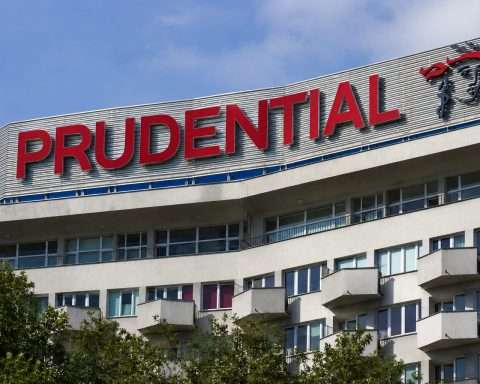
Prudential plc shares moved higher in London on Tuesday, helped by a broader rebound in UK financial stocks and renewed attention on the insurer’s ongoing capital returns. Hargreaves Lansdown showed Prudential at 1,016.5p/1,017.5p, up 11p, or 1.09%, with the FTSE 100 up 0.74% on delayed pricing. The stock opened at 1,003.5p after closing Monday at 1,006p, and HL listed Prudential’s market value at £25.41 billion. HL
The day’s rise was not driven by a fresh trading update from Prudential. It came as London’s blue-chip index advanced, with Reuters reporting that the FTSE 100 was up 0.6% to 10,490.35 points by 11:00 GMT, led by financials and industrials as lower oil prices improved risk appetite. For Prudential, which is listed in London but earns its growth story mainly in Asia and Africa, that market tone matters. When investors feel better about global growth and cross-border financial flows, the stock tends to respond. Reuters
The bounce also follows a rough patch. Earlier this month, Prudential fell 7.6%, its biggest one-day percentage drop in more than three years, after reports that China was tightening rules around offshore accounts hit Asia-exposed financial names. That remains the main bear-case issue: if Chinese wealth flows into Hong Kong are disrupted, demand for insurance and savings products could become harder to forecast. Morningstar’s Alliance News report said Prudential dropped 7.2% in that session, while JPMorgan argued the rule changes were likely to have “little practical effect,” though the quote was attributed to the bank rather than a named analyst. Reuters
The bull case is still built on growth and buybacks. Prudential said in its first-quarter update that new business profit rose 10% to $686 million and APE sales rose 6% to $1.82 billion; APE, or annual premium equivalent, is a common insurance measure used to show new sales on a yearly basis. Chief Executive Anil Wadhwani said the group was “well positioned to capture structural growth opportunities across Asia and Africa,” while the company has also launched a $1.2 billion buyback due to run no later than December 18, 2026. A buyback reduces the number of shares in issue, which can lift earnings per share if profits hold up. Prudential
The latest buyback data show why that matters for the share price. Prudential said on June 15 that it bought 2.09 million shares between June 8 and June 12, and that it had purchased 38.98 million shares since the programme began on January 6. The company intends to cancel the repurchased shares, reducing the voting-rights base to about 2.51 billion shares. That provides a steady buyer in the market, although it does not remove the wider risk from China, currencies, interest rates or equity-market swings. Investegate
On today’s facts, Prudential looks selectively attractive but not low-risk. The valuation is not demanding on HL’s numbers, with a price-to-earnings ratio of 12.24; the P/E ratio compares the share price with annual profit per share. The dividend yield was listed at 1.94%, and the shares remain well below the £12.38 52-week high reported by MarketWatch after Monday’s close. The next major catalyst is the 2026 half-year results, scheduled for August 27 in Hong Kong, or August 26 in the UK and US time zones. Investors will be watching whether Q1 growth carries through, whether Hong Kong and Mainland China demand holds up, and whether the buyback continues to offset the stock’s Asia-related risk discount. HL