Sydney, February 26, 2026, 17:53 AEDT — After-hours
- Qantas tumbled 9.2% to finish at A$9.67, after shares bounced around between A$11.09 and A$9.58.
- The airline reported an underlying profit before tax of A$1.46 billion for the first half, announcing plans for an interim dividend and a share buyback.
- Investors are eyeing demand on Australia-U.S. routes to see if it holds steady through the June half.
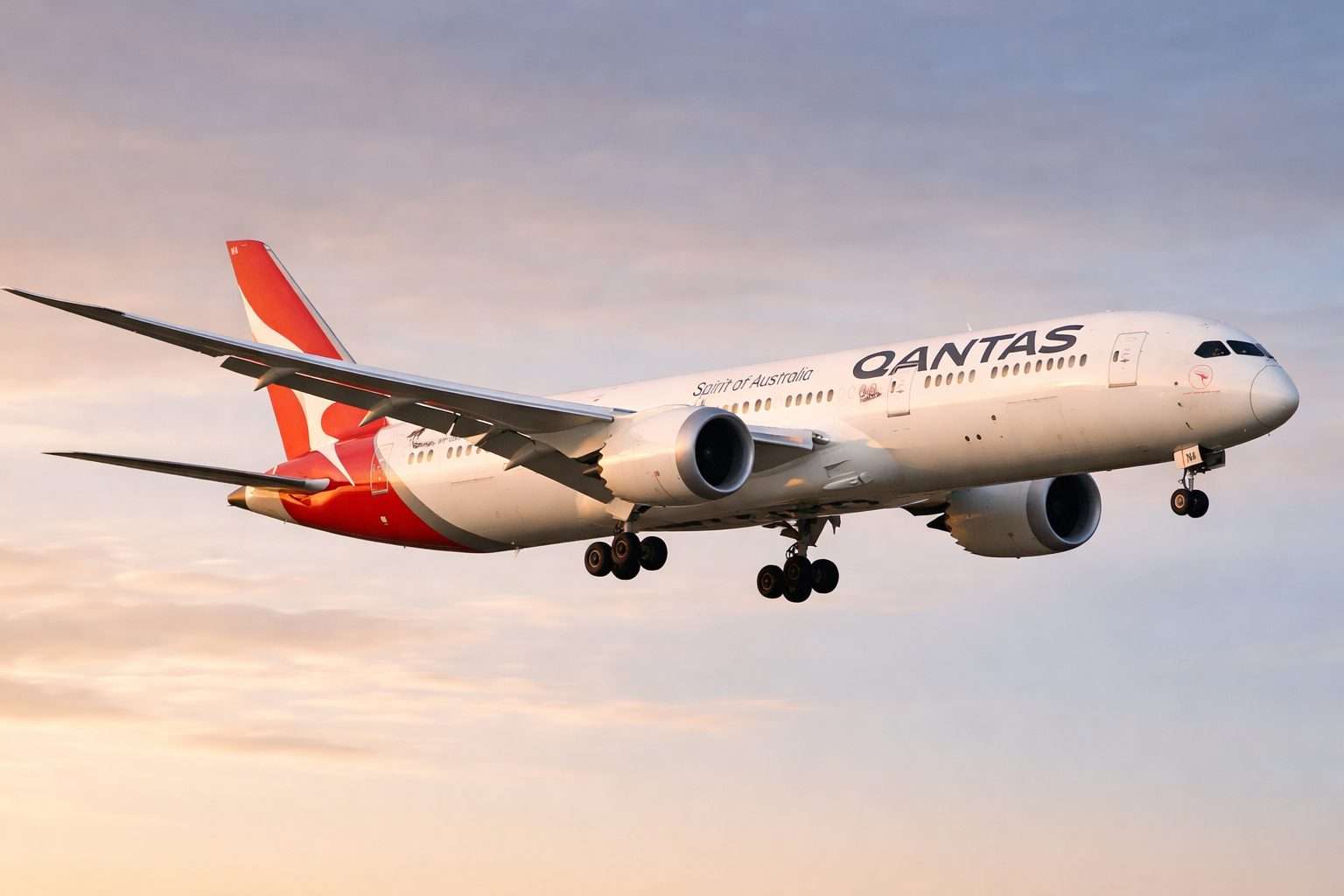
Qantas Airways Ltd (ASX:QAN) fell sharply Thursday, closing 9.2% lower at A$9.67 after first-half earnings revealed weakness in its international segment, even as profit climbed. Shares swung between A$9.58 and A$11.09 throughout the session.
The question weighing on the market is simple: is softness in long-haul routes just noise, or does it signal rougher waters for pricing and costs through the June half? That’s why this move stands out.
Qantas tends to signal where Australian travel appetite and discretionary dollars are heading. Investors don’t hesitate to hit airline stocks hard if they see international margins slipping—even when the local market is performing well.
Qantas posted an underlying profit before tax of A$1.46 billion for the half-year ended Dec. 31, a 5% increase. Statutory after-tax profit came in at A$925 million, holding steady. The carrier also detailed plans for interim FY26 shareholder returns totaling up to A$450 million. That includes a fully franked interim dividend of 19.8 Australian cents per share plus an on-market buyback of as much as A$150 million, according to the company.
Qantas ran into trouble abroad. While the airline’s domestic arm boosted underlying EBIT by 14%, international earnings slipped 6% — higher costs and a drop in U.S. economy-class travel did the damage. At one stage, shares tumbled as much as 10%. The company projects domestic unit revenue to climb roughly 3% in the second half, with international unit revenue seen rising 1% to 3%. Some U.S. flights will be swapped out for Singapore and other destinations.
Vanessa Hudson, the chief executive, described the softer demand on U.S. routes as likely temporary. She flagged the Australian dollar’s move back above 70 U.S. cents, noting to analysts this could give bookings a lift later in the financial year.
The currency story isn’t just staying local. Qantas and Air New Zealand are both pointing to price sensitivity as the culprit for weaker trans-Pacific demand, not a lack of interest in flying the route.
Qantas is upping its outlay on fleet renewal, taking on fresh aircraft and putting crews through training — moves that push up costs now, despite the long-term savings from more efficient, lower-maintenance planes.
Even so, investors aren’t buying into either the headline profit or the payout plan tonight—the sell-off makes that clear. Should cost inflation linger—wages, training, other expenses—or if U.S. demand doesn’t bounce back, the back half might not line up as neatly as company guidance suggests.
The next set of tests isn’t far off. Traders are set to look for any follow-through in the stock when markets open Friday. Also on their radar: updates on long-haul bookings, shifts in capacity over the coming weeks, plus specifics around the timing of the buyback.
Shareholders eyeing the interim dividend from Qantas should note these dates: March 11 is the official record date, with payments scheduled to hit accounts on April 15, the company’s financial calendar confirms.