New York, March 4, 2026, 15:17 EST — Regular session
Ross Stores shares were up about 6.9% at $211.35 in afternoon trading on Wednesday. The stock touched $217.10 earlier in the session.
The jump comes after Ross told investors it expects demand for discounted apparel to hold up even as macro uncertainty hangs over the consumer. “Spend growth at off-price chains is among the strongest in retail, with gains across all income segments,” said Michael Gunther, SVP of research and market intelligence at ConsumerEdge. 1
That matters now because the market has been treating retail earnings like a rolling read on household stress. The off-price model can look defensive, but it still relies on shoppers making extra trips for apparel and home goods.
Ross said fourth-quarter sales rose 12% to $6.6 billion, and earnings per share — profit per share — were $2.00, above the company’s own guidance. Comparable store sales, which track sales at stores open at least a year, rose 9%, and full-year sales reached a record $22.8 billion. CEO Jim Conroy said, “We ended the fourth quarter with solid momentum, and while early, we are encouraged by the very strong start to the Spring season,” as the company forecast 7%–8% comparable growth for the quarter ending May 2 and set out a new $2.55 billion, two-year share repurchase plan and a higher quarterly dividend. 2
On the earnings call, executives leaned on traffic. They said gains were broad-based across categories and regions, with the home business showing improvement after being pressured by tariffs earlier in the year. Conroy said, “We do not intend to buy the comp in Q1 or for the year going forward,” using retail shorthand for spending on promotions or marketing just to force comparable sales higher. 3
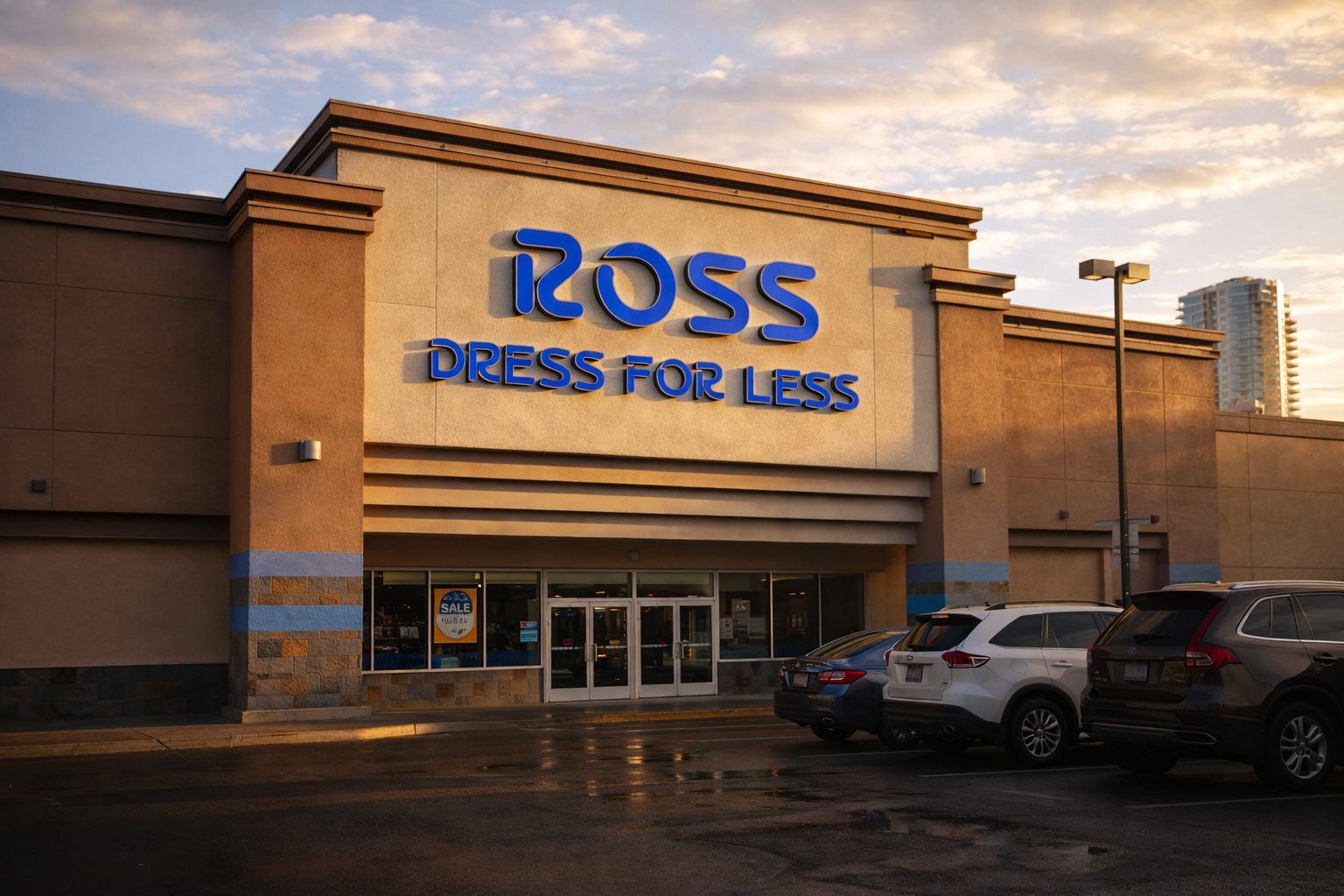
Ross runs the Ross Dress for Less and dd’s DISCOUNTS chains and competes with other bargain-focused retailers for the same wallet, while online players keep widening their discount lanes. The easy comparison quarter also cuts both ways: it can inflate the early-year growth rate, then make the back half look choppy.
But the risks are still sitting in plain view. Tariff swings, freight and distribution costs, and a sudden slowdown in discretionary buying could pressure margins, even if sales keep rising.
Traders will also be watching for signs the spring strength is more than a tax-refund pop and whether inventory stays clean as the company leans into new stores and supply chain spending.
The next hard checkpoint is the quarter ending May 2 — the period Ross is using for its strong spring forecast — and any update then on tariffs, traffic and the pace of repurchases.