Shanghai, Feb 22, 2026, 14:01 CST — The market has closed.
- Shanghai shares resume trading Tuesday as the Spring Festival break ends, putting A-shares in position for a catch-up session.
- Analysts will be sifting through holiday spending and subsidy figures, searching for signs of how consumers are behaving.
- Tariff headlines between the U.S. and China, plus the shuffle of diplomatic calendars, are back in the mix as a market variable.
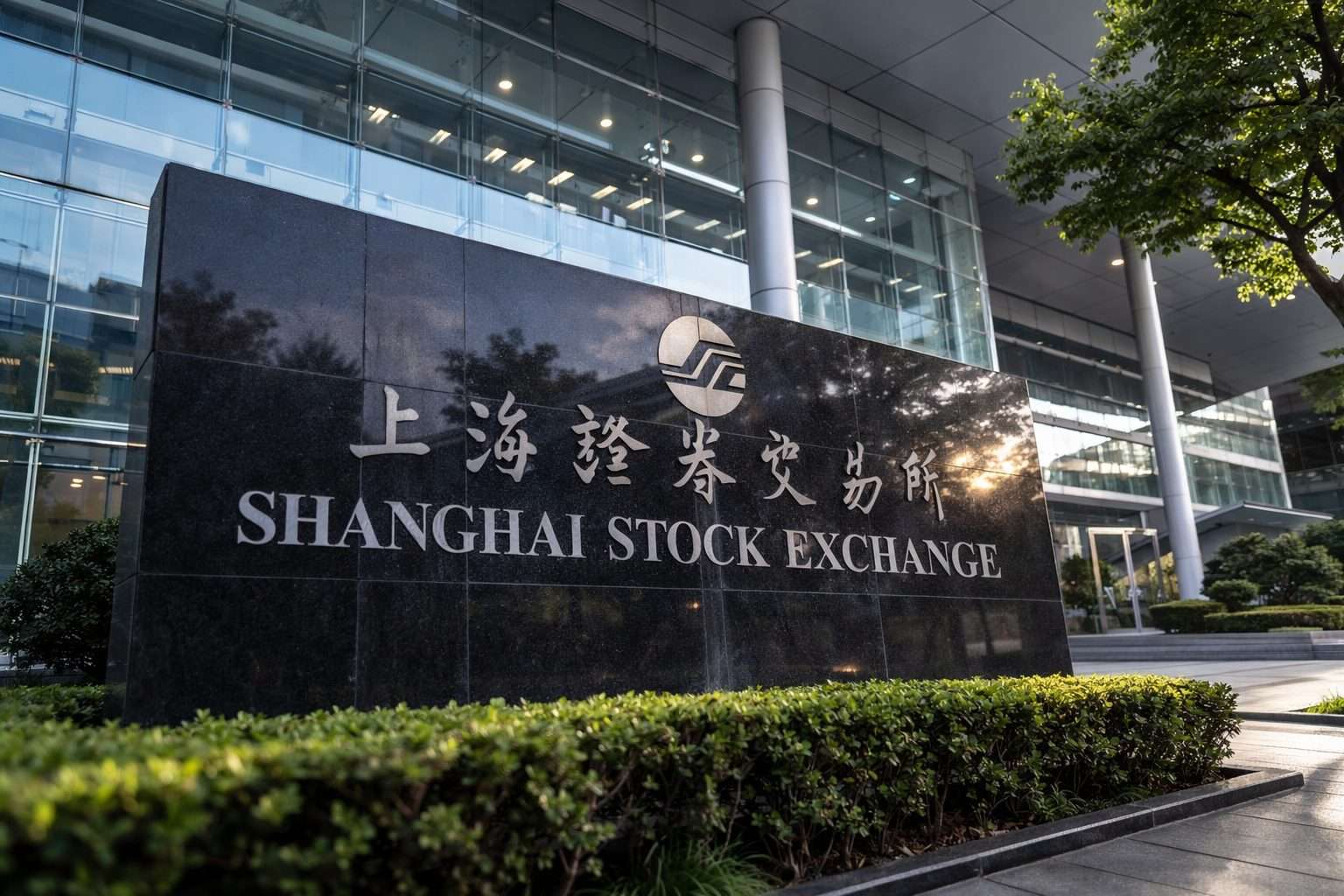
Shanghai markets will swing back into action Tuesday as mainland Chinese stocks resume trading after the week-long Lunar New Year hiatus. Investors return to an unsettled scene: new doubt over U.S. tariffs and the first hints of a pickup in holiday-driven demand.
This pause creates a pricing gap. Onshore “A-shares”—yuan stocks listed in Shanghai and Shenzhen—end up digesting a full week’s worth of offshore swings and headlines all at once. The first day back? Positioning effects usually get amplified.
The Shanghai Composite finished Feb. 13 at 4,082.07, slipping 1.26% for the session. The blue-chip CSI 300 settled at 4,660.41, off by 1.25%, Reuters data showed.
Heading into the reopen, traders are watching holiday demand numbers closely—one of the few almost real-time signals on the domestic economy. According to official figures relayed by state media, average daily sales at leading retail and dining businesses climbed 8.6% year-on-year over the first four days of the Spring Festival break. The data also highlighted a 970 million yuan ($140 million) boost in duty-free sales in Hainan. On top of that, a national consumer goods trade-in campaign has reportedly pulled in nearly 196.39 billion yuan in sales so far this year.
There wasn’t much conviction in offshore markets. Hong Kong’s Hang Seng Index dropped 292 points, or 1.1%, to finish at 26,413 on Friday, weighed down by tech stocks following the holiday, according to public broadcaster RTHK.
Sentiment around the globe is shifting. U.S. stocks climbed Friday, following a Supreme Court decision to overturn President Donald Trump’s global tariffs put in place under a national-emergency law. Trump responded by saying he’d set a 10% global tariff for the next 150 days. “Today is a removal of some uncertainty,” said Mike Dickson, who leads research and quantitative strategies at Horizon Investments. Reuters
Now the trade dispute has a timeline. Reuters says Trump heads to China March 31 to April 2, following a court decision that wiped out some tariffs and left Washington scrambling to figure out which duties—if any—it can quickly bring back. Scott Kennedy, a China economics specialist at the Center for Strategic and International Studies, argued Trump has been “playing defense” in this trade fight, and the tariff loss “cements his weakness” from Beijing’s perspective. Reuters
In Shanghai, eyes go to a pared-down watchlist: exporters and manufacturers tied to U.S. demand, consumer stocks riding the swings of holiday spending, plus those heavyweight state-backed sectors that typically react to policy moves.
The downside isn’t hard to spot. Holiday figures have a tendency to look better than they are, only to lose momentum. There’s still no direct connection between voucher-driven consumer activity and the bottom lines of listed firms. Trade talk turning harsher could rattle sentiment fast—liquidity tends to be thin at the open after a break, and fast money doesn’t wait to reduce exposure.
Cross-border flows look set to feature in the opening narrative. Northbound Stock Connect, which gives global investors access to mainland shares via Hong Kong, has been closed since Feb. 16 and remains shut through Feb. 23. A notice from Changjiang Securities International says trading will resume on Feb. 24.
Tuesday’s reopen is front and center—the first hour of trading, not an earnings call, is the spark here. Once that’s underway, traders will be watching for any new official updates out of the holiday stretch, while chatter around the March 31-April 2 Trump-Xi meeting has already started creeping into pricing.