
London, May 13, 2026, 11:04 BST
- Shell shares in London barely budged late this morning, caught between ongoing buybacks, softer oil prices, and lingering Middle East supply threats.
- Not a major headline, but Shell continued its share buybacks and is said to be shopping roughly 60 French highway petrol stations.
- Bulls highlight robust cash flow, gains in oil trading, and a 5% boost to the dividend. On the other side, bears flag a drop in second-quarter gas volumes, a higher debt load, and reduced buybacks compared to previous levels.
Shell shares barely budged in late morning London trade, holding at 3,156.25p, off just 0.04% according to Cboe Europe’s real-time read. The lack of movement isn’t apathy—investors are caught between two strong narratives tugging Shell in different directions.
Oil edged lower. Brent lost 0.2%, settling at $107.58 a barrel, while WTI dropped 0.4% to $101.79. Traders tracked a shaky ceasefire in the Middle East and eyed the Trump-Xi talks slated for Beijing. For Shell, lower crude prices would typically hurt, but with oil holding above $100, cash flow remains steady.
The second point: capital return. Shell reported purchasing 1,234,427 shares for cancellation on May 12, spread over LSE, Chi-X, and BATS, with volume-weighted average pricing near £31.61. By canceling the repurchased shares, the overall share count drops, giving each remaining share a touch more ownership in the company.
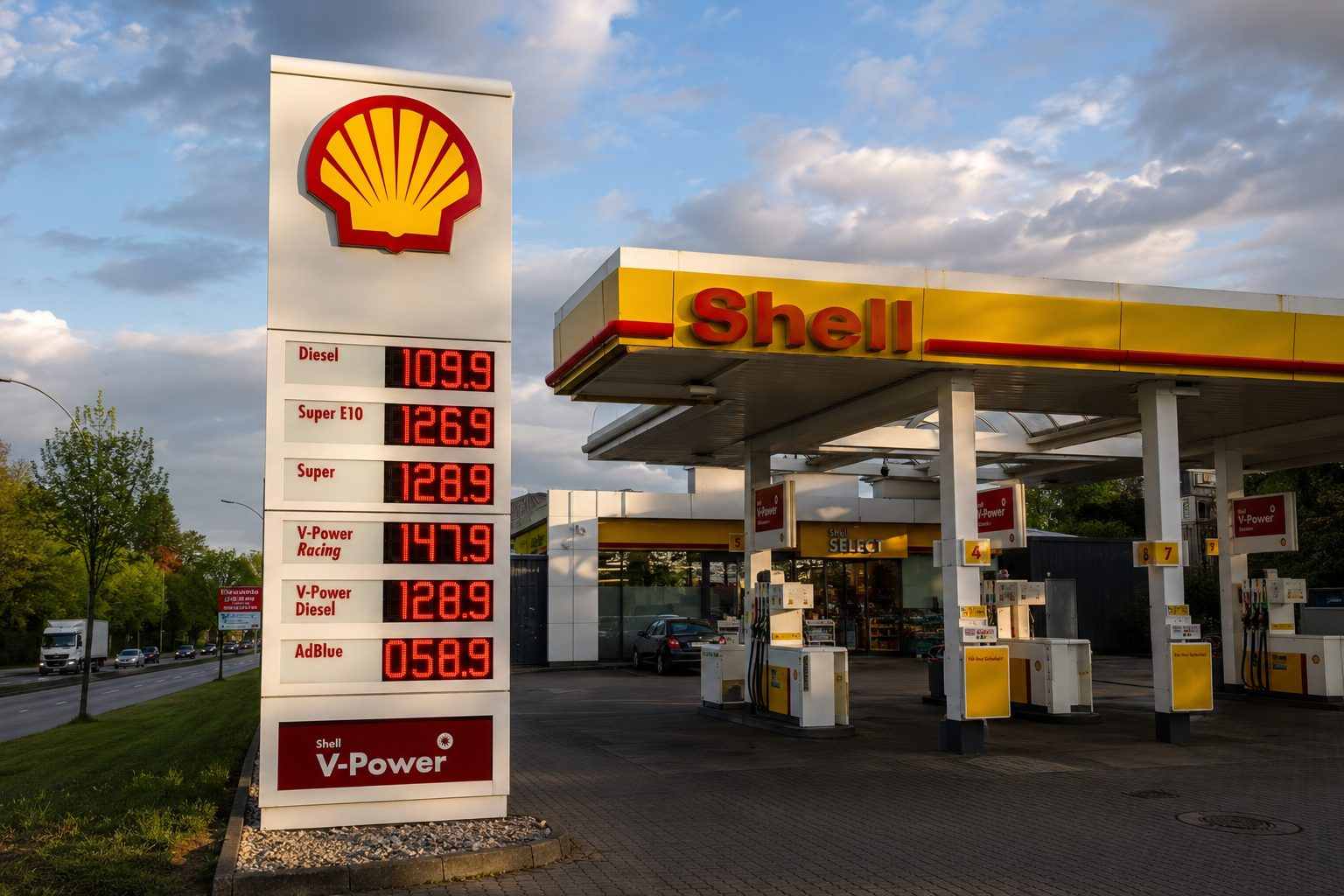
There’s also a portfolio piece here. Shell is looking to offload around 60 French highway petrol stations, according to Reuters on Tuesday. These sites pulled in €108.5 million in operating profit in 2025. Shell expects to line up a buyer in the third quarter, targeting a deal close in early 2027. This isn’t a balance-sheet mover by itself but lines up with Shell’s broader playbook: slimming down retail, steering funds toward buybacks, upstream bets, LNG, and trading.
Shell’s latest earnings snapshot sets the tone for the stock. The company posted $6.9 billion in first-quarter adjusted earnings, its go-to profit metric that leaves out certain accounting items. The dividend’s getting bumped up 5%, but quarterly buybacks are dropping—$3 billion now, down from the previous $3.5 billion. “That confidence” in Shell’s longer-term cash flows is what’s driving the dividend increase, CFO Sinead Gorman said. Reuters
Bulls have their case: Shell isn’t just weathering market swings—it’s cashing in. The company’s products segment, covering refining and trading, pulled in roughly $2.0 billion in adjusted earnings. Reuters pointed out that sharp trading has lifted European names like BP and TotalEnergies, putting them ahead of U.S. competitors such as Exxon Mobil.
The bears aren’t waiting around. The same turmoil that’s juicing trading is also hammering operations. Shell now expects integrated gas production for the second quarter to land between 580,000 and 640,000 barrels of oil equivalent per day—well below the 909,000 reported in the first quarter. The company pointed to the Middle East conflict and stepped-up maintenance as reasons for the downgrade.
Cash quality remains a sticking point. Shell pulled in $6.1 billion in cash flow from operations, but that came after an $11.2 billion drag from working capital — meaning money locked up in inventories, receivables, and similar short-term buckets. Net debt climbed to $52.6 billion. This goes some way to show why Shell opted to boost its dividend, yet kept the buyback below what some investors had hoped for.
Prediction markets aren’t offering much comfort. On Polymarket, traders price just an 8% probability that Strait of Hormuz traffic is back to normal by end-May, rising to 44% by July 31. Over at Kalshi, odds for “before Aug. 1” sit at 45%, bumping only slightly higher for “before Sept. 1” (46%) and “before Oct. 1” (58%). Oil’s premium looks justified here, but Shell faces further headaches across its gas and LNG system. Polymarket
Official figures paint a stark picture. The IEA now projects global oil supply trailing demand by 1.78 million barrels per day in 2026, flagging the risk of significant shortfalls well into the third quarter. The EIA, operating on the assumption that Hormuz remains largely shut through May’s end, puts Brent crude at an average near $106 for both May and June.
That’s keeping Shell’s chart rangebound for now—no straightforward breakout. Sure, firm oil prices give earnings a lift. But pricier crude also stirs up inflation worries and can eventually choke off demand as buyers pull back. Priyanka Sachdeva, senior market analyst at Phillip Nova, put it this way: “sharp swings are likely to persist.” Reuters
Right now, Shell isn’t behaving like a straightforward oil-price play—it’s more a test of how well management can deliver. Support comes from buybacks, asset sales, and trading profits. Yet, with second-quarter volumes down, net debt ticking up, and the outlook for Hormuz still unclear, the stock remains stuck in place.