
Dubai, July 7, 2026, 16:24 GST
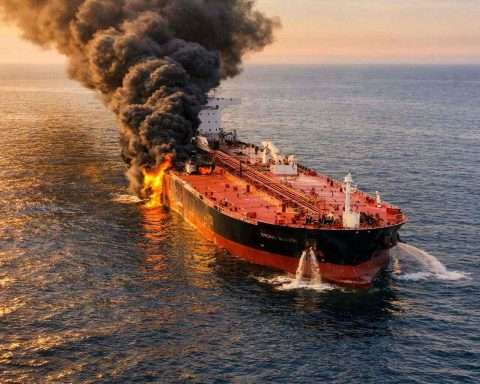
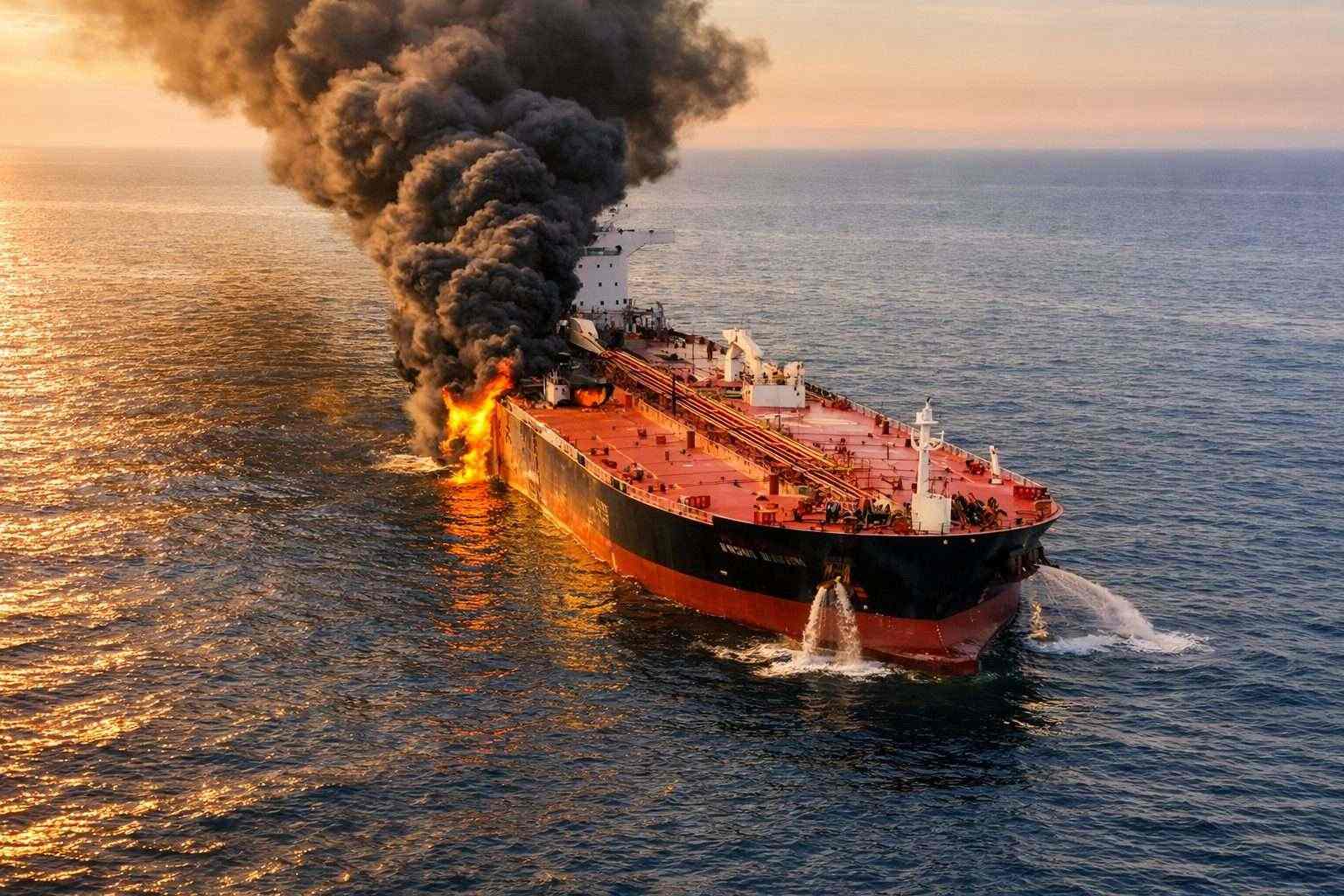
- Al Rekayyat, a Qatar LNG carrier, took a hit near Oman. A Saudi-flagged oil tanker, likely Wedyan, was damaged too.
- Vessel tracking shows traffic is still moving through Hormuz, but ships are split up, with some taking Iranian lanes and others using Omani routes. This points to a lane issue instead of a total shut-in.
- Brent moved higher after the attacks. Tanker and LNG shippers are seeing a mixed picture: gains from higher freight risk premiums, but also facing asset damage risk, off-hire time and insurance expenses.
- Capital Ship Management’s latest methanol-ready Suezmax signals owners remain focused on fuel flexibility. War-risk detours are driving short-term cash flows, but owners are still making longer-term bets.
Two tankers were hit near the Strait of Hormuz on Tuesday, snapping a weeks-long run of steadier Gulf shipping. LNG carrier Al Rekayyat, owned by Qatar Gas Transport Co. (Nakilat, QSE:QGTS), was struck near Oman’s coast. Security sources said a Saudi-flagged crude tanker, believed to be Wedyan from Bahri (National Shipping Co. of Saudi Arabia, TADAWUL:4030), was also damaged off Oman.
Dubai — Cash trading wrapped up in Riyadh and Doha. The Saudi Exchange holds its main session from 10:00 a.m. to 3:00 p.m. Riyadh time. Qatar’s open is 9:30 a.m. to 1:15 p.m. Doha time, according to the Qatar Stock Exchange.
Ship movement data gives investors a clearer picture. Bloomberg, using Kpler figures, reported about two-thirds of recent transits in Hormuz took the Iran-sanctioned northern passage, with the rest moving by the U.S.-controlled Oman route. Out of 25 ships seen crossing on Monday, just three ran down the Omani side with transponders turned on. “Traffic through the strait remains operational, but is fragmented,” Muyu Xu, a senior crude analyst at Kpler, said. Moneyweb
| Hormuz data point | Latest reading | Comparison / market read |
|---|---|---|
| Ships through the strait in week to July 5 | 211 | Dropped from 262 a week ago, a 19% slide. |
| Crossings from July 3-5 | 108 | Kpler said flows kept splitting among Iran, Oman and shadow/unknown paths. |
| Monday crossings | 25 | Just three took the Omani route with AIS turned on. Most stuck with Iran-approved lanes. |
| Brent crude at 0939 GMT | $72.88/bbl | Gained 1.24%. WTI added 1.04% to $69.26. |
“The overriding theme this morning is a ship being shot at in the Strait of Hormuz,” Saxo Bank analyst Ole Hansen said. He said if things escalate, Brent could go back to $75 and maybe $80. Reuters
The risk goes beyond just the ships that were hit. The International Energy Agency says nearly 20 million barrels a day of oil went through Hormuz in 2025. That’s about a quarter of world seaborne oil flows. The IEA also says 93% of Qatar’s LNG exports and 96% of the UAE’s LNG exports cross the strait.
| Asset or event | Owner / operator | Hard data | Investor read |
|---|---|---|---|
| Al Rekayyat LNG carrier | Nakilat QSE:QGTS | Struck roughly 8 nautical miles east of Limah, Oman; fire followed the incident. | Brings up questions around LNG shipping risks, off-hire, and war-risk costs. |
| Wedyan crude tanker | Bahri TADAWUL:4030 | Saudi tanker, flagged Saudi, likely damaged near Oman; reason not clear yet. | Bullish for Bahri in strong freight market, but more risk for the company’s ships. |
| M/T Archigos | Capital Ship Management | 157,000 dwt methanol-ready Suezmax from HD Hyundai Samho, South Korea. | Long-term play is on fuel options, though short-term issue is security along routes. |
| Saudi East-West pipeline | Saudi state infrastructure | Handles up to 7 million bpd now; could be raised by 1-2 million bpd but still in review. | Extra bypass would lower Gulf risk, though any new capacity is years away. |
Capital Ship Management has taken delivery of the Archigos, a tanker the company and shipping sources call methanol-ready and outfitted for energy savings. The new vessel has an optimized hull, upgraded propulsion, and several energy-saving systems. According to Bunker Index, Lloyd’s Register classed the ship, which also comes with a vapour emission control system.
Timing matters here. A methanol-ready Suezmax means some flexibility if fuel rules change, but after Tuesday’s Hormuz attack, safe passage is front and center for tanker owners. Even with fuel options, a ship can still get hit by higher war-risk costs, be forced to reroute, or have to go dark, all of which make it less attractive to charterers.
Bahri’s Q1 numbers show how conflict can work for and against tanker stocks. The company posted a 241% jump in Bahri Oil revenue to 3.74 billion riyals, as more VLCCs and higher freight rates lifted the top line. CEO Ahmed Ali Al Subaey said in April the focus is still “safety of our people and assets.” Bahri
Saudi Arabia is looking at a larger land route. Reuters said the country may expand its East-West pipeline to the Red Sea, which could boost capacity by as much as 2 million bpd. Zaid Belbagi at Hardcastle Advisory said the crisis has made people think about the “perils of relying solely on Hormuz.” Reuters
Reuters reported that Bahri, Nakilat, QatarEnergy, Qatar’s international media office, the Saudi government’s media office and U.S. Central Command haven’t replied yet to requests for comment.