
Melbourne, May 13, 2026, 08:07 AEST
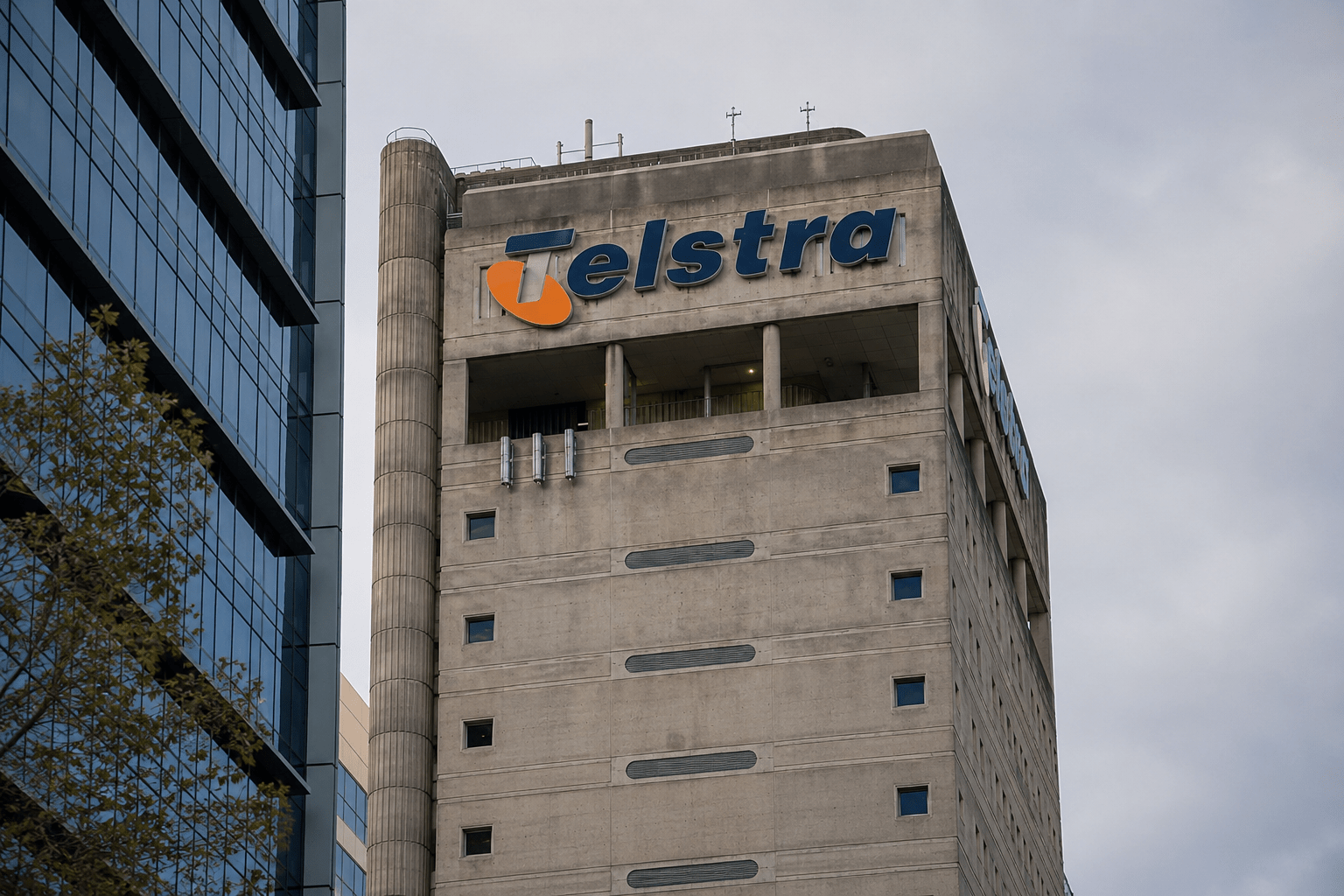
- Telstra closed at A$5.26 on Tuesday, down 0.57%, even as its on-market buyback kept absorbing stock near the same price level.
- The move was less a panic sell-off than a valuation check: the buyback is now familiar, the share price is still close to its 52-week high, and the market wants clearer upside beyond capital returns.
- Bulls point to mobile pricing, cash earnings and dividends; bears point to spectrum costs, higher rates and a sharper TPG/Vodafone attack on Telstra’s premium.
Telstra Group slipped into the close on Tuesday, ending at A$5.26 after trading between A$5.24 and A$5.31. Volume was 27.23 million shares, above Google Finance’s listed average volume of 20.15 million, so the move had real participation behind it, even if the price change was modest.
The reason the chart moved lower is not hard to trace. Telstra is still buying back stock, but the market no longer treats that as new information. The company’s May 12 buyback update showed it bought 1.66 million shares that day for A$8.75 million, an average of about A$5.26 a share — almost exactly where the stock finished. That tells a simple story: the company bid was there, but buyers were not willing to chase the stock above the day’s high.
A buyback means a company repurchases its own shares, usually to reduce the share count and lift per-share metrics. Telstra’s program is large — up to about A$1.25 billion — but it is also well advanced, with more than A$1.09 billion spent before the latest disclosed purchases. That leaves less surprise value, and surprise is what tends to move a mature telco stock.
The broader tape did not help. The ASX 200 closed lower on Tuesday, with technology and banks dragging the index down and pre-budget caution still sitting over the market. ASX data also showed the benchmark at a fresh 20-day low, so Telstra’s softer close came inside a market that was already trimming risk.
Telstra is not broken on fundamentals. In its latest half-year release, management said mobile services revenue rose 5.6%, cash EBIT grew 14%, and the board lifted the interim dividend to 10.5 cents a share. Cash EBIT is profit after operating costs and key capital outlays; in plain English, it is a stricter test of how much cash the business is really producing.
The tone from management was confident but not loose. CEO Vicki Brady said the buyback was backed by earnings growth and balance-sheet strength, and Telstra said the program was expected to support earnings and dividend per share growth. That is the bull case in one line: mobile pricing is working, costs are under control, and fewer shares should mean more earnings per share.
Bears answer with spectrum. On the results call, Brady said Telstra accepted it must pay a fair price for spectrum, the radio frequencies used by mobile networks, but she also said the company had “a different view to ACMA” on value and pointed to a roughly A$1.3 billion gap versus the regulator’s current view. That matters because spectrum is not optional; Telstra needs it to keep network quality high, and higher licence costs can eat into returns or push pressure back onto customer pricing. Telstra.com
Rates add another drag. The Reserve Bank of Australia lifted the cash rate by 25 basis points to 4.35% on May 5, and Polymarket’s June RBA market priced “No Change” at 79% and “Increase” at 22%. For Telstra, a dividend stock — meaning many investors own it for income — that is not a clean tailwind. Higher cash rates make safe yield more competitive and can cap how much investors pay for steady-but-slow growth. Reserve Bank of Australia
Competition is the other pressure point. TPG’s Vodafone brand is now leaning harder into price and coverage claims, while Optus remains the other major national rival. New ACMA rules will force Telstra, Optus and TPG to publish standardised mobile coverage maps, updated at least every three months, which could make network comparisons sharper for consumers and less forgiving for premium pricing.
That is why sentiment looks split rather than bearish. Blake Halligan of Catapult Wealth put Telstra at “Hold,” saying mobile price rises should support revenue but regulatory uncertainty around spectrum fees remains a medium-term headwind; he added that “near-term upside appears limited.” That view fits the tape: support under the stock, but not enough urgency to push it through the upper end of the day’s range. The Bull
The bull case is still respectable. Telstra has scale, mobile momentum, a 3.8% listed dividend yield, and a buyback that mechanically reduces the share count. The bear case is that investors are already paying up for that safety: Google Finance listed the stock’s P/E ratio at 26.5 and its 52-week high at A$5.46, not far above Tuesday’s close.
The ASX cash market was in pre-open at the dateline, with normal trading starting around 10 a.m. Sydney time. For the next session, the first level is plain: A$5.24, Tuesday’s low. If that holds, the buyback still looks like a floor. If it breaks, Telstra’s chart will be saying the market wants more than capital returns before it pays up again.