
NEW YORK, June 3, 2026, 09:03 (EDT)
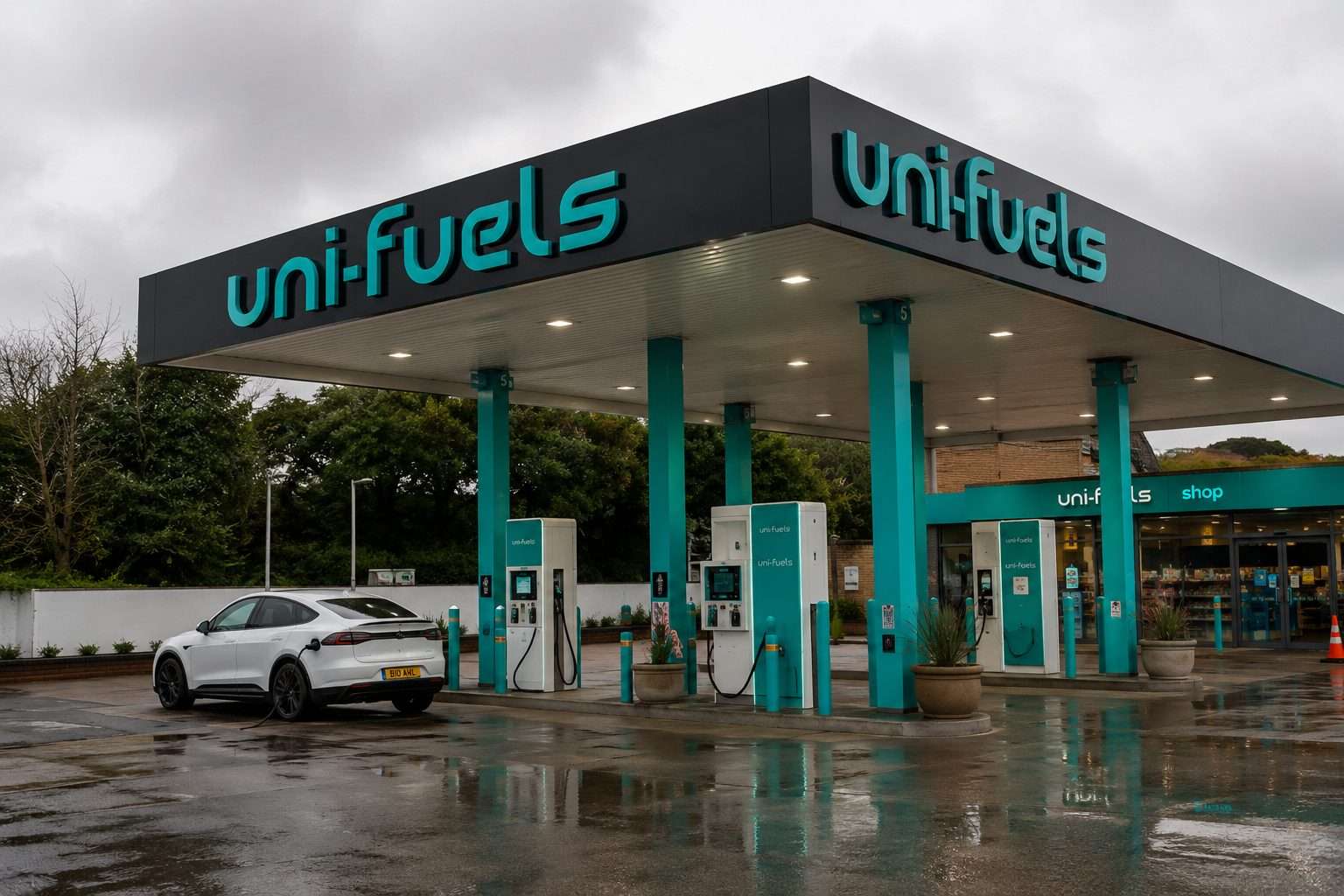
Uni-Fuels Holdings Limited shares fell in U.S. premarket trading on Wednesday, putting fresh focus on a June 8 shareholder vote that could reshape the marine fuel supplier’s capital structure. The stock was last quoted at $0.66 before the bell, down 12%, with premarket volume of about 258,000 shares, Investing.com data showed. Premarket trading means deals made before the regular Nasdaq session opens.
Why it matters now is simple: the vote comes while UFG trades below $1. The company is asking shareholders to let its board increase the votes attached to each Class B share from 10 to 100, increase authorised share capital, and carry out one or more share consolidations of up to 250-for-1 over two years. A share consolidation, often called a reverse split, combines shares and lifts the quoted per-share price without, by itself, changing the company’s value.
The shares had closed Tuesday at $0.7481, up 2.9%, but the rebound was sitting inside a rougher chart. StockAnalysis showed a market value of about $24.3 million and a 52-week range of $0.60 to $11.00, a wide band that underlines how thinly held small-cap Nasdaq names can swing.
The company’s latest operating update gives bulls something to point to. Uni-Fuels said on May 26 that first-quarter revenue rose 64% from a year earlier to $83.2 million, marine fuel volumes climbed 58% to more than 140,000 metric tonnes, and gross margin — the share of sales left after fuel costs — improved to 2.2% from 1.9%. It still posted a net loss of $376,087, and raised its 2026 revenue forecast to $320 million-$340 million. “We are encouraged by a promising start to 2026,” Chief Executive Koh Kuan Hua said, while adding that the loss was “primarily attributable to corporate communication expenses.”
There is also a live commodity angle. Brent crude was up 2.1% at $98.02 a barrel on Wednesday as renewed Middle East hostilities pushed a risk premium back into oil, Reuters reported. Emril Jamil, senior analyst for oil at LSEG, said stalled U.S.-Iran talks and warnings on stock levels were “adding upward layers in risk premium in benchmark prices.” Reuters
Broader U.S. equity trading was cautious before the open. Dow futures were down 0.3% and S&P 500 futures were slightly lower, while Nasdaq 100 futures rose, Reuters reported. Jefferies economist Mohit Kumar wrote that the firm’s base case still pointed toward a deal, “even if it’s a fudge to get the Strait of Hormuz opened.” Reuters
Uni-Fuels sits in a crowded bunkering market — bunkering is ship refuelling. World Kinect says its marine fuel and lubricant services cover more than 1,200 ports, Bunker Holding says it has a presence in more than 1,500 ports, and Minerva Bunkering says it operates across 150 ports. That scale gap is part of the story for UFG: the company is trying to grow quickly, but it is doing so from a much smaller base.
For 2025, Uni-Fuels reported revenue of $263.9 million, up 70%, and marine fuel volumes of more than 535,000 tonnes, up 112%. Koh said gross profit had increased, but margins were hit by “competitive market conditions, market share expansion, and higher operating costs associated with our growth and transition as a listed company.”
But higher fuel prices and faster sales are not an automatic win. Uni-Fuels has warned that marine fuel price swings can raise working capital needs — the cash and credit needed to run day-to-day trading — and that customer credit risk, supplier delivery failures and tighter financing could hurt results. The proposed increase in authorised share capital may also keep dilution risk in view, meaning existing holders could own a smaller percentage if new shares are issued.
The next test is whether the premarket drop carries into regular trade. After that, investors get the June 8 meeting, where the vote on Class B control, share capital and a possible reverse split may matter more to the stock’s near-term tape than the revenue guidance itself.