A new UW-linked analysis using passive phone data found U.S. teens average 1.16 hours of smartphone use during school hours. As 2026 begins, phone-free school laws, landline “first phones,” and under-16 social media restrictions are accelerating worldwide. 1
Published: January 12, 2026
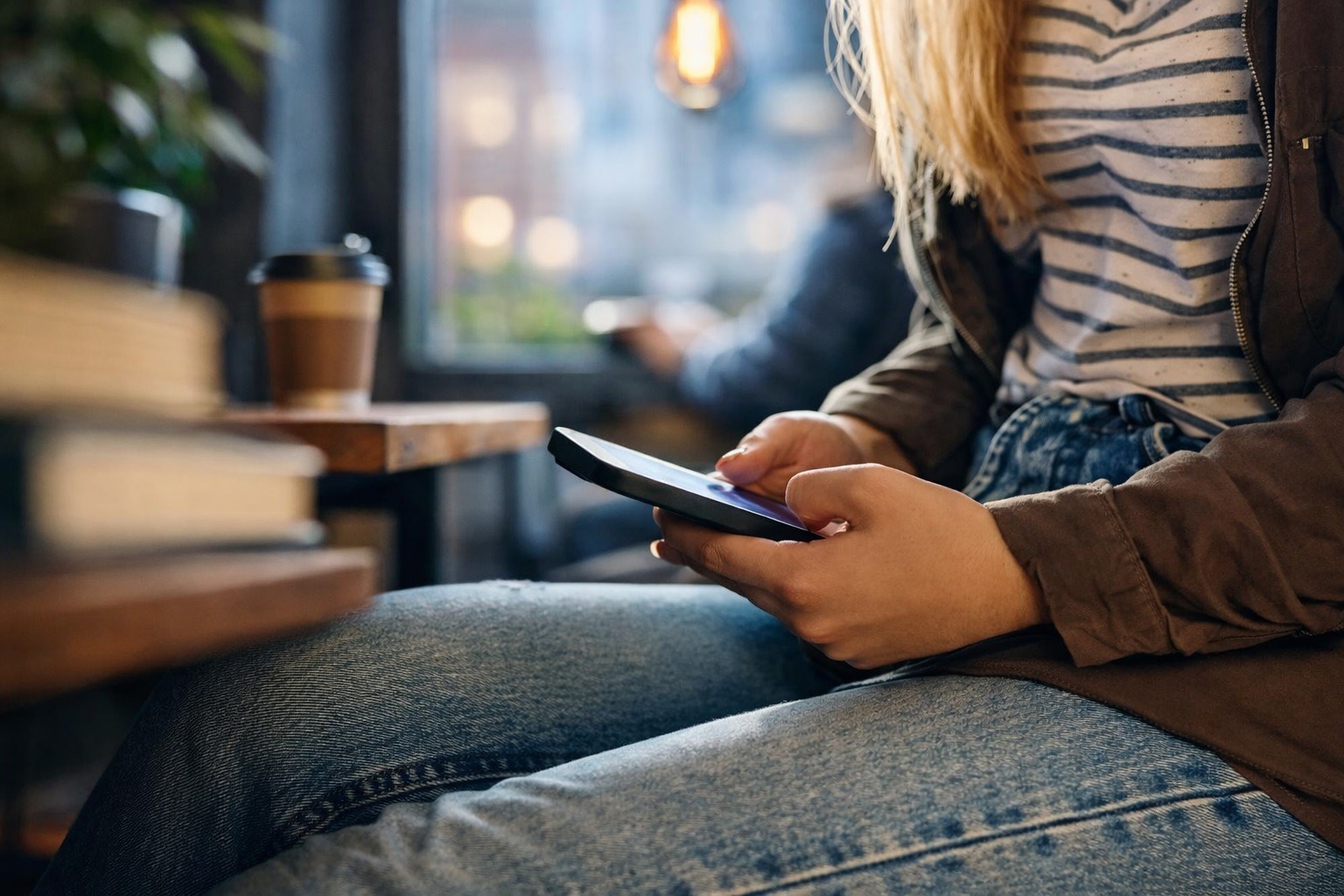
Phones aren’t just buzzing in backpacks anymore—they’re increasingly glowing under desks, in hoodie sleeves, and between the pages of a textbook. New research tied to the University of Washington adds hard numbers to what many teachers and parents say they see every day: U.S. adolescents are spending about 70 minutes (1.16 hours) on smartphones during school hours, and the biggest slice of that time is on social media. 1
As that data lands in early 2026, it’s colliding with a fast-moving policy wave: states and districts are tightening “bell-to-bell” rules, parents are experimenting with low-tech landlines to delay smartphones, and countries are pushing under-16 social media restrictions that force platforms to prove who’s really behind the screen. 2
What the UW-linked research actually tracked
Unlike surveys that rely on teens estimating their own screen time, this study used passive monitoring software—a method designed to capture real-world behavior rather than self-reports that can be off by a lot. 1
Here’s what researchers reported, based on teens enrolled in the Adolescent Brain Cognitive Development (ABCD) Study:
- Sample: 640 adolescents, ages 13–18
- Method: Passive monitoring software installed (with parent and teen consent) on Android phones
- Timeframe: September 2022 through May 2024
- Average use during school hours:1.16 hours per day
- Most-used category: Social media—Instagram, TikTok, Snapchat—followed by YouTube and games
- Higher use groups: Older teens (16–18) and teens from lower-income households 1
The senior author, UW pediatrics professor Dr. Dimitri Christakis, argues the design of popular apps is part of the problem, calling out that they are “designed to be addictive”—and that the classroom cost isn’t just lost instructional time, but fewer opportunities for students to practice in-person social skills. 1
Why this study matters beyond the headline number
A key context point from the research: most schools already have some kind of smartphone policy, but the existence of rules doesn’t automatically translate into less scrolling. The JAMA research letter notes that 99.7% of U.S. public school principals report having a smartphone policy, yet objectively measured use during school remains substantial. 3
That gap—between “policy on paper” and “phones in practice”—is driving the next phase of the debate: enforcement and what, exactly, should be restricted (class time only, or the whole day). 1
The policy rush: phone-free school rules are spreading fast
In the U.S., 2026 is shaping up as a turning point year for school phone restrictions—not because everyone suddenly agrees on the perfect model, but because momentum is building on multiple fronts: state laws, district policies, and public opinion.
New Jersey: statewide “phone-free schools” starting 2026–27
One of the biggest recent policy moves came in New Jersey. On January 8, 2026, Gov. Phil Murphy signed legislation requiring districts to adopt policies that restrict cell phones and other internet-enabled devices in K–12 schools, with district policies becoming effective in the 2026–2027 school year. 4
The governor’s office described the goal as making schools places for learning rather than “distracting screens,” and emphasized practical implementation elements like secure storage, staff training, and equitable enforcement. 4
Local coverage also highlights what districts will need to do in practice. For example, reporting on Newark notes that the law will require districts to limit student phone use during instructional hours and provide age-appropriate, grade-level guidelines. 5
Kansas: lawmakers push an “instructional time” ban
In Kansas, lawmakers are advancing a proposal that would ban phones during “instructional time”—from the start of the school day until dismissal—requiring phones to be turned off and placed in a secure, inaccessible location, with districts responsible for compliance and enforcement. 6
Why the “policy” vs. “practice” problem keeps coming up
Even researchers who support restrictions acknowledge the real-world challenges. Christakis has warned that policies in many places have been “very poorly enforced, if at all,” and that measuring outcomes will take time—especially as rules change quickly across states and districts. 1
What students are doing on phones in class—and who is most affected
Across coverage of the new UW-linked data, a consistent thread emerges: social media dominates school-hour phone use, which is one reason schools are targeting phones not just as distractions, but as a portal into always-on feeds. 1
The Stony Brook University summary of the research notes disparities that matter for policy design: Black teens and teens from lower-income households showed higher school-hour use—on the order of roughly 12 to 20 extra minutes per day in the study’s findings. 7
That raises a difficult implementation question for school leaders: if enforcement is inconsistent, restrictions can become another area where students experience rules differently depending on classroom, teacher, or campus culture—exactly why equity and clarity are repeatedly emphasized in newer state-level frameworks. 4
Public opinion: most parents support bans—even internationally
While school boards argue over logistics, public opinion is moving in a notable direction.
A separate research letter summarized by Stony Brook draws on a 2023 survey of more than 35,000 adults across 35 countries, finding more than 75% support smartphone bans in schools. In the U.S., the same reporting says around 71% of parents surveyed support bans. 7
Researchers also flagged a nuance worth watching: people who use social media more tend to be less supportive of bans, but that effect can be offset by concerns about spending “too much time online.” 7
Today’s parenting twist: landlines are back—and “Wait Until 8th” is spreading
One of the most striking “today” developments isn’t a new law—it’s a cultural shift in how some families are responding to phone pressure.
A story published today describes families committing to delay smartphones until at least eighth grade, inspired by the “Wait Until 8th” pledge. Instead of giving a child a smartphone as a first phone, some parents are giving kid-friendly landlines that only call approved contacts—aiming to build independence without opening the door to social media feeds. 2
The broader idea—parents coordinating with other parents so their child isn’t “the only one without a phone”—is central to the Wait Until 8th movement’s approach. 8
This trend is also being discussed as a wider “low-tech” turn: landlines and “dumb phones” are being reframed as not just nostalgia, but a deliberate boundary-setting tool in response to the mental-health and attention concerns tied to early smartphone exposure. 9
The global picture: restrictions are moving from classrooms to platforms
School phone bans are only one slice of a much larger youth tech debate. Today’s news also shows how quickly governments—and platforms—are being pulled into age enforcement beyond the school day.
Australia: Meta blocks nearly 550,000 underage accounts
In Australia, as the country rolls out an under-16 social media ban, reporting today says Meta disabled over 544,000 accounts across its platforms during early enforcement—mostly on Instagram, plus Facebook and Threads—during a window in December 2025. 10
The story underscores an enforcement reality that echoes school policy challenges: even with rules, the hard part is verification and compliance, and critics argue teens can still find workarounds or migrate to other platforms. 10
UK: renewed push for under-16 limits
In the UK, political leaders are again debating an under-16 social media ban, with proposals emphasizing stricter age checks. 11
Whether or not these proposals pass, they add fuel to a broader question now sitting at the center of education and parenting conversations worldwide: Should youth safety be handled through school rules, platform rules, or both? 10
If nearly every school already has a phone policy, what actually works?
The new data doesn’t magically settle the debate—but it does clarify what schools are up against: the problem is not hypothetical, and it’s not limited to a small minority of students.
Based on how states and districts are framing enforcement in early 2026, several “implementation levers” are emerging:
- Define the scope clearly: “During class” vs. “bell-to-bell” restrictions
- Make storage normal, not punitive: pouches, lockers, or classroom storage systems
- Plan for exceptions: medical needs, learning accommodations, emergencies, translation tools
- Train staff and standardize enforcement: reduce classroom-by-classroom inconsistency
- Involve students in policy design: buy-in can improve compliance and reduce resentment 4
One reason student voice matters: local reporting in Washington state notes that teens themselves are actively weighing the pros and cons of bans, and proposing more nuanced approaches than adults sometimes assume—balancing distraction concerns with the reality that phones can also be safety tools and social lifelines. 12
What parents can do right now (without waiting for a law)
If you’re a parent reading “1.16 hours at school” and thinking, “That sounds like my kid,” you’re not powerless—especially if your goal is to reduce friction rather than start a daily phone battle.
Strategies families are using in early 2026 include:
- Delay the smartphone: coordinate with other parents where possible (the core of “Wait Until 8th”) 8
- Try a “voice-first” device: a landline or limited-contact phone as a first step 2
- Create school-day norms: phone stays out of bedroom overnight; notifications limited during homework; agreed-upon app boundaries
- Ask the school for clarity: what is allowed, what isn’t, and how enforcement works—consistency matters
- Treat it like a skills issue, not a moral one: many researchers stress that these apps are built to hold attention; teens often need structure and practice to self-regulate 1
The big unanswered question: do bans improve learning and well-being?
Support is growing, but researchers are explicit about what’s still missing: robust evidence on the impacts of school smartphone bans on academic performance, mental health, and social development, especially across different communities and enforcement styles. 7
That’s why the UW-linked study is so influential right now: it doesn’t prove bans work, but it strengthens the argument that something is happening during school hours at scale—enough to justify serious policy experiments and careful evaluation. 1