
NEW DELHI, May 7, 2026, 02:38 IST
Vivo on Wednesday unveiled its X300 Ultra and X300 FE in India, slotting the ₹1,59,999 X300 Ultra at the very top of its local lineup and sharpening the competition in high-end Android phones. For buyers looking for something less eye-watering, the X300 FE lands at ₹79,999 but still leans on ZEISS-branded camera features to woo the photography crowd.
India’s phone market is tilting higher-end, even as total demand remains sluggish. According to Counterpoint Research Director Tarun Pathak, devices above ₹30,000 “emerged as the fastest-growing in 2025,” with the premium segment up 11% year-on-year, now accounting for 22% of all shipments. ETTelecom.com
But this rollout comes into a tougher market. CyberMedia Research is projecting a 10% to 12% drop in India’s smartphone shipments in 2026, citing pricier DRAM and NAND memory chips—core parts for RAM and storage—and sluggish demand for lower-end phones. “Clear cost pressure” marked the market’s start to 2026, according to Menka Kumari, senior analyst at CMR. Business Standard
Vivo is pushing to lift a mass-market brand into pricier territory. According to CMR figures reported by Business Standard, Vivo captured 21% of India’s smartphone share in the first quarter of 2026, edging past Samsung at 17%, OPPO with 14%, and Xiaomi at 12%.
Vivo’s X300 Ultra lands as a single configuration: 16GB RAM and 512GB storage, priced at ₹1,59,999, and available in Eclipse Black or Victory Green. According to Gadgets 360, pre-orders kicked off on Vivo’s own site as well as Amazon and Flipkart. The handset officially hits both online and offline shelves starting May 14.
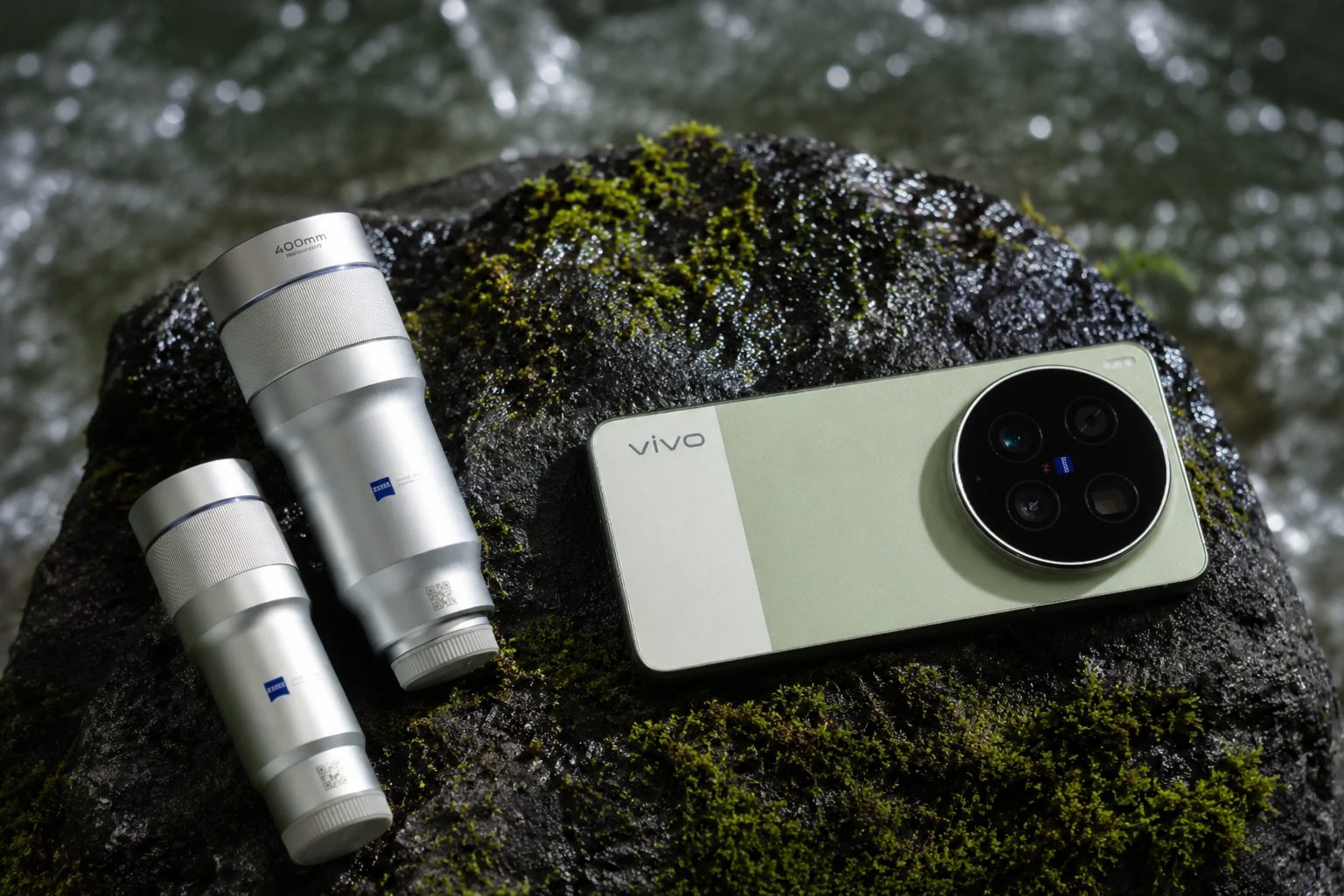
For Vivo, the camera takes center stage. On its India microsite, the company breaks down the specs: there’s a 14 mm 50-megapixel ultra-wide, a 35 mm 200-megapixel main camera, and an 85 mm 200-megapixel telephoto—all with optical image stabilisation to reduce hand-shake blur. Buyers can also use ZEISS telephoto extenders at 200 mm and 400 mm equivalents; these add-on lenses are designed for shooting distant subjects.
The X300 Ultra packs Qualcomm’s Snapdragon 8 Elite Gen 5 and a 6.82-inch 2K AMOLED screen pushing a 144Hz refresh rate, alongside a hefty 6,600mAh battery. Charging? 100W wired, 40W wireless, according to Gadgets 360. It ships with OriginOS 6, built on Android 16.
Vivo’s X300 FE trims down size and cost but sticks with much of the brand’s familiar imaging approach. The company’s website details a 50-megapixel ZEISS telephoto lens offering 3x optical zoom, a 50-megapixel primary camera, an 8-megapixel ultra-wide, plus a 50-megapixel shooter up front. 91mobiles points to a 6.31-inch LTPO AMOLED screen, meaning the refresh rate can shift dynamically to boost battery efficiency.
According to 91mobiles, the FE comes in at ₹79,999 for the 12GB/256GB version, while the 12GB/512GB variant is tagged at ₹89,999. Vivo opens sales on May 14. If you’re after longer-range shots but don’t want to step up to the Ultra, a separate telephoto extender kit is on offer.
The intent isn’t hard to spot. According to Aaj Tak, Vivo is taking aim at iPhone and Samsung’s premium lineups, leaning heavily on camera capabilities as a selling point for the new series. With the X300 Ultra priced squarely in flagship territory, it’s clear Vivo wants in on the same high-end shortlist.
There’s a chance camera specs alone won’t cut it if consumers hold off on upgrades or higher financing costs hit demand. CMR’s Kumari pointed to heavy price sensitivity in the value-for-money bracket, warning that hesitation here could slow the shift to handsets priced ₹80,000 up to over ₹1.5 lakh.
Vivo is touting longer software support, a sticking point for premium phone owners who tend to hold onto their devices. According to The Times of India, the X300 Ultra and X300 FE will see five years of OS updates and seven years of security patches—an approach that puts Vivo in line with the longevity strategies of Apple and Samsung.