
London, April 30, 2026, 16:02 BST
- BAE Systems’ Hägglunds division now sits on an $8 billion order backlog, with demand for armored vehicles from European buyers still going strong.
- The company kicked off production of its NavGuide military GPS receiver and has made its first deliveries.
- London shares climbed Thursday, pushing the stock into the spotlight ahead of BAE’s annual meeting set for May 7.
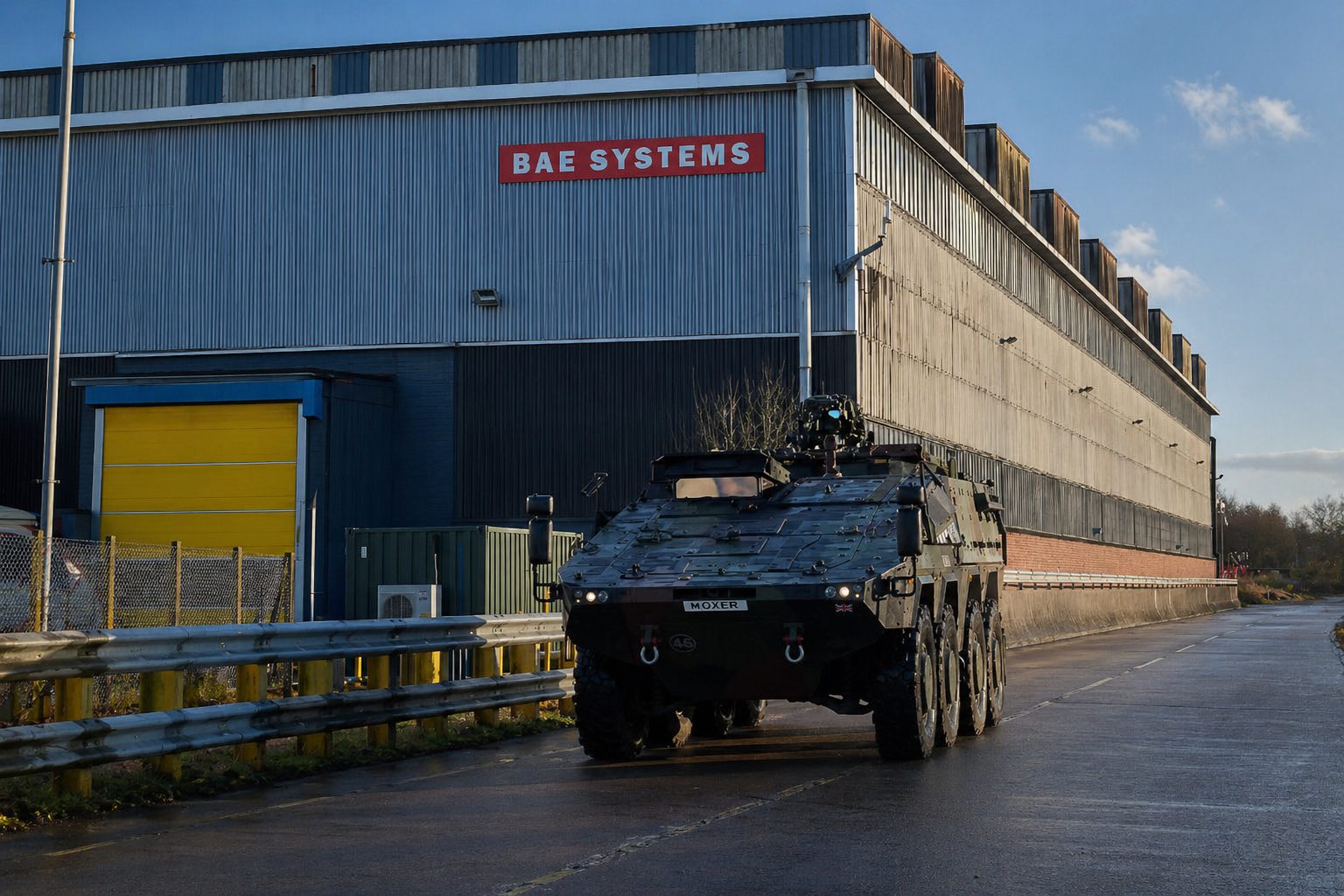
BAE Systems plc’s Hägglunds, the Swedish armored-vehicle unit, has carved out a bigger role in the UK defense group’s growth, its backlog swelling to roughly $8 billion. That surge comes after years of European military buildup tied to the Ukraine war.
Now, investors are putting BAE’s booming demand to the test, looking past headlines to see if the company can keep turning that into higher production, profits and cash. BAE’s annual general meeting lands on May 7, while half-year results are on the docket for July 30, according to its investor calendar.
BAE shares climbed 1.7% to 2,035.5 pence at 1547 BST, Fidelity data showed. That bounce followed a softer close the day before. Investors keep tracking the big UK-listed defense group as Europe and the U.S. step up spending on arms, ships, aircraft and electronic gear.
Tommy Gustafsson-Rask, who runs BAE Systems Hägglunds, said in an interview with Reuters that its order book has soared from just a few hundred million dollars to $8 billion—an “enormous development,” as he put it. Over at the unit, staff numbers have shot up to 2,600 from 800 since 2020, and Reuters noted that output is up 400% during the same stretch. Reuters
Growth is anchored by the CV90 infantry fighting vehicle, a tracked armored transporter designed for battlefield troop deployment. Reuters has tallied over 1,300 CV90s already sold, another 600-plus in the pipeline, and says Hägglunds is eyeing contracts for another 500 units from five European countries this year.
BAE announced this week that its NavGuide GPS receiver is now in production, with first deliveries already underway. The company calls NavGuide a portable, field-ready M-Code GPS receiver. M-Code, intended for military use, offers stronger protection against jamming and spoofing efforts that can disrupt or deceive satellite-based navigation.
NavGuide isn’t simply a stand-in for the aging Defense Advanced GPS Receiver, according to Luke Bishop, BAE’s director of Navigation and Sensor Systems. Over 650,000 DAGR units have shipped worldwide since 2004, BAE said. The company also noted NavGuide has already found its way onto more than 30 vehicle platforms.
The product push comes on top of a wider order base. Back in February, BAE posted 2025 sales at £30.66 billion, up 10%, with underlying EBIT — earnings before interest and tax — rising 12% to £3.32 billion. The company also logged a record order backlog of £83.6 billion.
Back then, Chief Executive Charles Woodburn described BAE as working through a “new era of defence spending.” The company forecast 2026 sales growth between 7% and 9%, with underlying EBIT seen rising 9% to 11%. BAE did note, though, that uncertainties—geopolitical and otherwise—still hang over its outlook. BAE Systems
Rivals are moving. Saab—Sweden’s top defense employer and builder of the Gripen jet—held an order backlog topping 274 billion Swedish crowns, according to Reuters. On the armored vehicle front, Romania chose Rheinmetall’s Lynx KF41 for a roughly 3.4 billion euro ($4 billion) deal, bypassing BAE’s CV90 after a head-to-head contest.
The bullish scenario still looks messy. Reuters noted that CV90 vehicles in Ukraine are still exposed to drone threats, and Romania’s move highlighted how European land-system contracts can slip to competitors, despite broader market growth. Production limits, supply-chain headaches, and the pace of government spending continue to cap what the rearmament surge can deliver.
BAE listed 3.16 billion ordinary shares trading as of April 30, according to a Thursday regulatory filing, with total voting rights at 3.01 billion once treasury shares lacking voting rights were left out. That’s the denominator investors use for UK disclosure requirements.