
LONDON, April 24, 2026, 12:58 BST
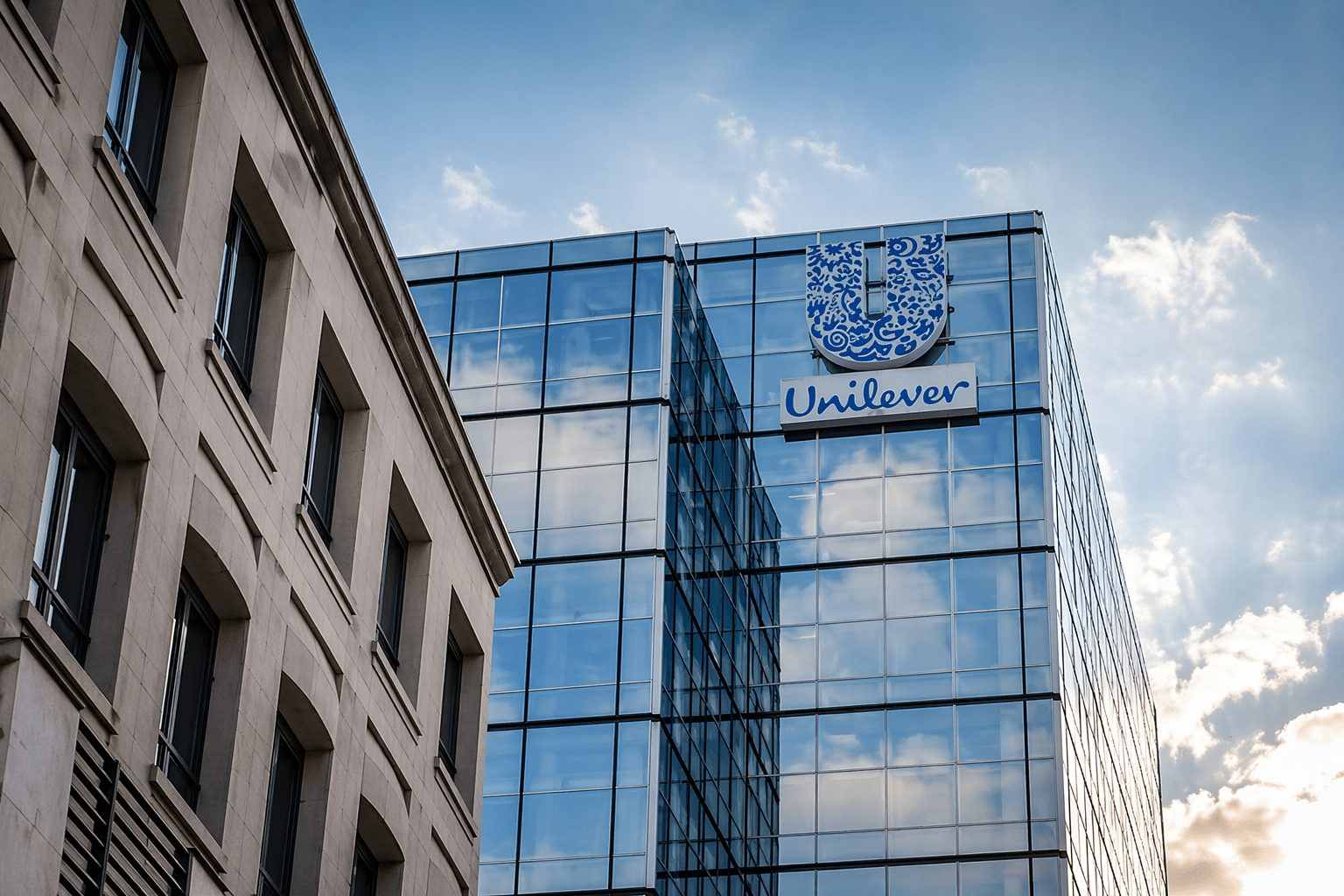
Unilever PLC’s Nigerian arm posted stronger first-quarter numbers: revenue jumped to ₦59.17 billion, up from ₦46.98 billion a year ago, according to unaudited results. Profit before tax reached ₦13.42 billion, compared with ₦10.75 billion. Net profit moved higher as well, coming in at ₦7.02 billion versus ₦5.55 billion.
The clock’s ticking for Unilever, with its first-quarter trading statement set for April 30. Investors want to see if the company’s emerging-market units are still pulling their weight when it comes to volume growth, especially as Unilever ramps up its focus on beauty, personal care, and home care.
Unilever shares advanced 1.57% to 4,298.50 pence in London as of 12:42 BST, according to delayed data. But even with today’s bounce, the stock remains off 16.24% over the past year—hardly a vote of confidence from investors in the break-up narrative.
Unilever Overseas Holdings BV had 75.96% of the Lagos-listed company’s ordinary shares as of the end of March, according to the filing. That left a free float of 24.03%.
“Increased volume was the main driver this quarter,” Managing Director Tobi Adeniyi said, noting that innovation and better execution played their part in the results. Adeniyi added the company plans to stick with its “play-to-win” culture across all categories. Businessday NG
Foods led the way for the unit, pulling in ₦37.69 billion in revenue for the first quarter. Personal care followed at ₦15.84 billion, while beauty and wellbeing trailed with ₦5.64 billion. Roughly 98% of those sales came from inside Nigeria, making the figures closely linked to what local households are spending.
The food-heavy mix broadens the impact of these figures. Just last month, Unilever and McCormick struck a deal to merge Unilever Foods with the U.S. spice giant, using a Reverse Morris Trust structure to spin out and combine the businesses in a tax-smart fashion. Unilever Foods gets an approximate $44.8 billion price tag in the deal, which still needs sign-off and is slated to wrap up by mid-2027.
Unilever says the deal will carve out a €39 billion portfolio centered on beauty, wellbeing, personal care and home care. This month, the company told investors it’s guiding for 2026 underlying sales growth at the low end of its 4% to 6% target range. Volume growth, they’re projecting, will be at least 2%.
Analyst opinions on the McCormick plan continue to diverge. RBC’s James Edward Jones flagged the “minimal control premium” in the deal. Over at Quilter Cheviot, consumer staples analyst Chris Beckett described it as “transformational for McCormick, but incremental for Unilever.” Reuters
Competition is shifting as well. With a streamlined Unilever, comparisons to Procter & Gamble and L’Oréal become more direct—investors often favor a tighter focus in beauty and personal care. Barclays analyst Warren Ackerman figures the pure-play angle will “be worth it in the end.” Still, Will Nott at Ninety One cautions that a re-rating “won’t happen overnight.” Reuters
The challenge: Nigeria’s gains might not feed straight through to group earnings. Inflation in Nigeria ticked up to 15.38% in March—its first rise in a year. On top of that, European unions want lengthier job guarantees linked to the McCormick deal, stacking up more hurdles for management.
Unilever gets a clear pointer from Nigeria for now: volume-driven gains in a tough market, significant foods exposure right as that division is being separated, and a share price yet to win over doubters. The bigger exam lands next week.