
SYDNEY, May 4, 2026, 01:02 AEST
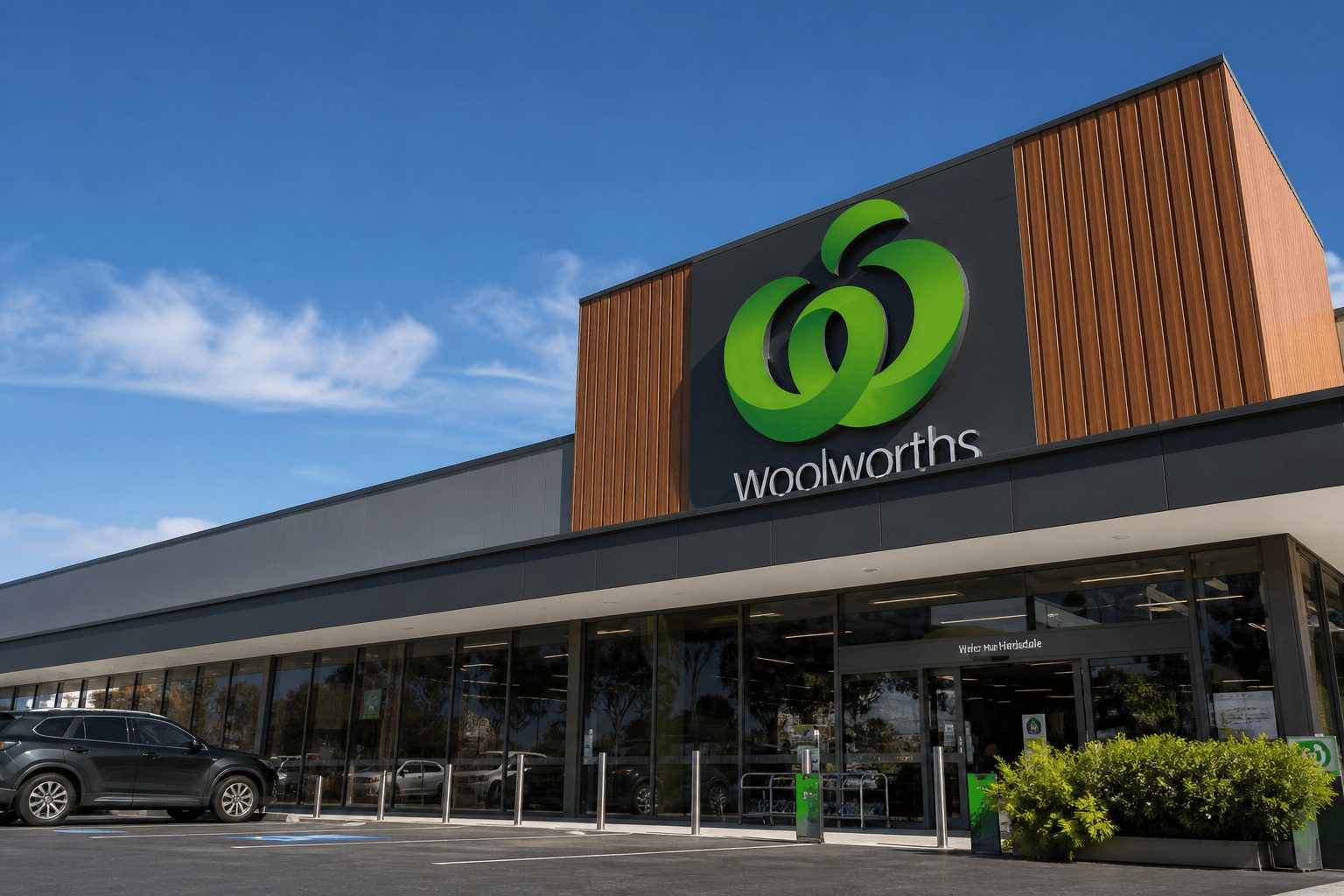
This week, Woolworths Group Ltd isn’t drawing attention for its sales numbers—investors are zeroing in on how much profit the supermarket giant might sacrifice to keep shoppers coming through the door. Australia’s top grocer cut its domestic food earnings outlook and is freezing prices on 300 household staples, moves that sent shares tumbling as much as 9.8% after last week’s announcement, according to Reuters.
It’s a tough moment for Woolworths. Shoppers are laser-focused on price tags, freight expenses keep climbing thanks to fuel, and there’s still no word from the Federal Court on the regulator’s challenge to those “Prices Dropped” ads. Sales numbers are there, yes—but tougher questions on margins and trust aren’t going away.
Woolworths finished the session on May 1 at A$34.15. According to the company’s investor page, shares swung from a high of A$34.77 to a low of A$33.93 during the day. The stock remains under pressure after the recent profit-warning rout.
The trading update didn’t disappoint on headline numbers. Woolworths reported group sales up 4.5% to A$18.095 billion over the 13 weeks to April 5. Australian Food sales picked up 5.9%, and online revenue soared 20.2% to A$2.7 billion. CEO Amanda Bardwell credited “value, fresh, convenience and execution” for the lift in sales momentum. Still, the company flagged that Australian Food EBIT — operating profit before interest and tax — won’t reach the upper band of its earlier mid-to-high single-digit growth outlook.
Starting May 1, Woolworths is locking in shelf prices on 300 of its own-label or exclusive goods for three months—think eggs, bread, chicken, sausages, pasta, and nappies. The retailer says it’ll shoulder supplier cost hikes for those products. Bardwell pointed to “a new wave of uncertainty” from the Middle East conflict, adding that “a little certainty can go a long way.” Woolworths Group
The legal trouble is a different story, but still comes down to pricing. According to the Australian Competition and Consumer Commission, Woolworths misled customers on 266 different items from September 2021 through May 2023—raising prices briefly, then advertising “discounts” that left prices equal to or above the earlier standard. Coles faces a parallel lawsuit from the ACCC over 245 products. ACCC
Woolworths pushed back against the claims. Wrapping up, lawyer Robert Yezerski SC argued customers weren’t duped—he insisted higher prices were around long enough to be considered the normal price. Justice Michael O’Bryan, for his part, challenged elements of the ACCC’s position, noting the promotion didn’t seem “nefarious or inherently misleading.” A ruling is still to come. ABC News
Joel Gibson, consumer expert at Zyft, told the Guardian he didn’t expect the case to “slow them down much.” Rachel Waterhouse, chief executive of the Australian Shareholders’ Association, put it simply: “most people are waiting for an outcome.” For Prof Nicole Gillespie, a trust expert at University of Melbourne, the incident has already thrown a “shadow of suspicion” over promotional tickets for plenty of shoppers. The Guardian
The picture from Coles is a little uneven. Woolworths’ chief competitor reported group sales revenue of A$10.703 billion for the third quarter, a 3.1% increase. Supermarket revenue climbed 4.0%, while online supermarket sales surged 24.8%. Coles pointed to more supplier cost requests coming through, plus rising fuel, freight and packaging expenses. CEO Leah Weckert noted “value and availability” will be important for shoppers in the coming months.
But there’s risk on both sides. Should fuel and supplier costs start to ease, Woolworths’ price freeze could hold up sales volumes with only limited margin impact. If, instead, costs keep climbing—or if the courts rule against the supermarkets—the company could be looking at tougher price cuts, possible fines, and a further hit to consumer trust. University of Melbourne law professor Jeannie Paterson noted the Woolworths and Coles decisions will set a benchmark for “truth in advertising” across the Australian retail sector. Find an Expert
Woolworths faces a straightforward challenge—and a tricky one. It needs to maintain full baskets, hold on to suppliers, and convince investors that ramping up value won’t undercut the profits it’s supposed to safeguard.