
iQOO is having a busy start to 2026. Fresh coverage over the past few days has put the spotlight on the iQOO 15 as a “flagship-killer” gaming phone, while new reports also outline a major Samsung Display panel upgrade that goes “polarization‑free.” At the same time, iQOO has confirmed the iQOO Z11 Turbo launch date in China, and multiple certification sightings suggest more devices—iQOO 15R, iQOO Z11x 5G, and vivo V70 FE—could be approaching release windows in additional markets. Notebookcheck
What’s new today: the iQOO 15’s subtle “Halo” LED ring gets a spotlight
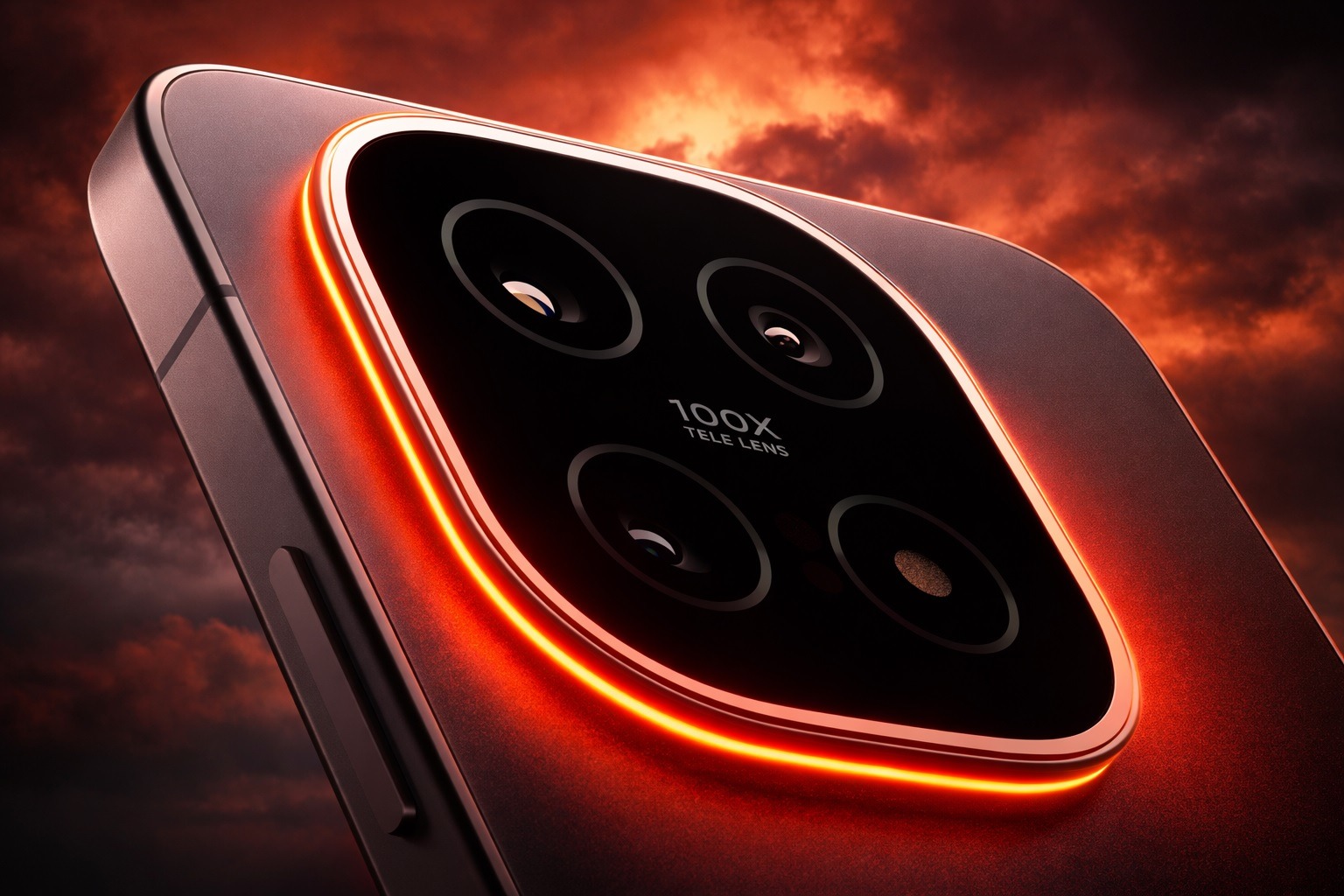
One of the newest January 11 developments comes from a Notebookcheck feature that highlights a design detail many brands have experimented with—but few have nailed in a way that feels useful day-to-day: a colored LED ring around the rear camera module, dubbed Halo Dynamic Light.
According to Notebookcheck, the ring can be customized not only in color, but also in how it lights up, acting as a visual cue for notifications, calls, and even gaming events—a concept reminiscent of Nothing’s Glyph lighting, but implemented in a subtler way on the iQOO 15.
This “small” feature matters because iQOO is clearly trying to broaden the iQOO 15’s appeal beyond raw performance—and user-facing touches like lighting, haptics, and fast biometrics are exactly where many gaming phones historically fell short. Notebookcheck
iQOO 15 review highlights: 144fps gaming plus long software support
The iQOO 15 is being framed as a performance-first phone that also checks a lot of everyday boxes. In its review verdict coverage, Notebookcheck calls the iQOO 15 an “affordable gaming smartphone” and notes hardware like UFS 4.1 storage, LPDDR5X RAM, and Sony camera sensors—but one detail stands out in 2026’s flagship landscape: a claimed seven years of software updates. Notebookcheck
On the silicon side, Notebookcheck reports the iQOO 15 is powered by Qualcomm’s Snapdragon 8 Elite Gen 5, manufactured on TSMC’s N3P (3nm) process, and paired with iQOO’s in-house Q3 gaming chip that supports the main SoC during gaming.
Notebookcheck also says iQOO attributes several gaming-focused enhancements to the Q3 chip, including a real-time ray tracing algorithm, plus work on frame interpolation and improving textures/details.
Real-world gaming: PUBG Mobile hits 144fps (in specific modes)
The eye-catching claim from Notebookcheck’s testing is that the iQOO 15 can reach up to 144fps in PUBG Mobile at low and medium detail settings, with a stable frame rate measured via GameBench. In UltraHD, Notebookcheck says the phone shows the usual 40fps behavior (and that frame interpolation doesn’t affect UltraHD).
That last point is important: iQOO can legitimately market “144fps gaming,” but it’s still tied to game settings/modes—as is usually the case with high-frame-rate Android gaming. Notebookcheck
The display story: Samsung “LEAD” polarization‑free OLED comes to iQOO 15
If the iQOO 15’s chipset is the headline for gamers, its display technology is shaping up to be the device’s biggest conversation starter beyond the gaming crowd.
A KR-Asia report says the iQOO 15 uses a 6.85-inch Samsung 2K M14 OLED flat panel, and emphasizes Samsung Display’s LEAD technology—explained as “low-power, eco-friendly, augmented brightness, and design.” KrASIA
What “polarization‑free” means (and why it matters)
In simple terms: smartphone OLED stacks often include a polarizer layer to reduce reflections and improve visibility. The trade-off is that polarizers can “eat” a lot of light, pushing the panel to use more power for the same brightness.
KR-Asia, citing Samsung Display, says LEAD improves power efficiency by removing the polarizer and introducing a new stack structure; it adds that eliminating the polarizer increases light transmittance by more than 1.5x at the same power consumption, allowing similar brightness at lower power.
Samsung Display’s own materials describe the same idea: with LEAD, removing the polarizer helps the panel achieve over 1.5x transmittance for the same power—or alternatively, the same brightness using less power—and also positions it as eco-friendly by reducing the need for plastic polarizers.
The hard part: reflections and color washout
Polarizer-free OLED isn’t “free wins” across the board. KR-Asia notes that displays without polarizers are uncommon partly because of challenges like higher reflectance and potential color washout. KrASIA
To address this, the report says iQOO and Samsung Display developed a nano photolithography color filter with more precise pixel-level film application, plus an overlapping film design and anti-reflective coating to reduce ambient reflections. The result is described as an expanded color gamut of 118% NTSC.
KR-Asia also claims the display solution required nearly 20 months of joint R&D work and multiple validation cycles—suggesting this wasn’t just a drop-in panel swap.
Brightness, dimming, and “eye comfort” features
KR-Asia reports a long list of display tuning details that are becoming increasingly central to premium phones:
- Local peak brightness up to 6,000 nits for specific scenarios like gaming/live streaming, with global peak brightness listed at 2,600 nits (as described in the report).
- A mix of 2,160Hz PWM dimming at low brightness and DC dimming at higher brightness.
- A triple ambient light sensor system that iQOO says improves response speed by up to 40% when moving between lighting environments.
- Dolby Vision certification and TÜV Rheinland certifications for “Full Care Display,” “Circular Polarization,” and “Flicker‑free,” according to the same report. KrASIA
As always, some of these numbers and experience claims will ultimately depend on real-world testing and how the phone behaves under sustained heat and brightness loads—but the direction is clear: iQOO wants the iQOO 15 to be discussed as a display phone as much as a gaming phone.
iQOO Z11 Turbo launch date confirmed: January 15 in China
While the iQOO 15 is already in the spotlight, iQOO’s next big headline is its upcoming Z-series performance device.
Gadgets 360 reports that iQOO has confirmed the iQOO Z11 Turbo will launch in China on January 15, and notes it is already available for pre-order via Vivo’s online store.
Beebom’s coverage aligns on timing, also stating the China launch is set for January 15, 2026, with an event time listed as 19:00 CST.
Key specs and positioning: big battery + gaming extras
Gadgets 360 says iQOO has also discussed a Q2 e-sports chip for the Z11 Turbo, positioning it for enhanced gaming performance.
The same report adds several major specs and pricing details that matter for the midrange-to-upper-midrange gaming segment:
- A 7,600mAh battery with 100W wired fast charging (with “Direct-Drive Power Supply 2.0,” per the report’s translation). Gadgets 360
- A thickness of 7.9mm and weight around 202g.
- A teased China price range of CNY 2,500–3,000.
- Snapdragon chipset branding is reported as Snapdragon 8 Elite Gen 5 in parts of the article, while another section uses Snapdragon 8 Gen 5 wording—so it’s best to treat final naming/spec confirmation as something to verify at launch.
Gadgets 360 further reports a 6.59-inch 1.5K display and a 200-megapixel main camera, plus an IP68 + IP69 dust/water resistance claim.
Beebom adds more design flavor, describing a “porthole-style” look and a squircle camera module with two rear cameras aligned horizontally, along with multiple color options named in the report. Beebom Gadgets
Certification sightings: iQOO 15R, iQOO Z11x 5G, and vivo V70 FE appear in multiple regions
Beyond launches and reviews, the other big signal in early 2026 is certification activity—often the earliest strong hint that a phone is getting closer to market.
Gizmochina reports that:
- iQOO 15R has appeared with model number I2508,
- iQOO Z11x 5G appears with model number I2507, and
- vivo V70 FE appears with model number V2550,
including listings in Indonesia’s SDPPI and references to additional certifications.
The Tech Outlook adds more granular details, saying iQOO 15R (I2508) appears across SDPPI (Indonesia), SIRIM (Malaysia), and also shows up in EEC (Europe) and BIS (India) databases—suggesting broader regional preparations.
For the vivo V70 FE, Gizmochina says a TÜV listing indicates support for 90W fast charging, though other specifications remain unknown from certifications alone.
Is iQOO 15R a rebrand of the iQOO Z11 Turbo?
Multiple outlets are floating a familiar idea: a China-first model launching under one name, then arriving in other markets as a renamed variant.
- Gizmochina explicitly suggests the iQOO 15R could be a rebranded iQOO Z11 Turbo.
- The Tech Outlook also states it may be a rebrand, while noting there isn’t enough benchmarking evidence to be definitive.
- A Gadgets 360 certification-focused report frames the same possibility, saying iQOO 15R is rumoured to arrive as a rebranded Z11 Turbo, and confirms the Bluetooth SIG listing shows model number I2508 tied to the iQOO 15R moniker.
- Beebom similarly references the 15R rebrand idea when discussing the Z11 Turbo’s prospects outside China.
For now, the safest takeaway is: certifications strongly suggest the iQOO 15R name exists and is nearing launch steps, while the rebrand angle remains plausible but not confirmed until iQOO officially states it.
Why this matters: iQOO is trying to own “performance value” in 2026
Viewed together, the week’s iQOO headlines outline a clear strategy:
- iQOO 15: premium flagship platform performance with a real push on display engineering and “quality of life” touches like haptics, biometrics, and the Halo Dynamic Light ring. Notebookcheck
- iQOO Z11 Turbo: big-battery performance positioning with a near-term launch (Jan 15) and aggressive-sounding pricing expectations in China.
- iQOO 15R / Z11x / vivo V70 FE: certification trail pointing to more releases and potential regional expansion.
If iQOO can keep the promised balance—flagship-grade chips, modern OLED tech, high refresh rates, and large silicon-anode batteries—while maintaining pricing that undercuts more mainstream flagships, 2026 could be a strong year for the brand in the “flagship killer” category. Notebookcheck
Quick FAQ
When is the iQOO Z11 Turbo launching?
January 15, 2026 in China (with the event time reported as 19:00 CST), and it’s already up for pre-order according to reports.
What’s the standout feature of the iQOO 15 display?
A Samsung 2K M14 OLED panel using Samsung Display’s LEAD approach, which removes the polarizer layer to improve efficiency—Samsung says transmittance can be increased by more than 1.5x at the same power.
What’s the iQOO 15’s notable design feature highlighted on Jan 11?
Notebookcheck’s Jan 11 coverage focuses on Halo Dynamic Light, a customizable LED ring around the camera module that can signal notifications, calls, and gaming events.
Which upcoming iQOO/vivo phones are showing up in certifications?
Reports point to iQOO 15R (I2508), iQOO Z11x 5G (I2507), and vivo V70 FE (V2550) appearing across platforms like SDPPI, BIS, SIRIM, EEC, and TUV (with a 90W charging hint for V70 FE).