
NEW YORK, Jan 21, 2026, 12:11 (EST)
- On Wednesday, NOAA extended its geomagnetic storm warnings, maintaining the possibility of aurora sightings through the evening.
- Space weather agencies reported that a rapid coronal mass ejection triggered by this week’s X-class solar flare caused rare and severe conditions.
- A thin crescent moon means darker skies for planet watching, though cloud cover and storm intensity will ultimately shape what viewers catch sight of.
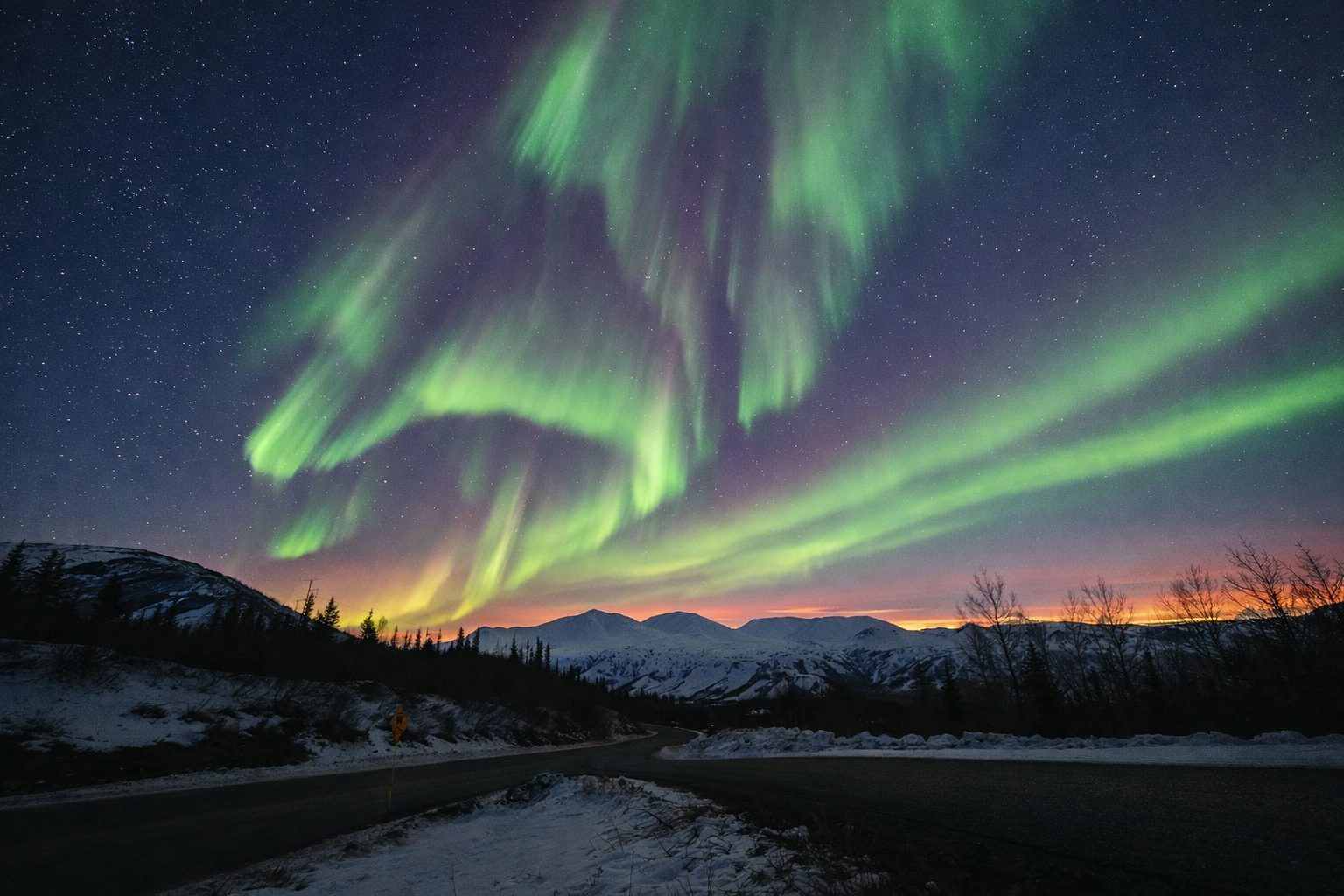
U.S. space weather forecasters extended geomagnetic storm warnings on Wednesday, indicating auroras might be visible farther south than normal—potentially reaching as low as New York—as the aftermath of a strong solar eruption persisted. NOAA alerts recorded a severe event late Tuesday, with auroras possibly visible as far south as Alabama and northern California, though forecasts predict weaker activity later in the week.
The revived “night sky tonight” craze has a catch: geomagnetic storms can mess with satellites, navigation signals, and radio communications, even as they provide a rare spectacle for stargazers. Shawn Dahl, a service coordinator at NOAA’s Space Weather Prediction Center, noted that the current storm’s strength hasn’t been witnessed in over twenty years. The Guardian
A coronal mass ejection (CME)—a surge of solar plasma and magnetic fields—came after an X-class solar flare spotted on Jan. 18, the European Space Agency reported. ESA noted the disturbance hit Earth roughly 25 hours later, with a high-energy particle shower peaking at severe levels on Jan. 19, driving the geomagnetic storm to “the top of the warning scales.” European Space Agency
Britain’s Met Office, one of the few around-the-clock prediction centres, reported a G4 geomagnetic storm lighting up the skies across the U.K. early this week. Remarkably, sightings stretched unusually far south, reaching into northern Italy. “We observed a G4 geomagnetic storm overnight on Monday into Tuesday,” said Krista Hammond, the space weather manager. She noted these storms typically happen “a couple of times a year” during this phase of the solar cycle. Met Office
NOAA flagged another danger tied to the event: a solar radiation storm caused by fast-moving charged particles, not the magnetic disruptions behind auroras. The storm hit S4 (severe) on NOAA’s five-level scale — a rare intensity — posing risks like increased radiation for astronauts and planes flying polar routes. Satellites and high-frequency communications near the poles also faced added strain.
Space weather physicist Tamitha Skov described the radiation storm as having a relatively “soft” particle spectrum—strong overall but missing the extreme energies required to penetrate down to the ground, Space.com reported. This difference is crucial since the greatest operational hazards occur above the atmosphere, where satellites and astronauts face reduced shielding. Space
In New York, the night sky plays along nicely: a waxing crescent moon, shining at roughly 8.5% illumination, will leave the skies darker than usual. Jupiter stays visible for most of the night. Saturn shows up best right after sunset. Uranus and Neptune are also within reach for binoculars this evening, provided the skies stay clear, according to timeanddate.com’s local sky chart.
Auroras at mid-latitudes usually appear low on the northern horizon, often just faint pale arcs to the naked eye. Cameras, though, can reveal more colour with longer exposures. Observers get the best views away from city lights, with an unobstructed view to the north and enough time for their eyes to adjust.
Beyond the U.S., the Met Office’s space weather operations centre issued a G3 Kp warning extending into Wednesday evening UTC. They also maintained proton-flux warnings, highlighting ongoing monitoring by several forecasters of lingering impacts.
The very factors that enable auroras also complicate predicting them. Storm intensity can plunge suddenly, and the magnetic field’s direction within approaching solar wind can reverse, dulling the display despite promising headline figures; then clouds can spoil the view entirely.
Wednesday offers a brief treat for skywatchers: a darker moon paired with a bright Jupiter. There’s also a chance—no guarantees—that the northern lights might make a rare appearance in areas that seldom catch them.