
WASHINGTON, January 22, 2026, 08:15 EST
- NASA reports that TESS is pausing its work on Sector 99 to focus on a special observation of interstellar comet 3I/ATLAS.
- The special pointing occurs from Jan. 15-22, and the data will be publicly archived immediately, with no proprietary period.
- Researchers note that the timing coincides with a near-opposition geometry, which can enhance the precision of comet dust measurements.
NASA has shifted its planet-hunting satellite TESS to focus on a special observation of interstellar comet 3I/ATLAS, pausing its usual star survey for exoplanet searches. The updated schedule reveals TESS will point along the solar system’s ecliptic from Jan. 15-22, then pick up again with its Sector 99 campaign.
The timing is crucial since a recent paper predicted 3I/ATLAS would line up within less than a degree of the Earth-Sun axis this Thursday—a configuration called near-opposition. At such tiny viewing angles, dust can produce an “opposition surge,” a nonlinear brightness spike caused by the way light scatters off particles. arXiv
Interstellar comets are rare visitors. According to NASA, 3I/ATLAS is just the third confirmed object detected moving through our solar system from beyond, following 1I/’Oumuamua in 2017 and 2I/Borisov in 2019. NASA also confirms it poses no threat to Earth.
On Jan. 16, the TESS Science Support Center announced that the comet campaign has been assigned to Sector 1751. This ecliptic pointing aims to keep the comet’s path confined to a single detector while steering clear of anticipated scattered light. TESS is capturing both full-frame images and short-cadence target pixel files along the comet’s trajectory. The data will be made available through the Mikulski Archive for Space Telescopes immediately, with no proprietary hold.
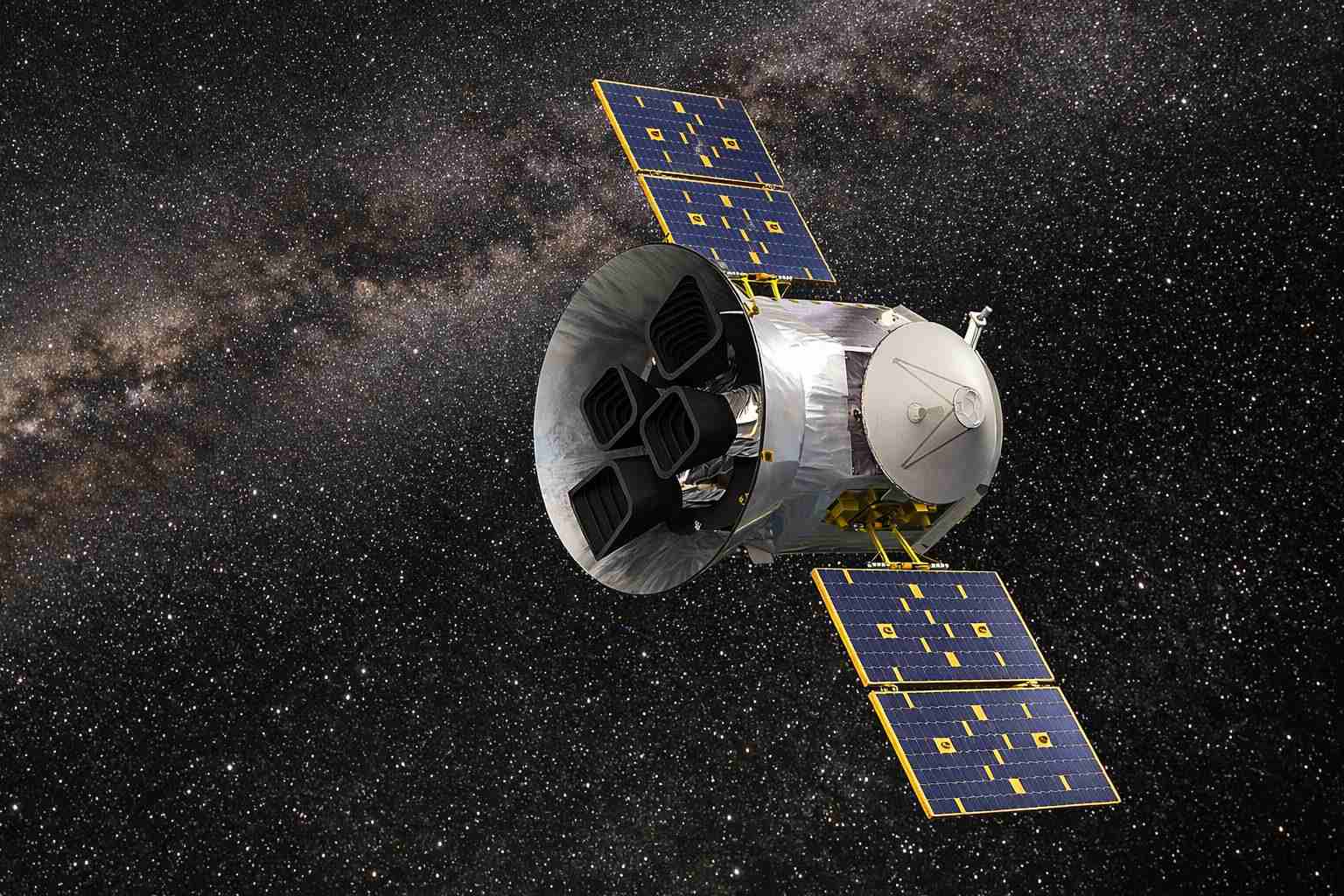
TESS — which stands for Transiting Exoplanet Survey Satellite — typically monitors stars for faint dips in brightness indicating a planet passing in front. When observing a comet, those same brightness readings reveal how activity fluctuates as gas and dust vaporize and the nucleus spins.
When ATLAS spotted the object back in July 2025, University of Hawaii astronomer Larry Denneau, a co-principal investigator on the survey, admitted they were still working to confirm the fundamentals. “Beyond that we do not know very much,” he told Reuters, as teams scrambled to secure larger telescopes for follow-up observations. Reuters
NASA officials turned to data from the Hubble and James Webb Space Telescopes to push back against online rumors that the object was artificial. “We love that the world wondered along with us,” said NASA science chief Nicola Fox during a November briefing. Oxford astrophysicist Chris Lintott dismissed the alien spacecraft theory as “simply nonsense.” Reuters
Researchers are now after cleaner physics. Data taken near opposition could reveal how reflective the grains are and whether the dust is compact or fluffy — clues that reveal how material was processed in another star system before the comet was ejected into interstellar space.
The payoff isn’t guaranteed. Any increase in brightness due to viewing geometry must be distinguished from typical fluctuations in comet activity, all while the object fades as it travels outward against a crowded star field.
After focusing on the comet, TESS will jump back into its planet-hunting mission. But with 3I/ATLAS, time’s working against us: it grows fainter, more distant, and tougher to track each week.