
WASHINGTON, Jan 30, 2026, 14:17 (EST)
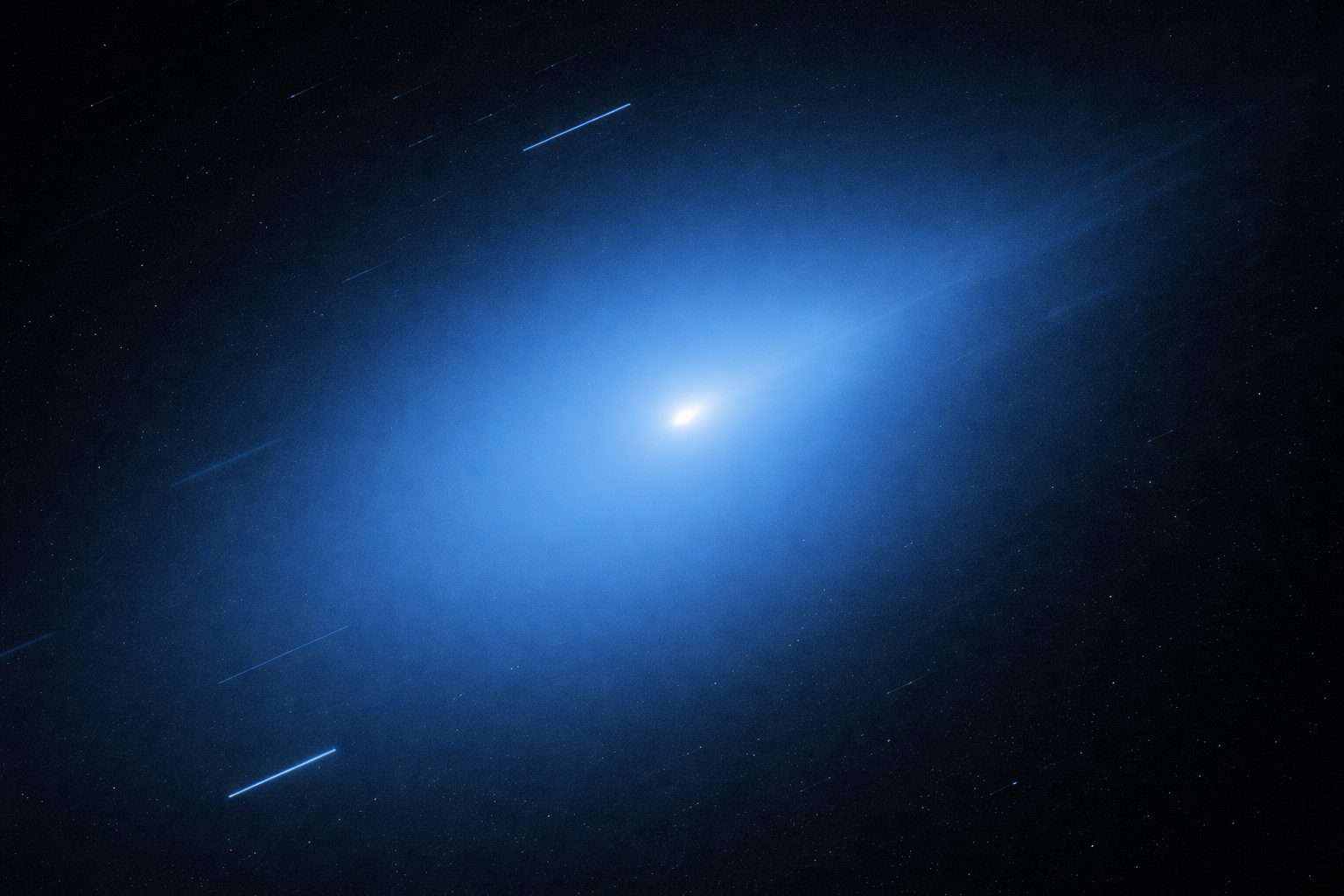
- In January, NASA’s TESS captured a fresh series of images featuring interstellar comet 3I/ATLAS.
- Scientists aim to analyze the comet’s brightness variations to better understand its rotation and activity.
- Already on its way out of the solar system, this object is just one of three known interstellar visitors.
NASA’s TESS spacecraft, known for hunting planets, has snapped new images of the interstellar comet 3I/ATLAS. This recent dataset offers scientists a close-up look at how the comet is acting as it leaves our solar system.
Why this matters now: 3I/ATLAS ranks just third among known objects confirmed to have originated outside our solar system. Time is ticking for gathering valuable observations as it dims and moves away.
Scientists gain a rare measurement here: steady, repeated snapshots spanning hours and days. This timing can uncover a spin signal—the light dimming and brightening as the nucleus rotates—and track changes in the comet’s jets and dust emissions.
TESS tracked the comet during a special observation period from Jan. 15 to Jan. 22. Space.com shared a short video made from images captured on Jan. 15 and again on Jan. 18–19. The footage contains a gap because the spacecraft went into “safe mode” after a solar-panel glitch, restricting its activities. Space
A NASA blog post reported the comet’s brightness at around 11.5 in apparent magnitude, a scale astronomers use to measure brightness. That puts it about 100 times dimmer than what the naked eye can detect. According to NASA, TESS data from Jan. 15 to 22 are publicly accessible through the Mikulski Archive for Space Telescopes.
Daniel Muthukrishna, an MIT researcher who helped compile the TESS images, noted that the spacecraft’s broad field of view allows it to “identify and monitor comets and asteroids out to large distances.” Sci.News: Breaking Science News
TESS was designed to spot exoplanets—planets beyond our solar system—using the transit method, detecting tiny dips in a star’s brightness as a planet passes in front. Thanks to its wide field of view, it can also track closer objects moving across its frame over extended periods.
Reports say the comet was spotted on July 1, 2025, by the ATLAS survey telescope located in Rio Hurtado, Chile. TESS had actually captured it earlier in archived data, but astronomers only managed to isolate it later by stacking—merging multiple observations together.
Other observatories, such as the Hubble and James Webb space telescopes, have also snapped images of 3I/ATLAS, BBC Sky at Night Magazine reported. Teams are racing to collect as much data as possible before the object vanishes from sight.
Researchers plan to track repeating patterns in the light, offering insights into the nucleus’s rotation and the intensity of its dust and gas emissions. These clues will allow scientists to compare this visitor’s composition and activity with comets formed near our own Sun.
Still, the brief observation window and the interruption from TESS’s safe mode complicate efforts to nail down the spin. Plus, jets from the comet can blur the data, and pinpointing the object’s exact birthplace in the galaxy remains unlikely.