
MENLO PARK, California — January 30, 2026, 11:29 PST
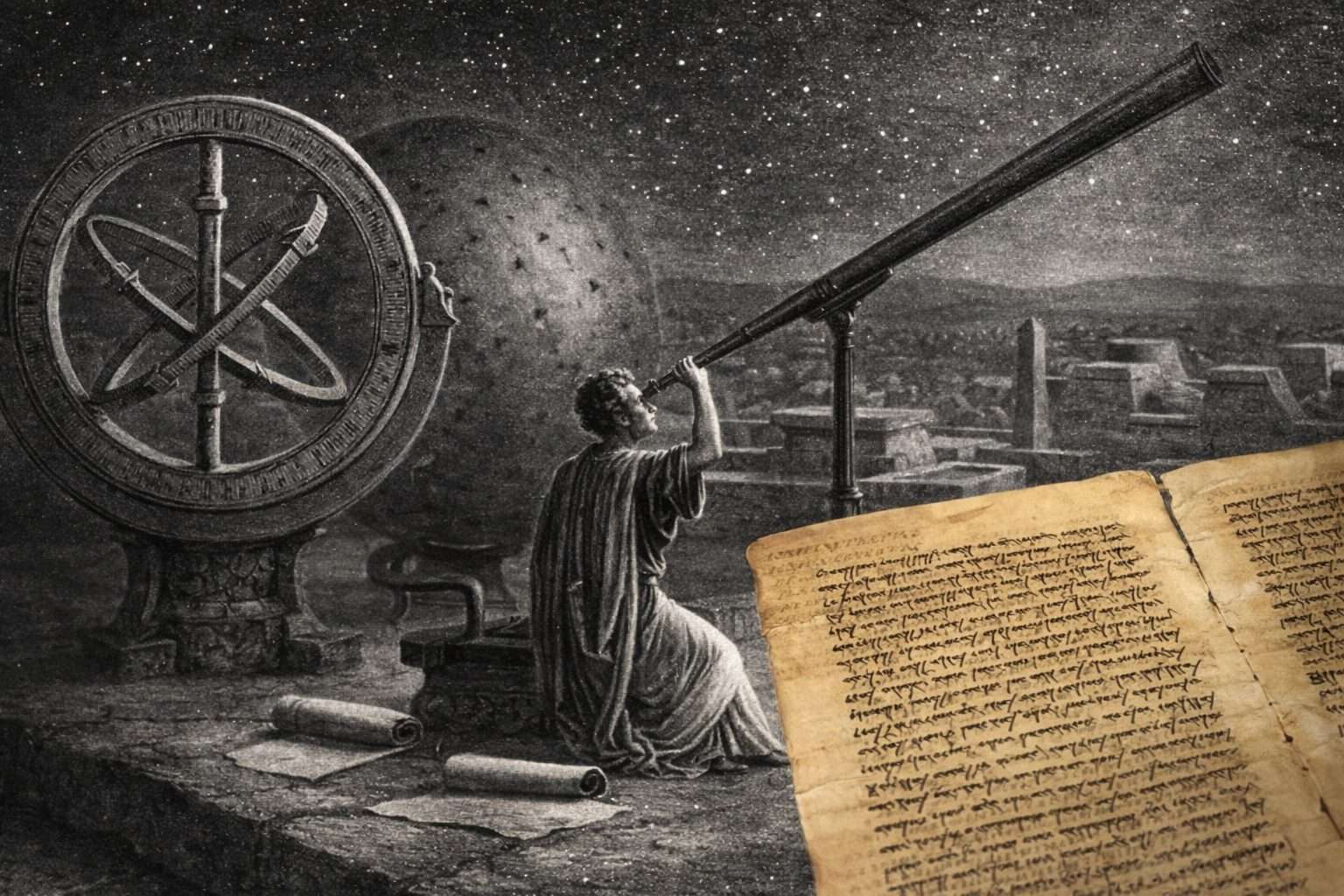
At the SLAC National Accelerator Laboratory, researchers harnessed X-ray beams from their synchrotron—a type of particle accelerator—to unveil erased star maps hidden within a centuries-old palimpsest, a manuscript that was scraped clean and reused. These pages, part of the Codex Climaci Rescriptus, include fragments linked to an ancient star catalog credited to the Greek astronomer Hipparchus, the lab reported.
Timing is crucial since early Greek scientific records are scarce, and star catalogs provide the raw data that later astronomers relied on. Just a few lines of coordinates can clarify historians’ understanding of who observed which stars—and when.
This is an unusual merging of fields. Instruments designed to study particles and materials are now aimed at delicate parchment, mainly because the chemical signatures of ancient inks often outlast the visible text.
The manuscript pages were moved from the Museum of the Bible in Washington to SLAC inside humidity-controlled cases, carried by hand due to the parchment’s extreme age and fragility, Popular Mechanics reported. To minimize harm, scanning uses short X-ray pulses focused precisely to detect traces of ink that had been scraped off or overwritten.
At SLAC’s Stanford Synchrotron Radiation Lightsource, researchers applied X-ray fluorescence imaging—tracking how elements emit light when hit by X-rays—to differentiate ink layers by their makeup. Newer writing showed higher iron levels, while older text left behind calcium-rich traces. Victor Gysembergh from France’s CNRS, who led the study, said the catalog’s significance made the team “pull out all the stops.” Samuel Webb, a lead staff scientist at SLAC, noted the documents were in good shape. Physicist Uwe Bergmann of the University of Wisconsin–Madison added that they quickly realized they had “good results.” Scientific American
The hidden layer holds an ancient Greek poem about the sky, along with an appendix featuring “coordinates of the stars discussed in the poem, and then little sketches of the star maps,” explained Minhal Gardezi, a physicist at the University of Wisconsin–Madison. The technique works because X-rays excite trace elements in the ink—elements you can’t see but that remain present, Bergmann said. These fragments have also stirred debate about whether the second-century astronomer Ptolemy copied Hipparchus. Gysembergh weighed in, saying, “That’s not plagiarism, that’s science.” Science News
Hipparchus lived around 150 B.C., but most of what we know about him comes from later sources since his original works mostly disappeared. That’s why any surviving copy, even if battered by centuries of erasure and reuse, instantly grabs attention.
For historians, this isn’t just about old star names. Matching the recovered coordinates with modern star positions could reveal how accurate early naked-eye astronomy actually was and shed light on how later catalogs built on earlier observations.
The process can still fail. Ink residues come out uneven, marks often survive only in fragments, and each scan walks a tightrope between pulling a clear signal and putting strain on parchment that’s been scraped and rewritten over centuries.