
BOULDER, Colo., Feb 2, 2026, 08:11 (MST)
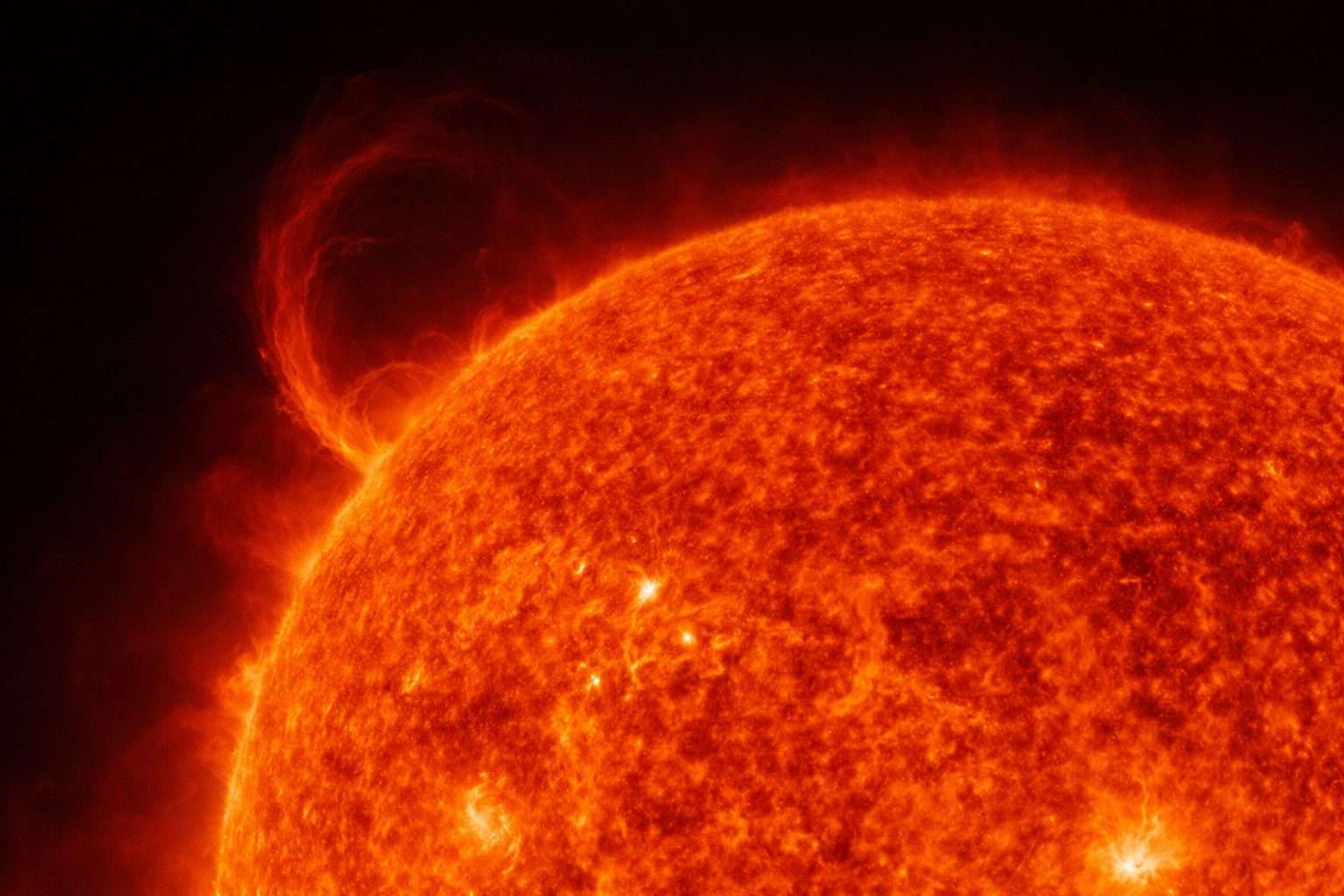
- NOAA reported a powerful X8.1 flare from active Region 4366, which might have caused some minor solar material effects around Feb. 5.
- NASA recorded four intense X-class flares between Feb. 1 and early Feb. 2, highlighted by an X8.1 flare.
- U.S. forecasters have raised the chances of radio blackouts and spotted a slight risk of a minor radiation storm over the next two days.
U.S. space-weather experts reported that an active sunspot group unleashed another powerful X8.1 solar flare. Modeling of the linked coronal mass ejection indicates most of the ejected material will pass to the north and east of Earth, with only potential glancing impacts expected late on Feb. 5 UTC. NOAA’s Space Weather Prediction Center noted the same region has been firing off M- and X-class flares since early Monday, and it’s expected to remain active.
This is crucial since intense flares can interfere with high-frequency radio signals relied on by aviation and maritime sectors, while also weakening navigation signals on Earth’s sunlit side. If a coronal mass ejection — a magnetic-field-laden cloud of charged plasma — accompanies the flare, satellites and power grids are at greater risk, especially if it heads straight toward them.
NOAA’s latest three-day forecast predicts an 80% chance of minor-to-moderate radio blackouts through Feb. 4, with a 40% daily chance of a strong event during that same timeframe. Following the late Feb. 1 X8.1 flare, a minor solar radiation storm (S1) is expected on Feb. 2. Geomagnetic storm activity, however, isn’t anticipated anytime soon.
NASA, which tracks the Sun using spacecraft like the Solar Dynamics Observatory, reported that between Feb. 1 and early Feb. 2, the Sun unleashed four powerful flares. These were classified as X1.0, X8.1, X2.8, and X1.6. The agency pointed out that “X-class” marks the strongest category of flares, with the accompanying number indicating their relative intensity. NASA Science
Space.com noted that the same active region unleashed a rapid series of powerful flares in the past day, prompting forecasters to watch closely for eruptions that might send material into space—potentially affecting aurora visibility and conditions near Earth.
The NOAA radio blackout scale spans from R1 to R5, with R3 labeled as “strong.” Such events can disrupt shortwave communication and cause navigation signals to falter briefly, particularly over sunlit areas where the upper atmosphere experiences heightened ionization.
The bigger question now is what happens next. A flare sends a quick burst of radiation to Earth, but the heavier damage usually hits if a coronal mass ejection follows—especially when its magnetic field aligns well with Earth’s.
Forecasting remains tricky. A CME hitting with the wrong orientation might just pass by, leaving only auroras behind. But if it’s better aligned, the resulting geomagnetic effects can far exceed early predictions.
Currently, NOAA and NASA are zeroing in on Region 4366 as the chief risk factor. Should this area continue to emit X-class flares in the coming days, the chances increase that one could fire off a more direct, faster-moving cloud heading straight for Earth.