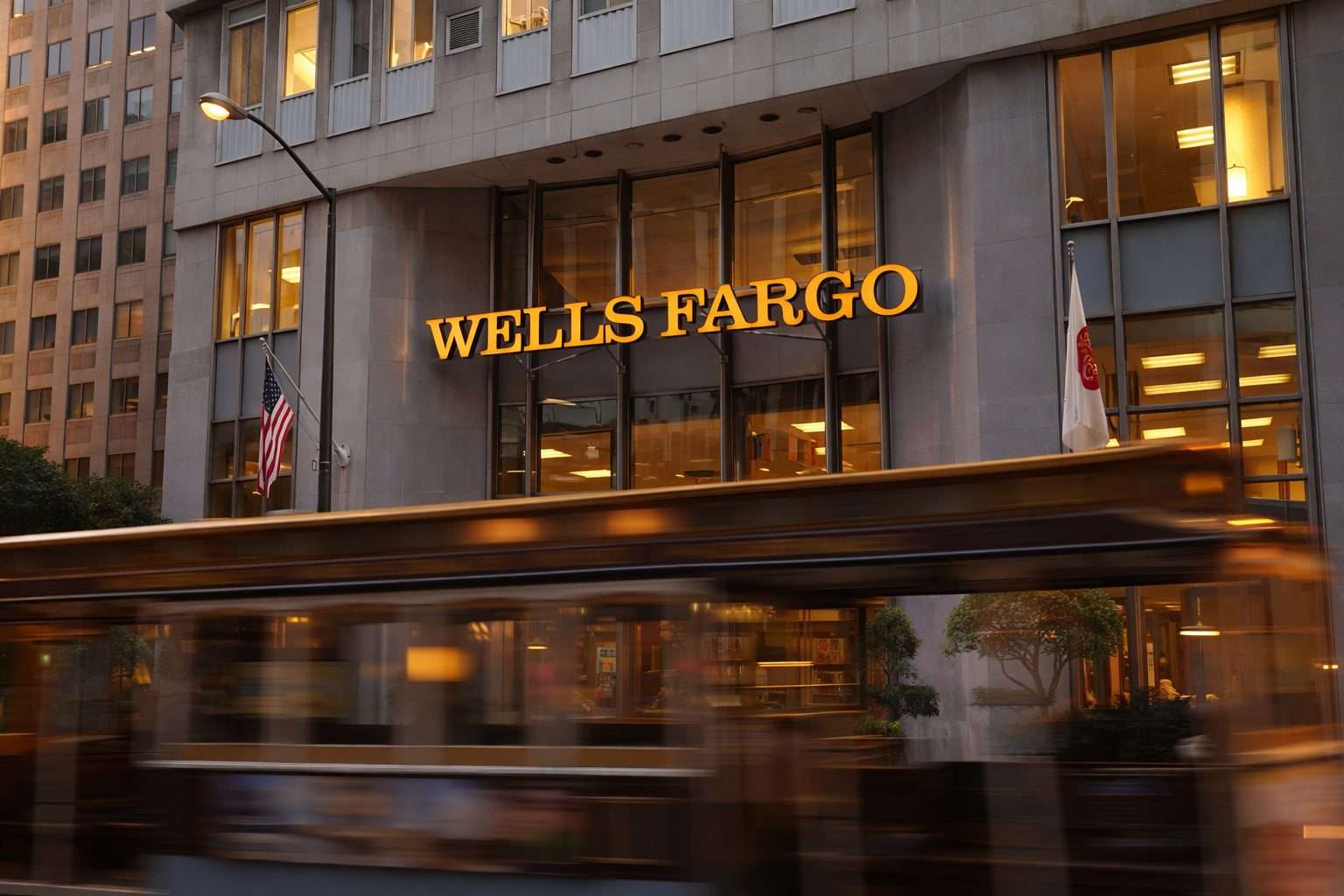

New York, March 1, 2026, 13:14 EST — The market is closed.
- Wells Fargo (WFC) closed out Friday at $81.45, dropping $4.85 for a 5.62% decline.
- Bank stocks slipped into the end of the month after a UK mortgage lender went under.
- Traders are eyeing new information about lender exposure, with Friday’s U.S. jobs report also on the radar.
Wells Fargo & Company ended Friday at $81.45, sinking $4.85, or 5.62%. February wrapped with a jolt as the stock was caught in a broader selloff among banks.
News that several banks—including Wells Fargo—have exposure to the collapse of Market Financial Solutions Ltd sent ripples through the sector. The troubled UK mortgage firm, now headed into “administration,” is at the center of a growing mess. Court filings in London revealed administrators believe MFS may have pledged the same assets more than once, potentially leaving a £930 million ($1.25 billion) hole in collateral. The S&P 500 bank index dropped roughly 4% after the headlines hit. “We’re starting to continue to see these types of things pop up, which is definitely a problem,” said Joe Saluzzi, co-head of equity trading at Themis Trading. Reuters
The credit story lands squarely on a key pressure point for bank stocks: potential loan losses and rate moves that shape net interest margin—the difference between what banks make on loans and shell out on deposits. Investors won’t have to wait long for new signals on growth: the U.S. jobs data comes March 6, right after the Fed’s Beige Book drops March 4, all before the March 17-18 policy gathering.
Stocks slipped into the red by Friday afternoon, Reuters said, with the S&P 500 dropping 0.43%, the Dow shedding 1.05%, and the Nasdaq off 0.92%. “Investors were reminded there are still some cracks out there,” said Ryan Detrick, chief market strategist at Carson Group, adding that hotter inflation data could delay hopes for Fed rate cuts. Reuters
Treasuries found buyers Friday, nudging the 10-year yield down near 3.96% as equities pulled back and oil pushed higher on fresh U.S.-Iran tensions, according to Reuters. For banks, thinner long-term yields start to squeeze lending margins ahead of any credit cost impact on results.
It wasn’t just a single stock taking the hit. U.S. bank shares saw their sharpest drop since the turbulence back in April, with investors rattled over lenders’ exposure to private credit and distressed loans, according to the Financial Times.
Wells Fargo shares swung from $80.45 up to $84.82 on Friday, with about 29 million shares changing hands, market data showed. The bank’s 52-week trading band sits between $58.42 and $97.76.
Traders aren’t asking for much—just some straight answers. They want to see exactly what risk lenders are still holding, how the collateral is performing, and if this is an isolated misstep or if it’s about to spark a string of uncomfortable issues in asset-backed lending.
Nailing down the downside scenario isn’t easy on the fly. Lenders frequently structure loans, then sell portions off, and if the collateral holds up, recoveries can be solid. But just one “double pledging” claim can spark a brawl over what looked like a secured loan.
Wells Fargo shares could swing Monday, depending on two things: new developments from the UK administration process and hints of wider credit trouble hitting banks. After that, Friday brings the U.S. jobs data, with the March 17-18 Fed meeting following close behind.