
NEW YORK, March 9, 2026, 10:26 EDT
- Walmart slipped roughly 0.7% by 10:10 a.m. EDT, while BJ’s dropped 1.3%, as Wall Street saw a broad selloff.
- Walmart posted a 5.6% jump in revenue for the latest quarter, with operating income climbing 10.8%. BJ’s matched the revenue increase at 5.6%, yet saw operating income edge down 0.2%.
- Walmart’s earnings multiple remains well above BJ’s, and Costco trades at an even steeper valuation.
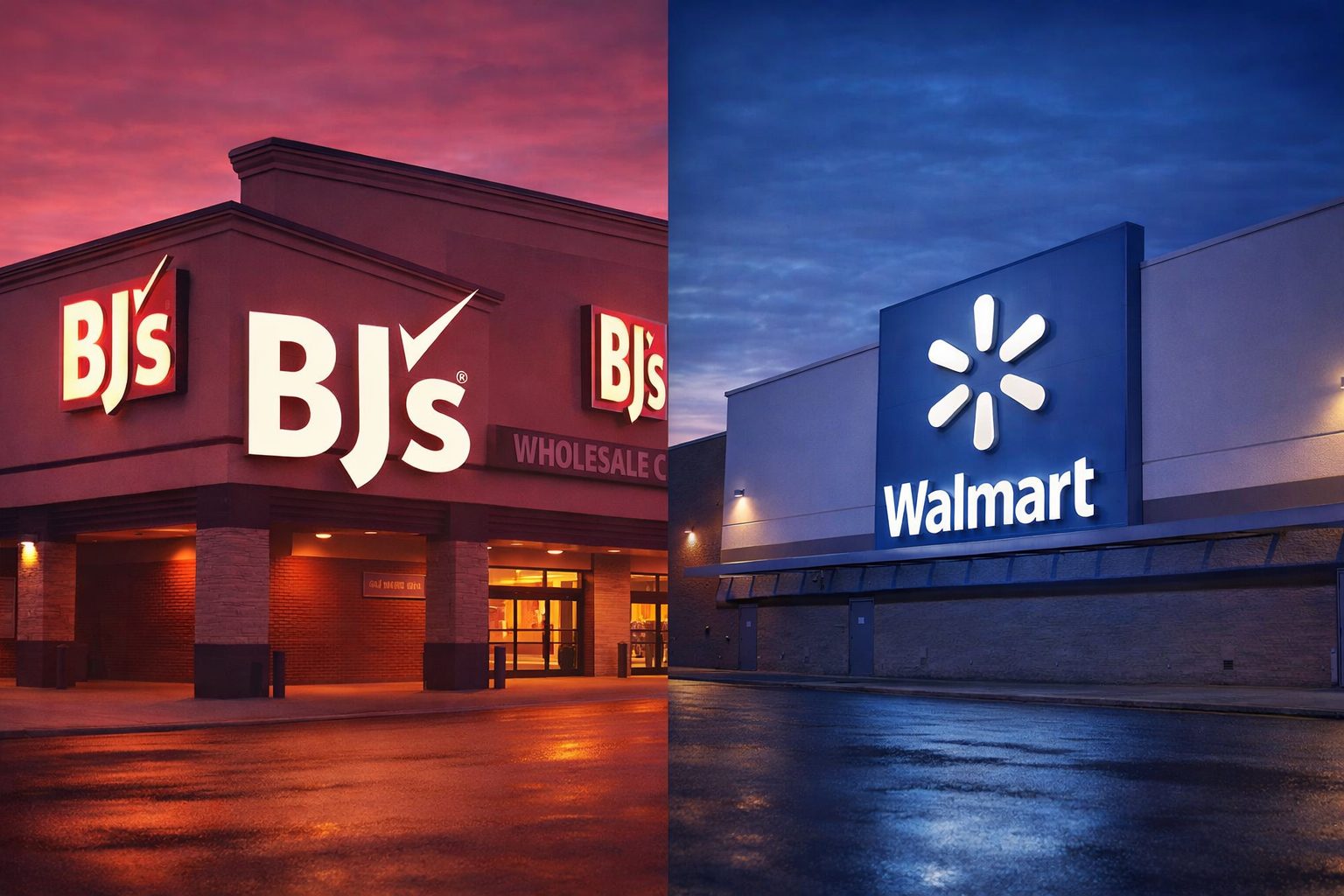
Walmart slipped around 0.7% by 10:10 a.m. EDT on Monday, outpacing BJ’s Wholesale, which dropped 1.3% as U.S. stocks broadly sold off. Investors kept a close eye on Walmart’s premium valuation and whether its profit growth can keep pace.
This isn’t a small point—investors are putting a premium on retailers who manage to squeeze more profit out of solid store traffic and digital gains, especially by leaning into higher-margin areas like ads and memberships. Shoppers may be holding back on extras, but that hasn’t stopped the trend. In fact, after Walmart’s recent earnings, Reuters noted that almost a third of its operating income last quarter came from advertising and membership fees.
Walmart’s most recent quarter pretty much tells the story. Revenue was up 5.6%, but operating income jumped even higher, with a 10.8% gain. E-commerce sales globally surged 24%, and advertising revenue picked up 37%. “More opportunities to capitalize on e-commerce growth,” Fitch analyst David Silverman said, pointing to Walmart’s scale and infrastructure. Walmart Corporate News
BJ’s saw decent growth on the top line. Total revenue was up 5.6%, and membership fee income jumped 10.9% to $129.8 million. Digitally enabled comparable sales, a key same-store metric, surged 31%. Still, operating income edged down 0.2%. Merchandise gross margin narrowed by roughly 50 basis points—half a percentage point—as selling and administrative costs picked up with the rollout of new clubs and gas stations.
Bob Eddy, chief executive, credited the “strength of our transformation” after BJ’s logged its 16th consecutive quarter of traffic gains. Finance head Laura Felice, pointing to confidence in the company’s “long-term strategy,” projected adjusted EPS between $4.40 and $4.60 for fiscal 2026 and outlined about $800 million in capex. BJ’s Wholesale Club Investors
Looking at price-to-earnings ratios, Walmart trades around 35, while BJ’s is close to 20. Costco stands out—shares changed hands near 48 times earnings following last week’s report of 6.7% growth in same-store sales, excluding gas. Analyst Michael Baker at D.A. Davidson called Costco a “safe haven” as the market stuck with it. Reuters
The competitive context is getting tougher. Last month, Reuters pointed out that Walmart crossed the $1 trillion market cap threshold—the first retailer to do it—fueled by speedier delivery, its marketplace ramp-up, and an advertising arm now kicking in around $4 billion. Walmart’s intensifying push against Amazon in e-commerce factors in, too. All of which underpins why the stock commands a premium valuation over typical brick-and-mortar peers.
Still, the trade isn’t settled. Walmart’s full-year forecast struck a cautious note, and Evercore ISI’s Greg Melich pointed out that management tends to err on the side of caution early in the year; a dip in consumer demand or slower growth in ads and memberships could make that premium hard to justify. BJ’s, on the flip side, trades at a lower multiple, which softens the blow—but fresh clubs and expanded distribution may keep costs like labor and occupancy moving up faster than revenue.
Right now, investors are sticking with the retailer that’s got more ways to win. Walmart’s getting a boost thanks to its sheer size and those better-margin businesses stacked alongside the big-box stores. BJ’s, on the other hand, faces pressure to show that its rapid online growth and new locations can actually fatten profits—not just pad the top line.