
SEOUL, April 16, 2026, 04:06 KST
Samsung’s Galaxy S26 series is drawing top marks from analysts as a premium Android pick this year. Yet, reviews highlight an old hurdle: getting Apple users to make the jump—or even persuading current Galaxy owners to trade up.
Premium is where the focus has shifted, with memory prices squeezing margins across the smartphone sector. Samsung said U.S. pre-orders for the S26 lineup surged nearly 25% from last year’s S25, while Omdia estimated global pre-orders rose more than 10%. Counterpoint’s data, though, still puts Apple slightly ahead in first-quarter shipments: 21% share to Samsung’s 20%.
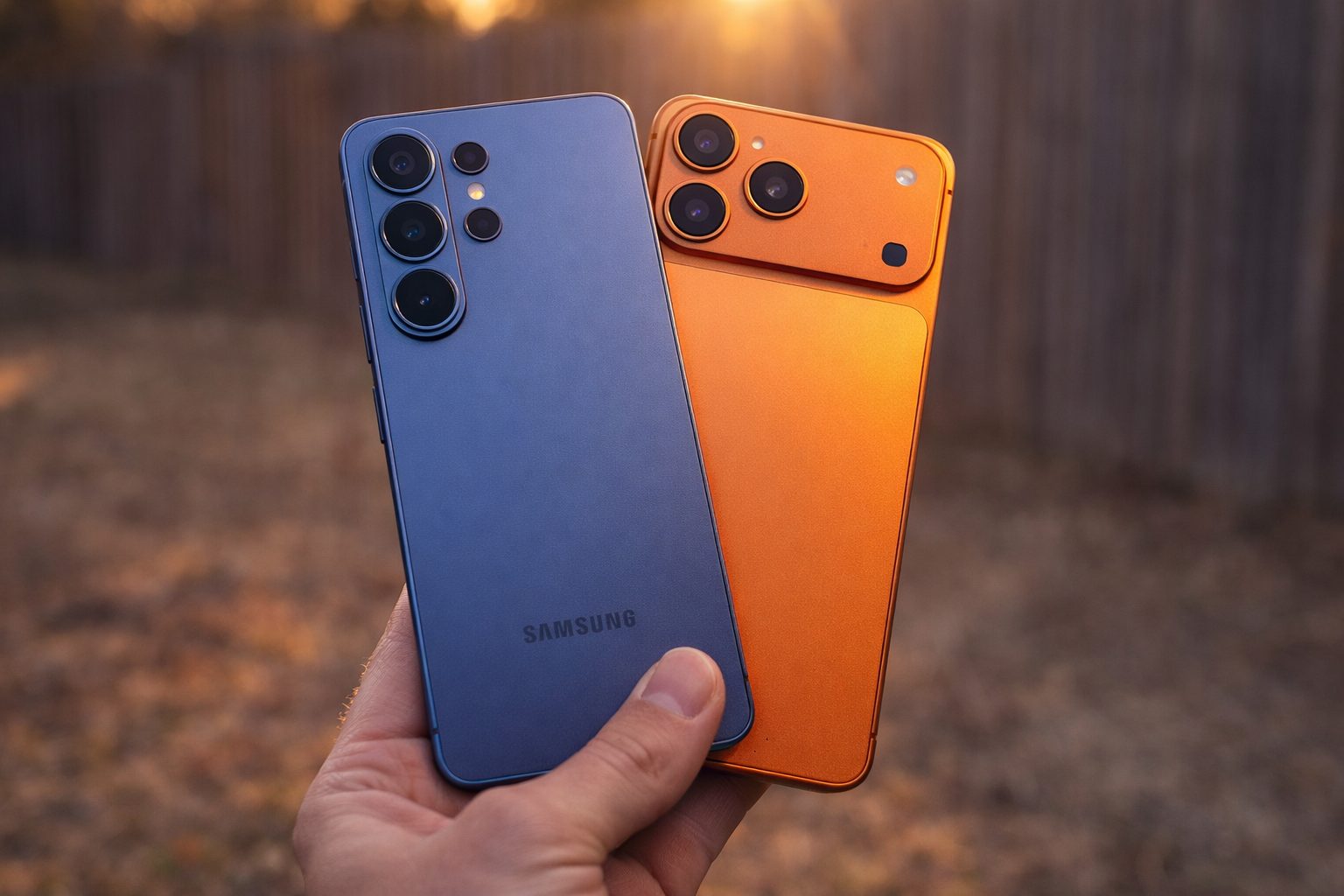
Owners of older Galaxy models probably won’t have much trouble justifying an upgrade. Android Headlines points out that trading in a 2022 Galaxy S22 gets you a bigger display, new chipsets, and a 4,300 mAh battery in the standard S26—up from the S22’s 3,700 mAh. Samsung’s official specs show no change to the rear cameras on these two: you’re still looking at a 50-megapixel main sensor, 12-megapixel ultrawide, and 10-megapixel 3x telephoto. So Samsung’s latest standard release puts the focus squarely on speed, size, and battery, leaving the camera hardware alone.
Not a lot of comfort for recent buyers at this point. Stephen Radochia over at Android Police said Tuesday he’s already struggling with the idea of moving on from his Galaxy S25 Ultra by 2026. Samsung, meanwhile, is promising seven generations of OS updates and seven years of security patches for the S26 series—so owners of those phones could be holding on quite a bit longer.
Samsung’s S26 Ultra didn’t exactly get a standing ovation from Macworld’s review crew. Sure, they handed the phone battery-life bragging rights, praised its camera zoom, and singled out the Privacy Display—blocking prying eyes from side angles. But those advantages only go so far. Apple’s walled garden—Watch, AirPods, Macs, iCloud—still keeps users firmly in place. Recon Analytics’ XJ Wang, in a note last week, dubbed the ecosystem a “gravitational field.” Services like iMessage, AirDrop, and FaceTime, he argued, are where the real lock-in happens; even hardware gains just can’t break that hold. Macworld
Testing paints a familiar picture. This week, Tom’s Guide put the iPhone 17 Pro Max at the top overall, while naming the Galaxy S26 Ultra best Android and best camera phone. Samsung’s S26 Ultra spec sheet shows a 6.9-inch display, 200-megapixel main camera, 5,000 mAh battery, and that custom Snapdragon 8 Elite Gen 5 for Galaxy. Co-CEO TM Roh says the AI is designed to “work quietly in the background” so people can stick to what’s important. Tom’s Guide
SammyGuru jumped in with a technical angle, arguing in an opinion piece that Samsung ramps up image processing when users zoom further in. The site pointed out that at higher focal lengths, RAW shots—those untouched originals—and the final JPEGs actually come from different capture processes. That detail, SammyGuru said, points to a “Dynamic Fusion” multi-sensor system and highlights how Samsung keeps leaning on software, not just hardware, to stay ahead in camera tech. SammyGuru
Samsung’s first look at S26 demand gives bulls something: 80% of U.S. pre-orders went for the Ultra. Omdia’s latest numbers put Samsung ahead in global flagship shipments for Q1, reclaiming the top spot in smartphones. But Counterpoint says Apple narrowly holds the crown, so there’s barely any daylight between them.
Risks are piling higher. Sanyam Chaurasia at Omdia says vendors have “little choice” except to raise prices as their costs rise. Over at IDC, Francisco Jeronimo called the memory price jolt “tsunami-like.” Counterpoint’s Shilpi Jain highlights memory suppliers leaning into AI data centers, cutting into consumer electronics supply and dragging down shipments. As for Samsung, its S26 Ultra faces a tougher challenge than simply winning over reviewers—the company must convince users who’d rather stay put. Omdia
Market chatter paints a picture of two paces right now. The Galaxy S26 lands as a clear-cut upgrade for anyone holding onto an older device, while the Ultra goes after Apple’s top iPhone with more punch. For those already on the S25 Ultra, though, there’s less urgency—Samsung faces a challenge convincing that crowd to make the leap, as it tries to stop fence-sitters from drifting to Google’s Pixel or digging deeper into Apple’s ecosystem.