
Washington, April 28, 2026, 07:07 EDT
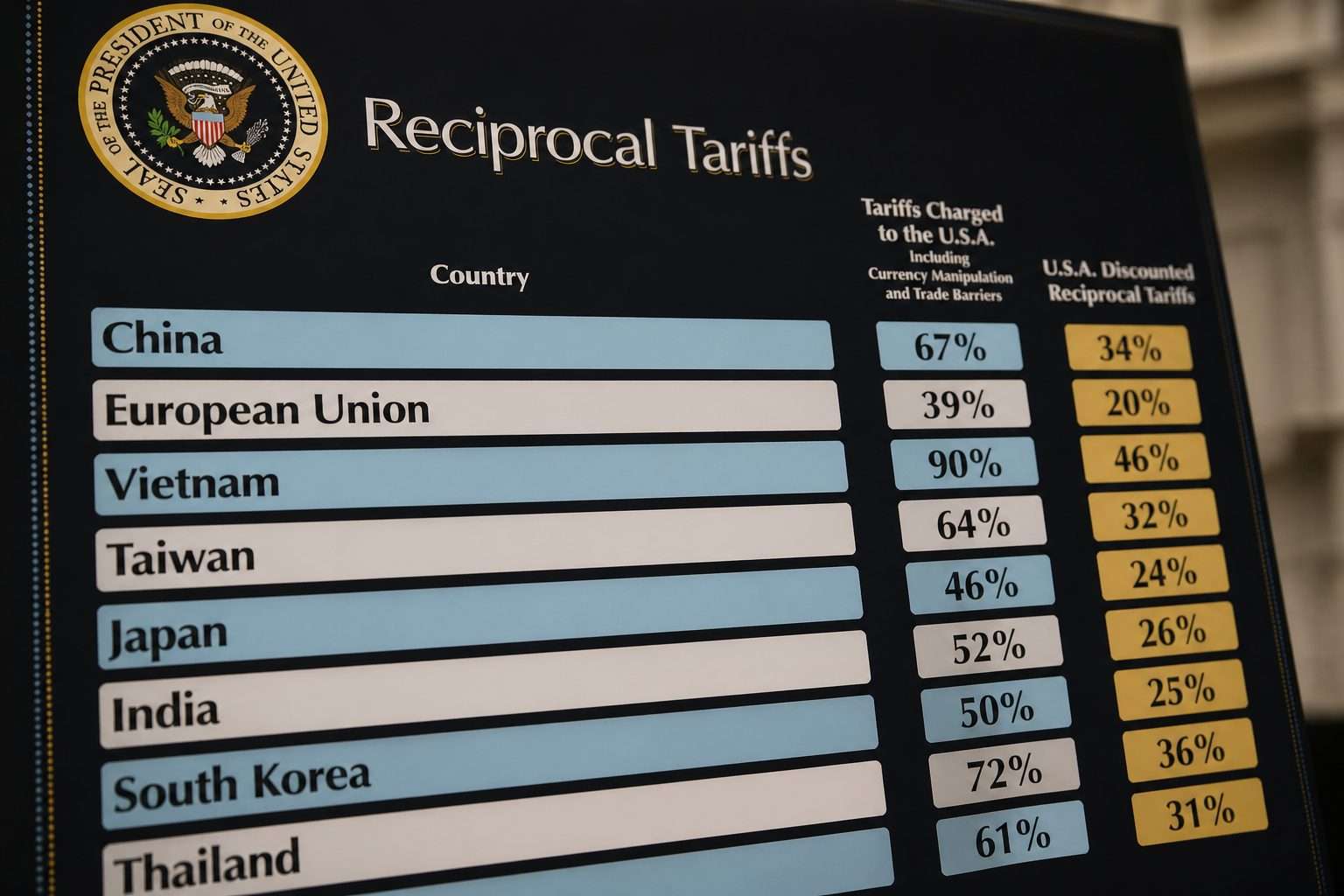
Public hearings kick off Tuesday as the Trump administration resets its trade strategy, pivoting to traditional statutes after the Supreme Court blocked Trump’s sweeping emergency tariff plan. The Office of the U.S. Trade Representative said it’s teeing up two days of testimony on whether 60 economies are falling short on banning and policing imports tied to forced labor.
Time’s tight. The temporary 10% import surcharge, slapped on via Section 122 of the Trade Act as a balance-of-payments measure, can’t last more than 150 days unless lawmakers step in. Right now, it’s set to expire at 12:01 a.m. EDT on July 24, according to a Federal Register notice.
So, Section 301 stands as the administration’s primary long-term option here. The provision, built into the 1974 trade law, gives USTR the authority to probe foreign practices it considers unfair, then hit back with tariffs or other trade measures. Those tariffs—essentially taxes—are paid by U.S. importers, who typically look to push the added cost onto their customers.
The USTR’s forced-labor investigation now spans 60 economies—China, the EU, Japan, India, Britain, Canada, Mexico, all on the list. Trade Representative Jamieson Greer, back in March, called it a test of how governments enforce bans on goods made with forced labor. He argued foreign producers could end up with an unfair cost advantage thanks to “the scourge of forced labor.” United States Trade Representative
The second track, with hearings on the calendar for May 5, goes after what officials call structural overcapacity—factories churning out more than domestic or world demand wants, so the extra ends up shipped overseas. Sixteen economies fall under this probe: China, Japan, the EU, plus others. Industries flagged include autos, steel, solar modules, semiconductors, and machinery.
The lineup of witnesses spells out the stakes: industry players are glued to this. Tuesday brings panels from labor and human rights groups, but the docket also features the Consumer Technology Association, Solar Energy Manufacturers for America, Steel Manufacturers Association, American Line Pipe Producers Association, and Aluminum Extruders Council. There’s a slate of officials or trade reps too—names from Mexico, Guatemala, Ecuador, Peru, China, Indonesia, Vietnam, Egypt, Pakistan, and India all appear.
Backers are pushing for sweeping measures, not just a box-ticking review. Brandon Farris, executive vice president at the Steel Manufacturers Association, argued the overcapacity issue needs “decisive action.” Jon Toomey, who leads the Coalition for a Prosperous America, described forced-labor-free supply chains as both a “moral and economic imperative.” Steel Manufacturers Association
Domestic trade voices, it turns out, aren’t exactly in sync. Rodrigo Balbontin at the Information Technology and Innovation Foundation, in comments to USTR, warned that the overcapacity review could end up lumping allies together with China. For Balbontin, the real focus should stay on “China, China, China”—not casting a wide net across 16 economies. ITIF
The risk is obvious: moving too fast could leave fresh tariffs open to legal challenge, and possibly tougher to justify politically. “If Trump and Treasury Secretary Scott Bessent have already promised replacement tariff revenue, the cake is already baked,” said Scott Lincicome at the Cato Institute. Still, trade lawyer Joyce Adetutu at Vinson & Elkins pointed out that Section 301 gives the administration “cover of the process itself.” AP News
Companies may feel the impact before legal battles wrap up. Clark Hill attorneys Mark R. Ludwikowski, Ashley Gifford and Mariana Berumen, in a Reuters column, noted the switch from IEEPA doesn’t halt tariffs; it just “changes the legal pathway,” and expands supply-chain risk deeper than China—now stretching into regions firms previously considered lower risk. Reuters
Importers now face the next phase in a tariff overhaul that kicked off after the Supreme Court’s February decision. Should USTR put together a solid record, the administration stands to secure a sturdier tariff option. But a rushed process could send the dispute back to the courts.