
San Francisco, May 5, 2026, 09:22 PDT
- Apple has looked into tapping Intel and Samsung for U.S. production of its main device chips, according to Bloomberg.
- Apple raised concerns about a tighter supply of advanced chips for iPhones and Macs, setting the stage for these talks.
- Intel shares surged over 13% Tuesday, despite no chip orders coming in.
Apple Inc. has kicked off preliminary discussions with Intel Corp. and Samsung Electronics Co. on manufacturing its core device processors in the U.S.—a move that would mark a sharp pivot from its heavy dependence on Taiwan Semiconductor Manufacturing Co., Bloomberg said. For now, talks are still in the early stages with no deals in place, Reuters noted, citing the original Bloomberg coverage.
Timing is key here. Apple last week pointed to strong iPhone 17 demand as a boost for March-quarter revenue, yet hardware supply constraints also cropped up—raising fresh questions for investors about whether the world’s biggest consumer-electronics company can secure enough of the latest chipmaking capacity.
The system-on-a-chip—SoC for short—serves as the main processor, packing computing, graphics, and more into a single unit. These chips sit at the heart of iPhones, iPads, and Macs. The newest ones need advanced manufacturing nodes, the precision tech that shapes how powerful and efficient a chip can be.
Apple execs toured a Samsung facility still under construction in Texas and also started early discussions with Intel about tapping its foundry unit, Reuters reported. No agreement is on the table—Intel wouldn’t comment to Reuters, and both Apple and Samsung left requests for comment unanswered.
Talks have taken on new urgency following comments from Apple Chief Executive Tim Cook, who told Reuters that iPhone sales are being held back by limited access to advanced processors. “The demand was off the charts,” Cook said, noting there’s “a little less flexibility in the supply chain” when it comes to sourcing additional parts. Investing
On Apple’s earnings call, Cook told Bloomberg that memory wasn’t the main bottleneck—he pointed instead to “the availability of the advanced nodes our SoCs are produced on.” Getting supply and demand back in sync? That could take a few months, he said. The Edge Malaysia
Intel surged 13.4% to $108.61 by midday in U.S. trading, grabbing the spotlight. Apple nudged up 1.3%. TSMC’s U.S.-listed shares edged down 0.9%, market data showed.
Barron’s pinned the rally on bets that Intel might snag Apple as a significant foundry client. Creative Strategies CEO Ben Bajarin posted on X that Apple appeared “much farther along than just ‘discussions’” with Intel. Patrick Moorhead, who heads up Moor Insights & Strategy, said it looked like “much more than exploration.” Barron’s
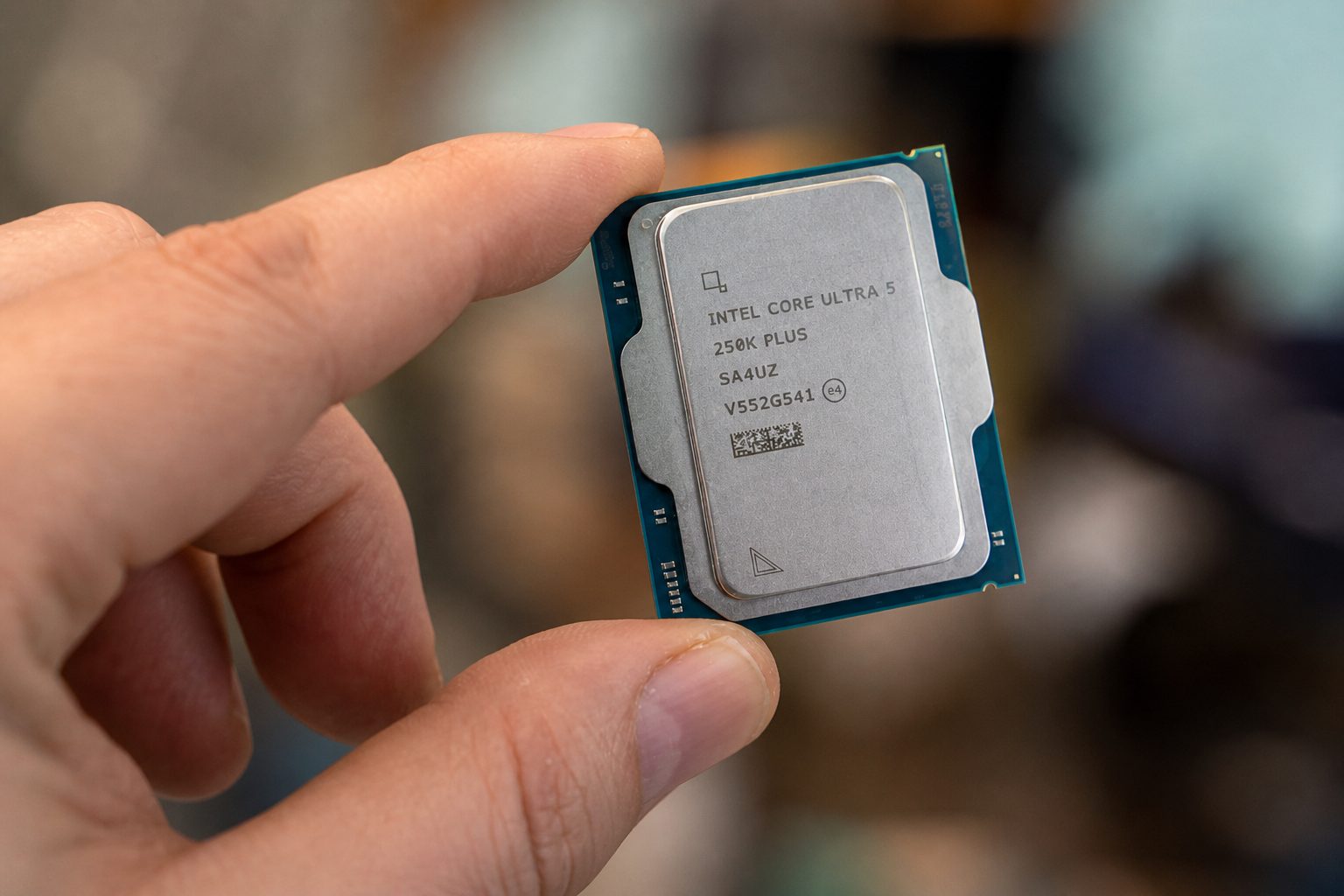
Even a smaller-scale Apple order would give Intel a splashy victory as it tries to take on TSMC in the foundry game. The company maintains its 18A process—billed as sub-2-nanometer-class and produced in North America—is now ready for customer projects. “Nanometer” here marks chipmaking generations, not just a single feature’s size. Intel
Samsung, meanwhile, remains in the running. The company’s Taylor, Texas, facility carries a $17 billion upfront price tag and, according to Samsung, aims to ramp up logic chip output for 5G, artificial intelligence, and high-performance computing.
The lineup of players here is tight. TSMC still anchors Apple’s production, while Samsung is pushing hard for advanced foundry clients. Intel, for its part, wants to show it can handle external chip design work in volume. Just last week, Reuters said Samsung anticipates landing more contracts for state-of-the-art 2-nanometer logic chips, and is weighing a second fab in Taylor to match demand.
There’s a hitch. According to Bloomberg, Apple isn’t sold yet on non-TSMC tech—questions remain around both reliability and scaling up. Apple could easily walk, leaving Intel and Samsung in the lurch. The company can experiment, squeeze its suppliers, and still funnel major orders back to TSMC.