
LONDON, June 20, 2026, 20:04 BST
- J Sainsbury closed Friday at 300.2 pence, down 0.6%, with the London market shut for the weekend.
- The stock lost 2.6% on Wednesday and about 4.3% over the week, compared with a 1% weekly fall for the FTSE 100.
- Investors are positioning for Sainsbury’s first-quarter trading statement on June 30.
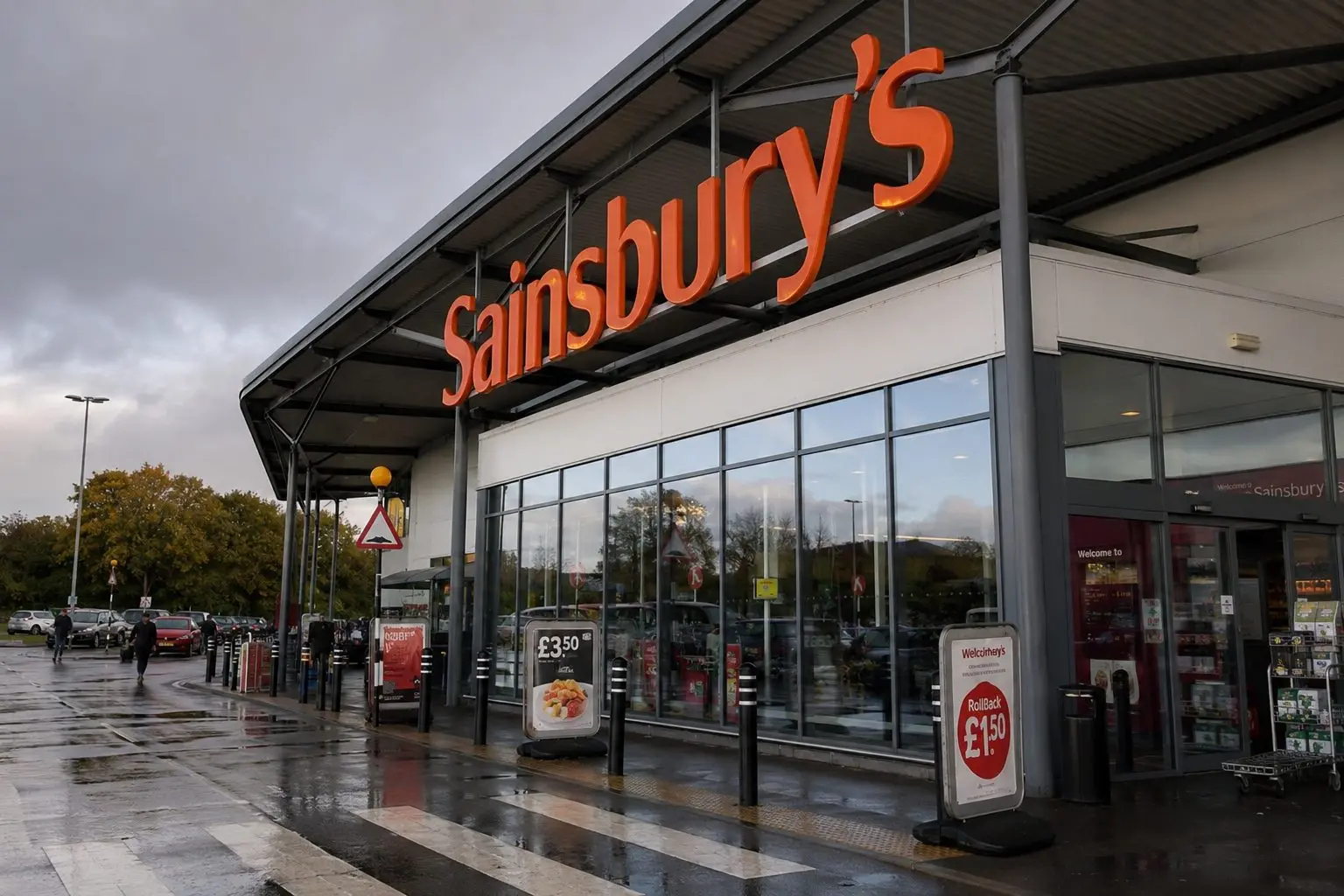
J Sainsbury shares ended a bruising week at 300.2 pence, down from 313.8 pence the previous Friday. The 4.3% decline left the supermarket group trailing the wider London market, with Wednesday accounting for most of the damage.
The move came without a fresh trading warning. Sainsbury’s latest filing showed it bought about 5.6 million of its own shares between June 12 and June 18, while a separate disclosure showed BlackRock’s combined position slipping to 9.89% from 10.01%. That points more to investors cutting exposure before the quarterly update than reacting to new operating news.
The bar is fairly high. Company-compiled analyst forecasts put 2026/27 underlying operating profit — earnings from normal operations before exceptional items — at £1.061 billion. That is close to the top of Sainsbury’s £975 million-to-£1.075 billion guidance range, leaving little room for a weak sales or margin signal on June 30.
Friday’s economic data gave mixed comfort. British retail sales volumes rose 1.2% in May, more than double the 0.5% gain economists had expected, helped by hot weather and promotions. Rob Wood, chief UK economist at Pantheon Macroeconomics, said consumers had been “surprisingly resilient to higher energy prices,” while Lloyds Bank consumer head Sandra Prince said retailers were “trying to keep prices low” despite cost pressure. Reuters
Inflation data were also less hostile to grocers. UK consumer-price inflation held at 2.8% in May, while food and non-alcoholic drink inflation slowed to 2.2% from 3%. The Bank of England nevertheless kept its benchmark rate at 3.75% and warned that the Middle East conflict could still feed through to business costs and household bills.
Competition remains severe. The latest Worldpanel data showed Sainsbury’s and market leader Tesco gaining grocery share, while Lidl was the fastest-growing store-based chain and Asda continued to lose ground. Asda’s newly reported £989 million pre-tax loss highlights the cost of its turnaround, but its focus on lower prices can still force rivals to spend more defending customers.
Chief Executive Simon Roberts said in April that the Middle East conflict meant customers were “even more focused on the cost of living.” That supports Sainsbury’s emphasis on value and food-market-share gains, though aggressive promotions can lift sales volumes while holding back profit margins. Sainsbury’s
But the downside case has not gone away. Goldman Sachs analyst Richard Edwards cut Sainsbury’s to “sell” in late April, citing weaker consumer spending and pressure in non-food retail, while Citi moved to “neutral” after the company issued softer-than-expected profit guidance. Argos remains the key uncertainty because discretionary purchases are more sensitive than groceries to confidence and borrowing costs. Investing
There is no scheduled Sainsbury’s announcement in the coming trading week, leaving the shares exposed to energy prices, interest-rate expectations and sector pricing news before the June 30 statement. The stock could recover if grocery growth remains ahead of the market and Argos stabilises. Another sales slowdown, or evidence that price investment is eroding margins, would test the 300-pence area quickly.