
Sydney, July 9, 2026, 05:03 AEST
- Macquarie closed down 0.5% on Wednesday at A$252.04, still near its A$254.31 52-week high.
- The ASX cash market had not opened for Thursday trade; normal trading runs to 16:00 Sydney time.
- Deal activity and commodity volatility remain key supports, but oil-driven inflation and rates are the near-term risk.
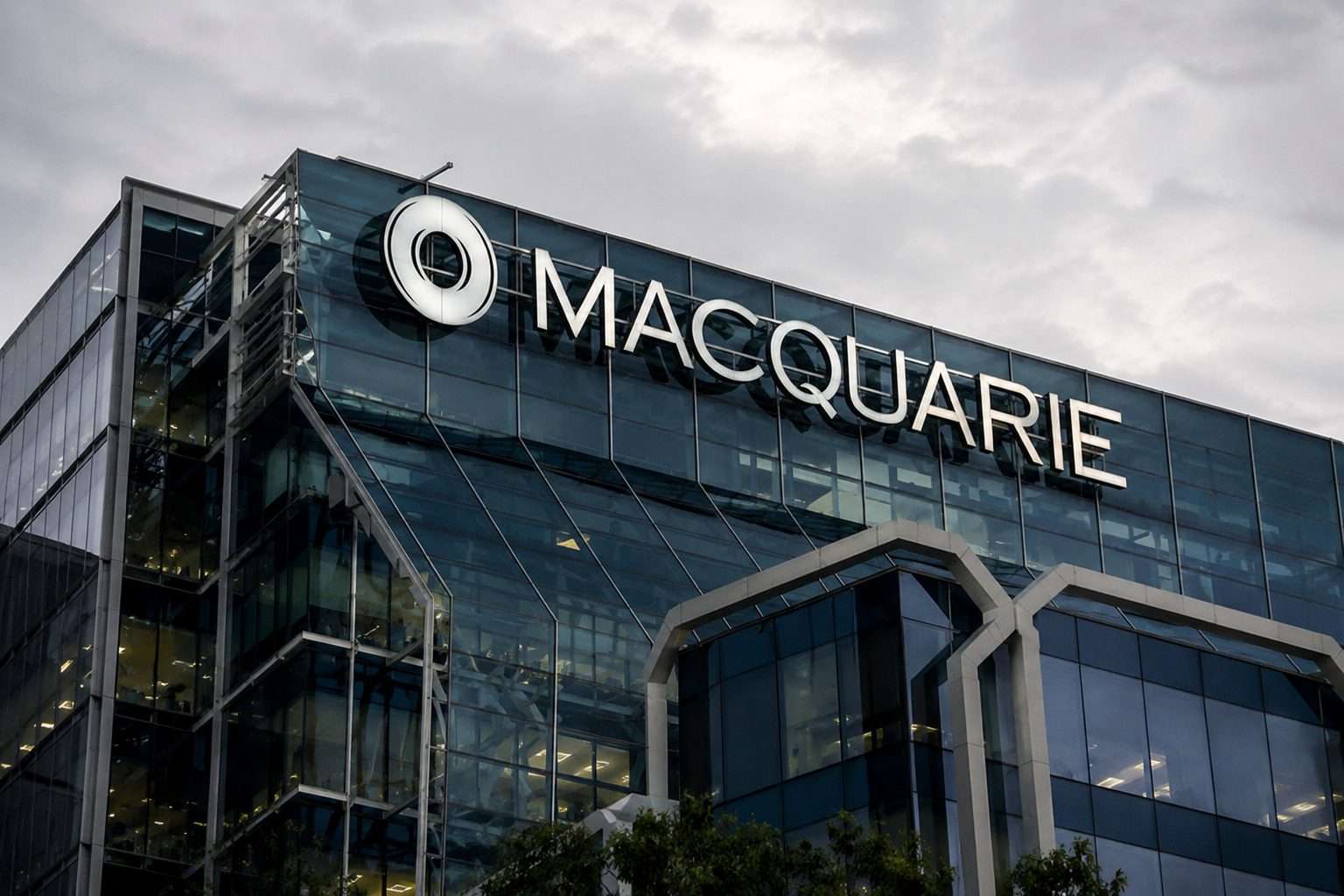
Macquarie Group Ltd ASX:MQG ended lower on Wednesday, slipping 0.5% to A$252.04 as Australian shares softened ahead of Thursday’s open, with investors balancing a strong earnings backdrop against fresh oil and rate worries. The stock last traded just below its A$254.31 52-week high and carried a market value of about A$96.69 billion.
That makes the next few sessions less about one day’s price move and more about how much good news is already in the stock. Macquarie has gained 24.8% in 2026, according to Intelligent Investor data, outpacing many domestic financial names and leaving less room for disappointment before its July 23 annual meeting.
The broader S&P/ASX 200 closed 0.21% lower at 8,785.10 on Wednesday as renewed U.S.-Iran tension pushed up oil prices and weighed on sentiment. The ASX cash market’s normal trading phase runs from about 09:59:45 to 16:00 Sydney time, leaving Thursday’s open as the next test for local investors.
Macquarie is not a plain bank trade. Its earnings lean on asset management, commodities trading and advisory fees, so the same volatility that unsettles the market can also lift parts of the business if clients hedge, trade or raise capital. That split is why the stock often acts more like a global markets proxy than a mortgage lender.
A report in The Australian said Australian M&A — mergers and acquisitions, meaning corporate dealmaking — involving local entities reached $US58.4 billion in the first half of 2026, up 43% from a year earlier, with Macquarie, Goldman Sachs and JPMorgan among the leading advisers. That matters for Macquarie Capital, whose FY26 profit contribution rose 43% as mergers and acquisitions fees, brokerage and private credit income improved.
The commodities arm is the other swing factor. Macquarie said Commodities and Global Markets delivered a FY26 profit contribution of A$4.22 billion, up 49%, helped by higher client hedging activity and oil trading income. Hedging is when clients use financial contracts to protect against price moves.
Chief Executive Shemara Wikramanayake said in May that Macquarie remained “well-positioned to deliver superior performance in the medium term,” while also keeping a cautious stance on capital, funding and liquidity. The company reported FY26 net profit of A$4.85 billion, up 30%, and paid a final ordinary dividend of A$4.20 a share on July 2; the dividend was 35% franked, meaning it carried Australian tax credits. Macquarie
The market’s worry is that the same oil shock that can stir trading revenue may also keep pressure on rates. Brent crude, the global oil benchmark, touched $76.38 a barrel on Wednesday after fresh U.S. strikes on Iran, Reuters reported. Reserve Bank of Australia Assistant Governor Sarah Hunter said supply shocks did not reduce the need for “maintaining low and stable inflation.” Reuters
Rob Haworth, senior investment strategist at U.S. Bank Wealth Management, said in a Reuters market reaction piece that “duration is the key here” for the oil shock. If the Strait of Hormuz remains open and oil flows continue, markets may look through the flare-up; a longer disruption would be harder for rate-sensitive shares to absorb. Reuters
The competitive read-through is mixed. Goldman and JPMorgan are contesting the same advisory fee pools in Australia, while Commonwealth Bank and National Australia Bank offer a cleaner read on domestic credit and mortgage margins. Macquarie’s edge is its broader markets exposure; its risk is that investors price it like a growth stock just as rates and geopolitics turn less friendly.
The but is valuation. At A$252.04, Macquarie was trading near its 52-week high and at a price-to-earnings ratio of 19.89, the amount investors pay for each dollar of annual earnings. If oil stays high, inflation expectations rise or deal completions slow, the stock’s recent run leaves little cushion for a pullback.
Related articles: ASX:MQG