
Paris—April 30, 2026, 15:02 CEST.
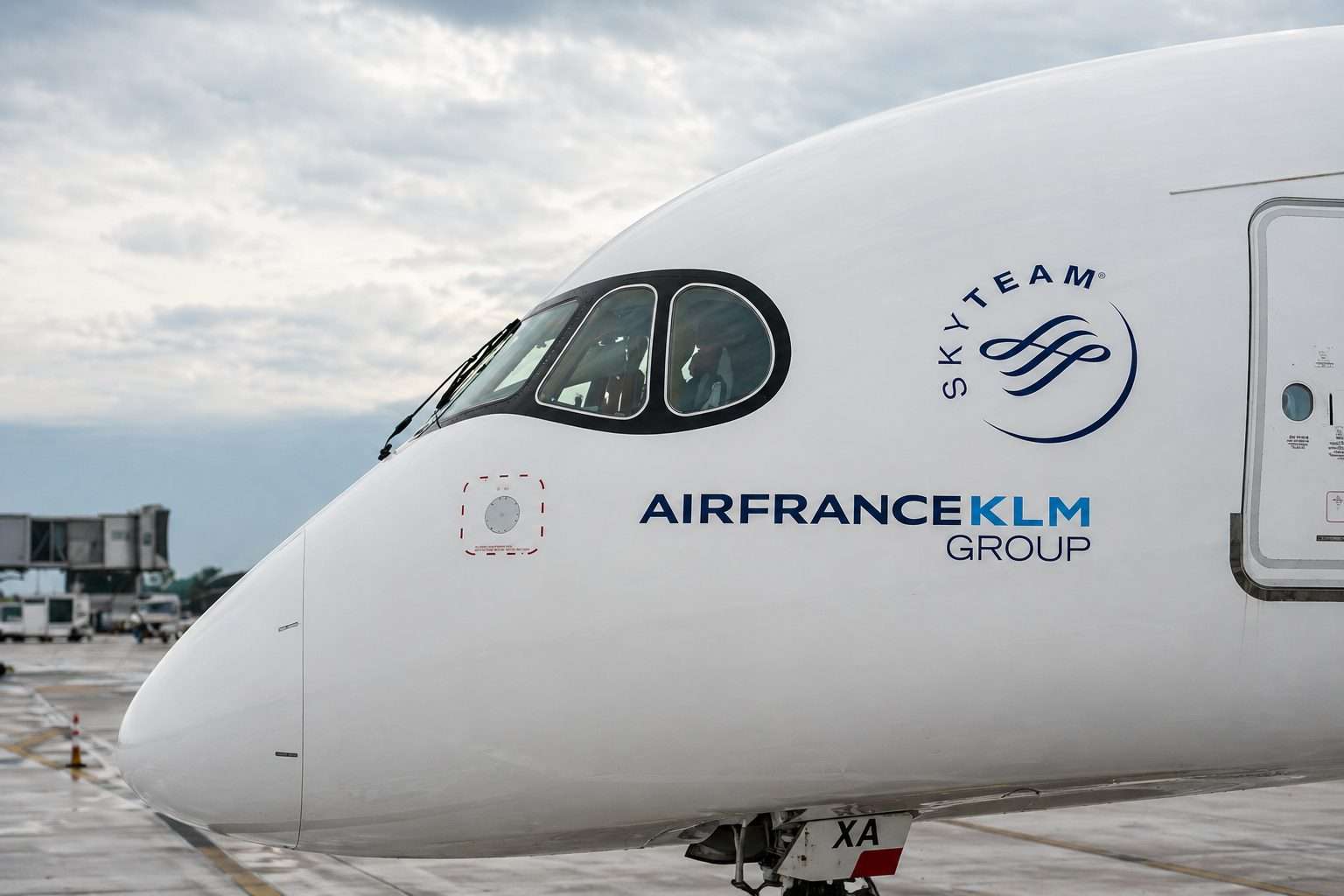
Air France-KLM slashed its 2026 capacity-growth outlook Thursday, citing an expected $2.4 billion jump in fuel costs this year tied to the Iran war. The Franco-Dutch group plans to hike ticket prices and rein in spending as it reins back growth plans. Capacity is set to climb just 2% to 4% from 2025, a downgrade from the previous 3% to 5% projection.
The warning comes right as airlines head into the crucial summer travel stretch—typically a sweet spot for bookings and cash. Air France-KLM noted that its first-quarter results haven’t felt the fuel price spike yet, citing a lag in how costs filter through. But the carrier flagged that roughly $1.1 billion in added fuel expenses will flow into its second-quarter numbers.
Available seat kilometres—seats flown times distance—remain the industry benchmark for airline capacity. Air France-KLM projects a 2% to 4% uptick in long-haul capacity; short- and medium-haul routes aren’t budging. Transavia, the group’s budget carrier, is targeting 8% to 10% growth.
Even after reporting a stronger first quarter, the cut landed. Revenue ticked up 4.4% to 7.48 billion euros. The group’s operating loss? Just 27 million euros—analysts surveyed by LSEG had braced for a much deeper 389 million euro loss. Shares climbed roughly 3.5% by 1200 GMT, with the market reading the milder capacity cut as evidence that demand hasn’t softened.
Chief Executive Ben Smith warned that rising fuel costs are “expected to weigh on the coming quarters.” The group had shifted aircraft toward higher-performing routes and gained from travelers steering clear of Gulf hubs. The company also participated in repatriation flights at the onset of the Middle East war. Globenewswire
The group is projecting a fuel bill of $9.3 billion for 2026. Its rolling fuel-hedging policy—those financial contracts aimed at cushioning price volatility—should bring in a $1.5 billion benefit. Still, that won’t be enough to offset the full surge in jet fuel costs.
Fares are starting to feel the squeeze. Air France-KLM has tacked on a bigger carrier-imposed surcharge to each ticket. Last week, Reuters noted the group intends to hike long-haul cabin fares by 50 euros for a round trip.
KLM reported its first-quarter operating loss narrowed by over 84 million euros, landing at a negative 114 million euros on revenue just shy of 3 billion euros. CEO Marjan Rintel flagged “increasing pressure on results,” and CFO Bas Brouns pointed out the airline “cannot fully pass on the high fuel prices” to its customers. Klm
Pressure is showing across the industry. EasyJet flagged a deeper first-half loss, while IAG—British Airways’ parent—plans to bump up fares in response to rising fuel bills. Lufthansa, for its part, has already announced it’s cutting 20,000 short-haul flights from the schedule through October.
The numbers could shift yet again. Air France-KLM cautioned that its fuel forecast relies on hedges and forward fuel curves from April 24, leaving it exposed to geopolitical swings. Reuters noted CFO Steven Zaat expects supply stability through June, as the company monitors European stock draws and potential Jet-A imports from North America.
Brent crude surged to $126 a barrel on Thursday, a level not seen in four years, as jitters over possible lingering disruptions near the Strait of Hormuz rattled the market, according to the Guardian. Europe’s association of airport operators flagged risks for smaller airports, warning they might be hit hardest if jet fuel shortages force airlines to slash routes.
At this stage, Air France-KLM is leaning on packed flights, pricier tickets, and tighter spending, rather than slashing routes. Bernstein’s Alex Irving pointed out in a note that the airline’s modest capacity reduction signals “ongoing strong earnings environment and high demand for travel,” Reuters reported. Reuters