
Mirabel, Quebec, May 6, 2026, 14:13 EDT
- Airbus has scheduled a Mirabel press conference touting a “historic” A220 development, and Reuters sources point to AirAsia as the likely buyer. Reuters
- Landing an order for about 150 jets would hand the A220 a boost, following pressure from Embraer’s E2 and while Airbus looks to ramp up production.
- AirAsia may be able to tap into routes that don’t require the passenger load of its bigger A320-family planes, thanks to the smaller single-aisle jet.
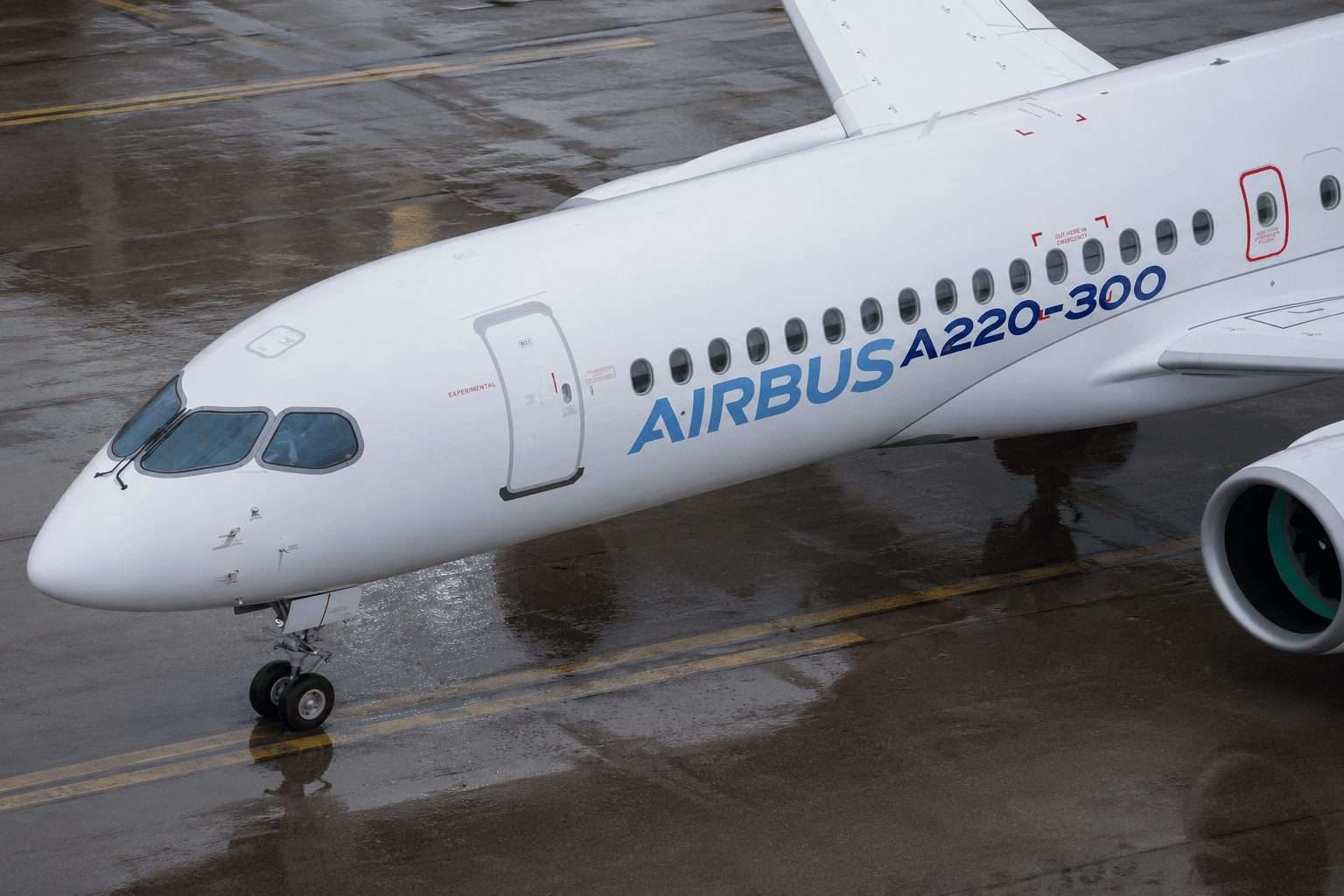
Malaysia’s AirAsia will lock in a roughly 150-jet order for Airbus’s A220 on Wednesday, according to two sources who spoke with Reuters—a notable boost for the European company’s smallest passenger line. Airbus has teased a “major A220 programme announcement” at its Mirabel facility near Montreal, though it hasn’t officially named the buyer. Reuters
Timing’s a big factor here. The A220—a single-aisle jet that started life as Bombardier’s CSeries—has picked up solid airline reviews, but it’s been a stubborn financial challenge for Airbus. The manufacturer is still working to ramp up output and get the program to break-even. As of last week, Airbus reaffirmed its goal: 13 A220s per month by 2028.
Adding the A220 would hand AirAsia a smaller jet than its staple A320 models, letting the airline target thinner routes around Asia. Airbus pitches the A220 for the 100- to 160-seat segment, touting fuel burn and CO2 emissions down 25% from older generation planes.
Tony Fernandes, AirAsia’s co-founder, called out the pivot last year. “What does the network need? It needs lots of frequency and it needs the ability to go to more destinations,” he told Reuters. The airline, he said, was “back in the growth stage.” Reuters
Airbus is set to kick off its Mirabel gathering at 2:30 p.m. Montreal time, choosing the New A220 Delivery Center as the venue. On the guest list: Airbus Canada CEO Guillaume Chevasson, Lars Wagner from Airbus Commercial Aircraft, representatives from both the Canadian and Quebec governments, plus a customer group.
Reuters said Canadian Prime Minister Mark Carney was slated for the Montreal-area event. Both Airbus’ Canadian arm and a spokesperson for Carney wouldn’t comment on the possible order or the gathering. The sources pointed out plans might shift or face delays.
An order this large would intensify Airbus’ rivalry with Embraer, which fields its E2 jets at the bottom end of the narrowbody segment. According to Reuters, Embraer scored a Finnair deal back in March and outpaced the A220 last year, selling three E2s for every Airbus A220 delivered.
Canada’s role is key here. Quebec owns a minority slice of the A220 program, and according to Reuters, Mirabel handles A220s bound for customers outside the U.S. Airbus, for its part, also builds the aircraft in Mobile, Alabama.
AirAsia counts itself among Airbus’ biggest clients, holding outstanding orders for over 350 of the company’s bigger A320-family aircraft. July saw the airline ink a memorandum of understanding for 50 Airbus A321XLR long-range planes—plus rights to convert another 20—while continuing its post-pandemic restructuring.
The order isn’t a fix-all. Last week, Airbus Chief Executive Guillaume Faury described the operating landscape as still “dynamic and complex,” noting the company continues “navigating the shortage of Pratt & Whitney engines.” Airbus also flagged Pratt & Whitney as a key bottleneck holding back its narrowbody production plans. Airbus
Earlier this week, The Edge, referencing Bloomberg, said AirAsia X was close to sealing a deal for roughly 150 A220 jets—a potential record order for that aircraft. The report also noted that AirAsia is feeling the pinch from rising oil prices and has only modest fuel hedging in place, not ideal for a low-cost airline looking to expand its fleet as markets swing.
There was no confirmed delivery timeline, final mix of orders, or financing arrangement ahead of the Mirabel press conference. For Airbus, though, what matters is the headline figure: landing a big AirAsia commitment means the A220 finally gets a high-volume, low-cost carrier’s backing—something it’s been chasing for years.