
Accra, April 29, 2026, 15:04 GMT
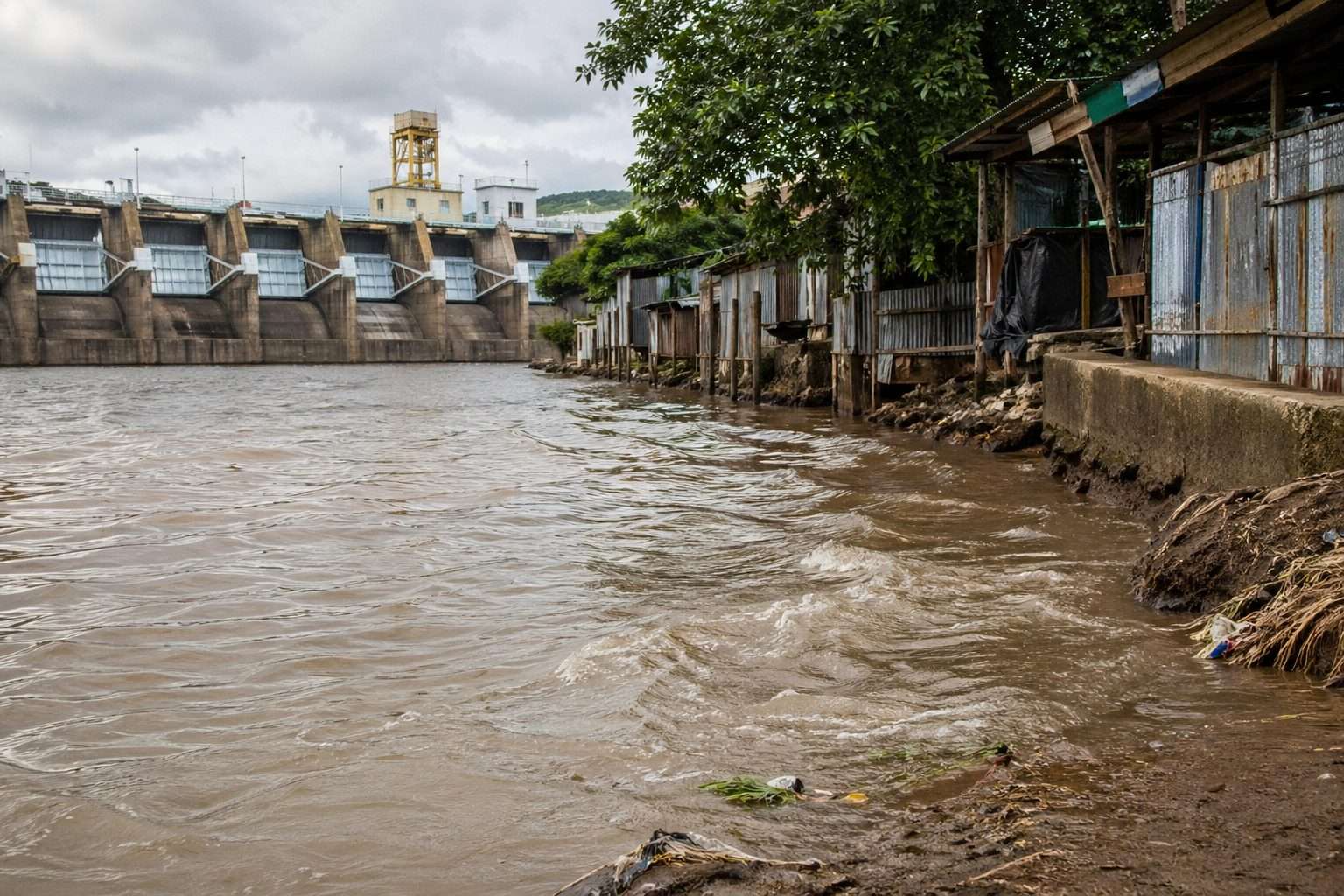
The Volta River Authority is ramping up emergency measures for areas downstream of the Akosombo and Kpong dams, following new warnings about flood risk and the discovery of over 2,000 illegal structures lining the riverbanks in Ada East. This renewed effort puts the spotlight on Ghana’s dam spill protocols, land-use controls, and alert systems as heavier rains loom.
Ghana’s weather agency is projecting heavier-than-usual rainfall between April and June for the East Coast and nearby inland regions—Accra and Tema among them—heightening flood and flash flood risks. GMet has called on district authorities to revisit planning permits and construction approvals in flood-prone and low-lying zones.
This isn’t distant history. In 2023, a controlled water release from the Akosombo and Kpong reservoirs forced tens of thousands from their homes. According to a committee report cited by MyJoy, 38,624 people were displaced, with homes, schools, health clinics, and farmland all hit by damage.
Officials representing 10 districts considered vulnerable gathered in Accra for the most recent VRA-Greater Accra Regional Coordinating Council workshop, where they assessed the Emergency Preparedness Plan—EPP for short—designed for dam emergencies, as well as the Environmental Management Plan covering communities impacted by hydroelectric activity.
Greater Accra Regional Minister Linda Obenewaa Akweley Ocloo described the yearly engagement as an effort to strengthen local capacity, put response systems through their paces and shield communities. “This focus is critical,” she said. The region remains committed, Ocloo added, to making sure “lives and property are protected.” Graphic Online
VRA senior engineer Akosua Owusu-Efaa pointed to two key scenarios in the plan: controlled spillage—a managed release of extra water from the reservoir—and the risk of a dam break. According to Owusu-Efaa, the strategy relies on hydrological and meteorological data, daily inspections of the dam, and a three-phase emergency classification that escalates from minor events up to evacuation.
Abdul Noor Wahab, director for Water Resources and Renewable Energy at VRA, described the plan as an early warning system that spells out what local authorities, security services, and other responders must do in an emergency. Public engagement, he added, is still key—communities need to understand what to do if there’s a spillage.
Kenneth Kabu Kofi Kanor, Ada East District Chief Executive, flagged mounting risks as unauthorized development keeps pushing into waterways. Officials have counted over 2,000 illegal structures lining riverbanks—most lacking proper permits. Enforcement options are on the table, including demolition and taking legal steps to overturn approvals that shouldn’t have been granted.
“Most of the structures you see today do not have permits,” Kanor said. A 50-metre riverbank buffer, he noted, has been routinely flouted. So far, the assembly has stopped roughly 28 projects in sensitive zones—Ramsar sites, island communities among them. Graphic Online
Execution remains the sticking point. Warning systems, updated maps, and community workshops won’t protect people if assemblies don’t enforce buffer zones, courts stall, or alerts arrive too late. Works, Housing and Water Resources Minister Kenneth Gilbert Adjei has issued a caution to developers eyeing wetland reclamation and construction, stressing that assemblies granting permits for protected wetlands are now under the microscope.
A communications gap remains. At a prior VRA event, officials flagged that some locals were unsure where their safe havens actually were. The authority also made it clear: compensation won’t cover illegal structures built in flood zones. “Many people do not even know what safe havens are in their communities,” Owusu-Efaa said. MyJoyOnline
Competitive dynamics matter, but the main players here are clear: VRA stays at the core, since Akosombo and Kpong are inside its hydro network. Ghana Grid Company’s job is transmission. Bui Power Authority runs the 404-MW Bui Generating Station over on the Black Volta—distinct from VRA’s assets. When it comes to this flood drill, most of the responsibility falls to VRA, NADMO, and the district assemblies—not the other power agencies.
VRA claims its emergency plan lays out how it coordinates with downstream stakeholders when flooding can’t be prevented, saying communities are alerted whenever spill volumes shift. Now comes the real test: Can those warnings, land-use rules, and evacuation strategies actually match the pace of the rains, unapproved building, and the next jump in reservoir levels?