
SEATTLE, August 19, 2026, 20:11 PDT
- Amazon plans to expand Prime Air from 11 locations to about 500 U.S. locales by year-end.
- Drone delivery costs $4.99, or $2.99 for Prime members, and is free on qualifying orders of at least $50.
- Local approvals, noise concerns and an open safety investigation remain the main constraints.
Amazon.com (NASDAQ:AMZN) plans to offer drone delivery across about 500 U.S. locales by year-end. The expansion would move Prime Air far beyond its current 11-location footprint.
The target is a coverage promise, not 500 new drone hubs. One center can serve several nearby towns within a roughly 7.5-mile radius. That makes permits and community acceptance the real scaling test.
Amazon expects to add Syracuse, New York, and an area near Cleveland, Ohio, among other markets. Current operations include Papillion, Nebraska, and Ruskin, Florida. Exact launch dates for individual communities were not disclosed.
| Measure | Current position | Year-end plan |
|---|---|---|
| U.S. footprint | 11 locations | About 500 locales |
| Named examples | Papillion, Nebraska; Ruskin, Florida | Syracuse, New York; near Cleveland, Ohio |
| Hub reach | Up to 7.5-mile operating radius for MK30 | Same radius; one hub may cover multiple towns |
| Status | Operating in selected markets | Subject to local and regulatory approvals |
The pricing makes the service a small convenience purchase. Non-Prime customers pay $4.99 per delivery. Prime members pay $2.99, while qualifying orders of at least $50 carry no drone fee.
| Customer or order | Drone-delivery fee | Condition |
|---|---|---|
| Non-Prime customer | $4.99 | Eligible drone order |
| Prime member | $2.99 | Eligible drone order below $50 |
| Qualifying order | $0 | Order value of at least $50 |
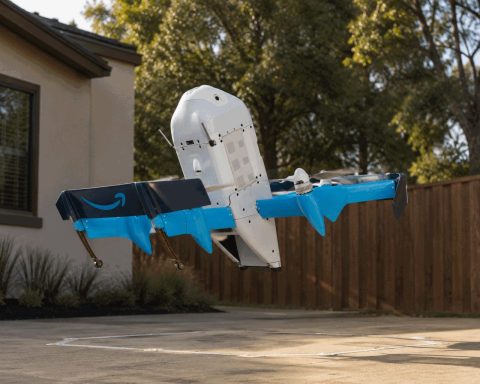
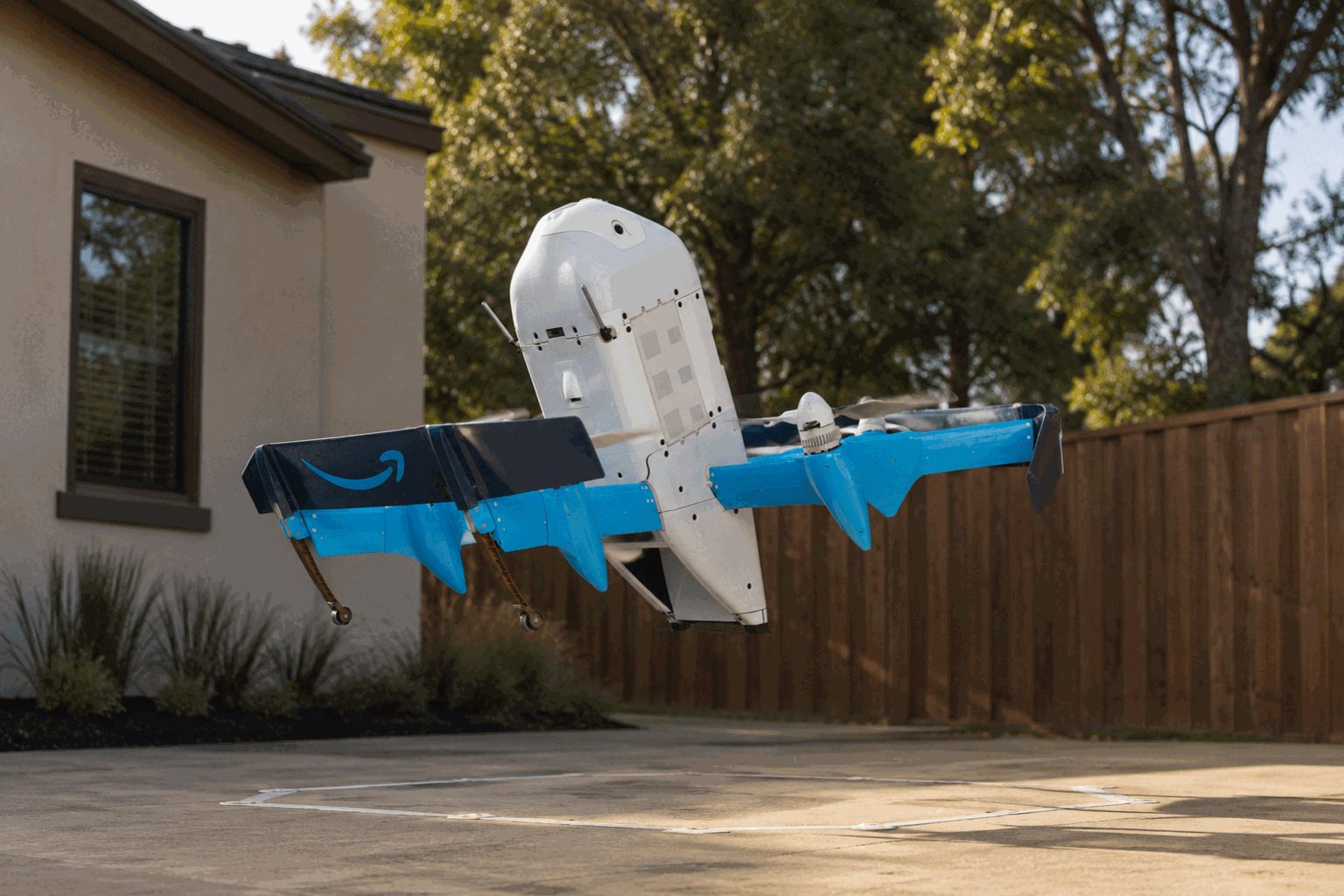
The MK30 carries packages weighing up to five pounds. It rises vertically, then shifts to wing-borne flight. At delivery, it hovers a few feet above the ground and releases the parcel.
| Capability | MK30 | MK27-2 |
|---|---|---|
| Operating radius | 7.5 miles | 3.7 miles at College Station |
| Delivery method | Hover and release | Land and release |
| Light-rain operation | Supported | Not disclosed on current FAA page |
| Perceived noise | Almost half that of earlier Amazon drones | Baseline not quantified |
| Maximum takeoff weight | 83.2 pounds | Not disclosed on current FAA page |
The Federal Aviation Administration says package-drone operators need Part 135 certification and relevant airspace approvals. Flights must generally remain below 400 feet. Beyond-visual-line-of-sight operations also require an exemption or waiver.
Environmental reviews show the intended density. Amazon has proposed up to 1,000 MK30 flights daily from each of three Chicago-area centers. Each center could cover as much as 174 square miles, though actual demand and weather will vary.
Noise may decide how quickly those plans leave paper. Prime Air executive Sam Bailey said neighbors hear a descending drone for about 20 seconds. “It’s a brief experience,” he told Reuters.
Amazon says the sound remains below a lawn mower. The company has already changed average flight height and routes in Richardson, Texas, after a resident complained. Routes now favor commercial areas where possible.
Privacy is another local concern. Amazon says onboard cameras support navigation rather than surveillance. Its detect-and-avoid system is designed to identify people, pets, aircraft and obstacles.
Safety remains under scrutiny. Two Amazon drones struck a crane in suburban Arizona last October. The National Transportation Safety Board investigation remains open, according to Reuters.
Risks: Local opposition could delay launches even where federal approvals exist. Noise disputes, weather limits and further incidents could also weaken demand or raise costs. Amazon has not published expected volumes or economics for the 500-locale plan.
Prime Air now has a route to national reach without building 500 centers. Its harder task is repeating the approval process while keeping each short flight acceptable to the people below.
Related articles: News