NEW YORK, March 2, 2026, 14:21 (EST)
- Boeing shares edged higher as aerospace and defense ETFs outperformed the broader market on Monday.
- A valuation screen flagged Boeing for low price-to-sales versus peers, despite a high earnings multiple during its turnaround.
- Traders are also watching chart support near $230 as the stock pulls back from January highs.
Boeing shares rose modestly on Monday afternoon as aerospace and defense stocks led U.S. markets higher. Boeing was up about 0.3% at $228.22, while the Invesco Aerospace & Defense ETF and the iShares U.S. Aerospace & Defense ETF gained about 2% and the S&P 500 ETF was slightly lower.
The defense bid has been fueled by a widening U.S. military operation in Iran that followed joint U.S.-Israeli strikes over the weekend. The campaign has included Tomahawk cruise missiles and air strikes, according to a briefing by the chairman of the Joint Chiefs of Staff. 1
A MarketWatch screen published on Monday flagged Boeing as a standout in aerospace and defense because it pairs a low forward price-to-sales ratio — the share price relative to expected revenue — of about 1.8 with relatively fast projected sales CAGR, or compound annual growth, even as its forward P/E remains high during a turnaround. The screen also cited the Invesco Aerospace & Defense ETF as up 16% in 2026 through Friday versus a 1% rise for SPY, and put the ETF’s forward P/E at 31.7, above the S&P 500’s 21.6. In emailed comments, Gabelli portfolio manager Tony Bancroft cited reports of heavy Tomahawk use and wrote: “With roughly 4,000 in the U.S. arsenal, that level of usage underscores the likelihood of increased replenishment, production, and defense spending going forward.” 2
The ETF is not a pure weapons bet, and Boeing’s presence in it underscores that. PPA holds about $8.24 billion of assets, and Boeing is one of its top holdings at roughly an 8.3% weight, alongside Lockheed Martin, GE Aerospace and RTX, StockAnalysis.com data showed. 3
Boeing straddles both sides of the aerospace trade. It builds commercial jetliners, but it also sells military aircraft and defense systems, putting it in the same investing bucket as contractors such as Lockheed and Northrop Grumman in some screens. 4
Still, the commercial side is where investors say the turnaround gets tested. The company has spent years trying to stabilize factories and delivery flows after safety and quality problems.
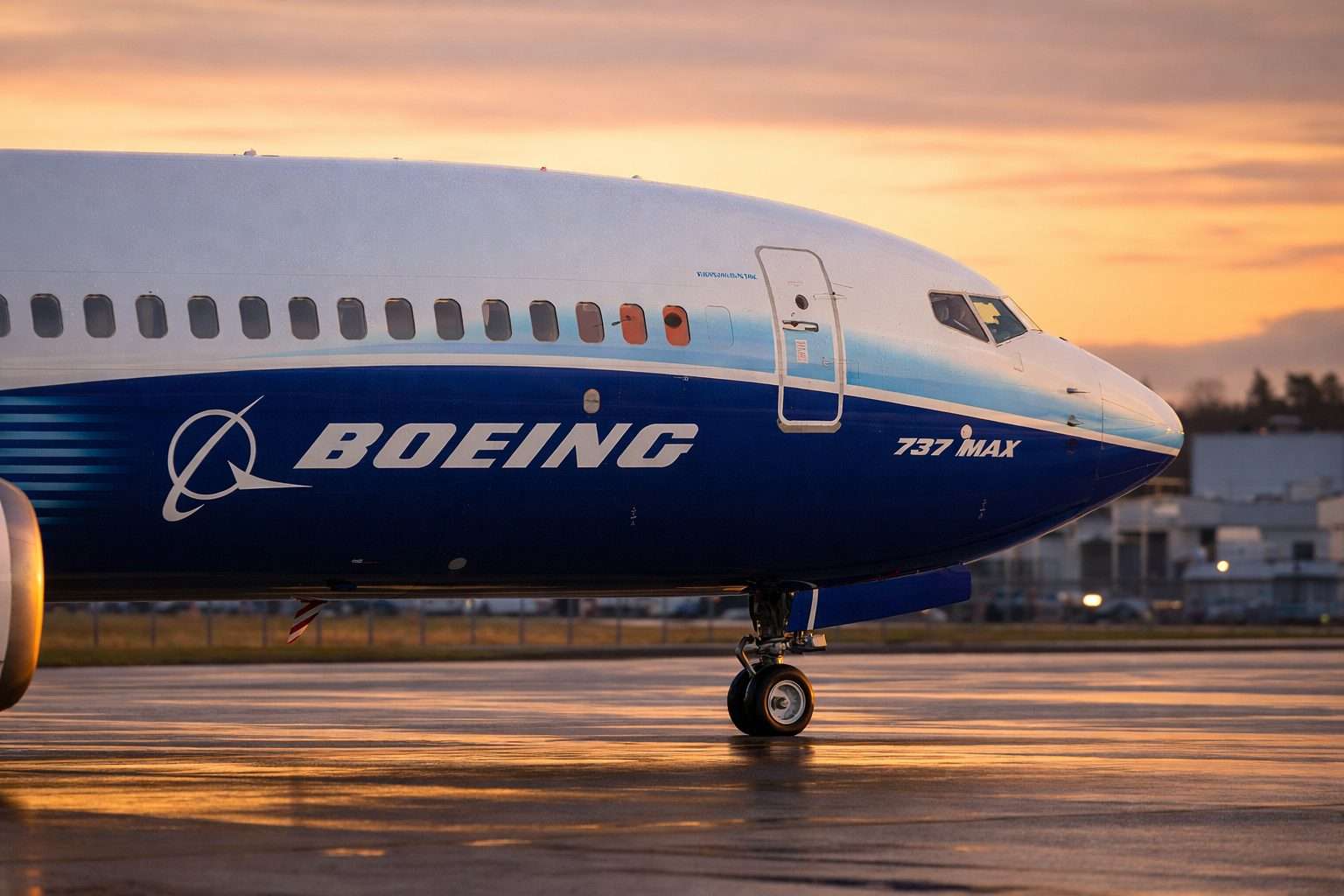
Boeing plans to open a fourth 737 MAX production line in mid-summer in Everett, Washington, as it tries to lift output above the current 42 jets a month and ultimately reach 63 a month, a company executive said at an industry conference. The move would bring 737 assembly outside Renton for the first time and keeps pressure on Airbus’s A320neo family in the single-aisle market. 5
Orders have helped, too. Delta Air Lines in January ordered 30 Boeing 787-10 Dreamliners, with deliveries scheduled to begin in 2031, Reuters reported, giving Boeing a win at a carrier better known for buying Airbus aircraft. 6
Dhierin Bechai, an aerospace analyst who writes on Seeking Alpha, wrote: “I remain bullish on BA, expecting at least 13.5% 737 MAX delivery growth and potential production rate hikes in 2026.” He pointed to a January book-to-bill ratio above 2 — orders compared with deliveries — as evidence demand is running ahead of output. 7
Chart watchers are also active. In a Feb. 25 note, eToro analyst Bret Kenwell wrote that “support is coming into play from two areas: The $230 level and the 50-day moving average,” meaning the average closing price over the last 50 sessions, after the stock pulled back from above $250. He said the options with the highest open interest — the number of contracts still outstanding — were May $300 calls. 8
But the trade cuts both ways. A defense-driven rally can fade if the Iran conflict cools, and Boeing’s recovery still hinges on a clean production ramp that has tripped up before. The FAA last week ordered airlines flying 737 MAX 8 and 8200 jets to update manuals within 30 days to address an air-conditioning circuit breaker issue while Boeing works on a permanent fix. 9
For now, Boeing’s stock is caught between the sector’s war-driven momentum and the slower grind of building and delivering more airplanes. Investors are still waiting to see which one wins.