
London, June 8, 2026, 09:16 BST
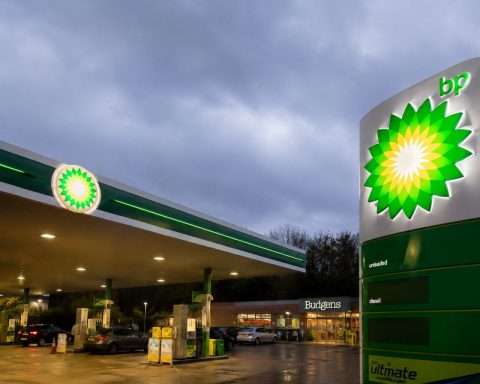
BP shares rose in early London trade on Monday, lifted by a fresh jump in oil prices as renewed Middle East attacks put supply risk back at the centre of the market. The London-listed stock was up 1.37% at 553.50 pence at 09:14 BST, outperforming a weaker UK market.
That matters now because BP is one of the FTSE 100’s most direct large-cap plays on crude prices, just as investors are still testing whether its strategy reset can survive another bout of boardroom upheaval. Brent crude, the global oil benchmark, rose $4.42, or 4.47%, to $97.15 a barrel by 0609 GMT after Israeli strikes on Iran and Lebanon revived concern about flows through the Strait of Hormuz, a key shipping route for oil and liquefied natural gas.
The FTSE 100, London’s blue-chip index, fell 42 points, or 0.4%, to 10,326 at the open as the wider market sold off. Kyle Rodda, senior financial market analyst at Capital.com, said “things could get a bit hairier” after the flare-up in geopolitical tension. The Guardian
BP was not alone in catching a bid from crude. Shell, its closest London-listed oil major peer, rose 0.82% to 3,254 pence at 09:15 BST, showing the move was sector-wide rather than only BP-specific.
OPEC+, the producer group that includes the Organization of the Petroleum Exporting Countries and allies such as Russia, agreed on Sunday to raise output for a fourth month. But Jorge Leon, Rystad Energy’s head of geopolitical analysis, said the “physical impact” of the move would be “close to zero” because many members cannot meet targets while supply routes remain constrained. Reuters
The rally gives BP some breathing room after a bruising governance episode. BP’s board last month ousted Chair Albert Manifold, citing serious concerns over governance standards, oversight and conduct; the shares fell as much as 10% that day before paring losses. Lindsey Stewart, director of institutional investor content at Morningstar, called BP “the most volatile boardroom of the oil supermajors.” Reuters
Analysts have framed that churn as more than a board story. Henry Tarr at Berenberg said Manifold’s removal would “raise questions on the strategy,” while Alastair Syme at Citi said Manifold had become part of BP’s “equity story” for investors re-engaging with the stock after years of turmoil. Reuters
Chief Executive Meg O’Neill is still pushing a simpler structure. BP is moving into two main units: upstream, meaning oil and gas production, and downstream, meaning refining, fuels and customer products. William Lin, head of gas and low carbon energy, is due to leave in the third quarter; O’Neill thanked him for his “leadership, impact, and long-standing commitment.” Reuters
Asset sales remain another strand of the story. BP held advanced talks to sell its UK North Sea assets to Ithaca Energy in a deal worth nearly 2 billion pounds, Reuters reported last week, citing the Financial Times; the talks failed, but BP remains open to options as it targets $20 billion of disposals by 2027.
But the trade can turn quickly. If diplomacy calms the Iran-Israel conflict or shipping through Hormuz resumes more freely, crude could give back part of Monday’s jump and take some support away from BP. The company also faces the overhang from Manifold’s exit; he has denied misconduct and said he may have “pushed hard” for change, while BP said it stood by its statements and had a duty of care to employees. Reuters
For now, oil is setting the tape. The harder question for BP is whether a crude-led rally can last long enough for O’Neill to prove that the simpler, oil-and-gas-focused BP is not just a price spike story, but a steadier company.