
Intelligence Artificielle News: 10 August 2025

Retrieval-Augmented Generation (RAG): The Search‑Enhanced AI Revolution in Chatbots and Enterprise Applications

Retrieval-Augmented Generation (RAG): The Search‑Enhanced AI Revolution in Chatbots and Enterprise Applications

RAG stands for Retrieval-Augmented Generation, a hybrid AI approach that combines a large language model with a search engine or database to fetch external knowledge for grounded, up-to-date answers. In 2025, RAG has emerged as a strategic imperative for modern AI, powering
August 13, 2025
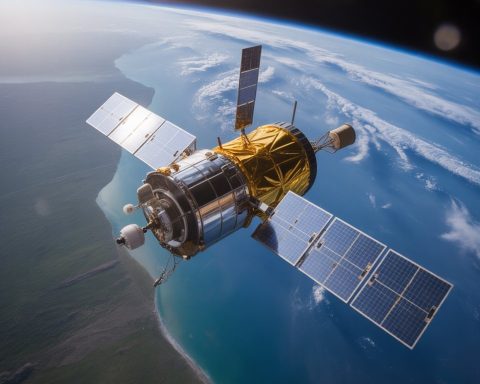
Complete Guide to Satellite Earth Monitoring: How Space Tech Is Watching Our Planet Now

Complete Guide to Satellite Earth Monitoring: How Space Tech Is Watching Our Planet Now

Landsat-1, launched in July 1972 as ERTS-1, became the first satellite dedicated to mapping Earth’s land resources and began a 50+ year continuous Landsat record. TIROS-1, launched in April 1960, was the world’s first weather satellite and delivered the first TV images
August 10, 2025
The AI Revolution Is Here: How Large Language Models Are Reshaping Business, Coding, and Automation

The AI Revolution Is Here: How Large Language Models Are Reshaping Business, Coding, and Automation

By 2025, 95% of U.S. companies are using AI. ChatGPT captured 1 million users in 5 days after launch, signaling rapid adoption. GPT-4, released in 2023 as a multimodal model, was followed in late 2023 by GPT-4 Turbo with an extended context
August 10, 2025

Technology News

  • AI could optimize the power grid, MIT expert says
    January 9, 2026, 4:00 AM EST. MIT's Priya Donti explains how AI could sharpen power-grid optimization. The aim is to keep supply and demand in balance in real time amid uncertainty on demand, fuel costs, and weather-driven renewable output. AI can fuse historical and real-time data to forecast how much renewable energy will be available and to solve complex trade-offs: which generators to run, how much to produce, when to charge or discharge batteries, and how to flex loads. These optimization tasks are computationally heavy, so operators rely on approximations that can be inaccurate, a problem as renewables grow. Better AI methods could push toward a cleaner, more reliable grid, though challenges remain in scaling, risk, and real-world deployment.