Research 12 January 2026 - 26 May 2026

Opus Genetics Slides Ahead of June Test

Opus Genetics Slides Ahead of June Test

Opus Genetics Inc. shares eased late Monday morning, retracing some of Friday’s advance. Investors are watching for the gene-therapy company’s slot at the Jefferies Global Healthcare Conference this week. The stock, which trades on the Nasdaq, slipped 7 cents to $4.29, off 1.6%. Shares opened at $4.40 and ranged from $4.20 to $4.49. Volume was roughly 288,500 shares. Market cap sat near $373 million.
June 1, 2026
Lexaria Gets Attention with GLP-1 Test on Deck

Lexaria Gets Attention with GLP-1 Test on Deck

Lexaria Bioscience Corp. will open for normal Nasdaq trading on Tuesday after closing Friday at $0.65. Shares climbed 7.33% in the last full session before the Memorial Day holiday. Regular trading restarts at 9:30 a.m. Eastern, with pre-market open at 4 a.m. Lexaria’s move is now in focus as its next test takes aim at the fast-growing oral obesity drug space. GLP-1 medicines that copy a gut hormone for hunger and blood sugar are a big market, dominated by Novo Nordisk and Eli Lilly.
May 26, 2026
BioVie Stock Pops After Parkinson’s Trial Milestone. The Real Test Comes in Q3

BioVie Stock Pops After Parkinson’s Trial Milestone. The Real Test Comes in Q3

BioVie Inc. shares rose on Wednesday after the clinical-stage drug developer said its SUNRISE-PD Parkinson’s trial had completed the last patient evaluation visit, moving the story from enrollment and dosing toward data. The stock closed at $1.35, up 3.05%, after trading between $1.31 and $1.37. That matters now because BioVie is a small, low-volume biotech whose valuation is tied closely to clinical events. At Wednesday’s close, the company had a market value of about $10.2 million, and trading volume was 19,735 shares, below the 89,680 average shown by Google Finance.
May 21, 2026
Google AI Overviews Accuracy Questioned Again as Study Points to Millions of Wrong Answers an Hour

Google AI Overviews Accuracy Questioned Again as Study Points to Millions of Wrong Answers an Hour

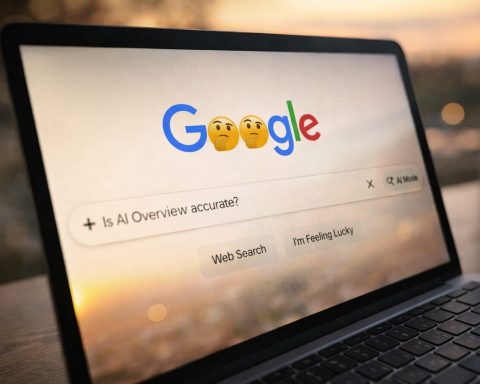
Google’s AI Overviews are under the microscope again. On Tuesday, new coverage raised concerns about the accuracy of these machine-generated summaries, which appear above traditional search results. The New York Times, referenced in the latest reports, found that after the Gemini 3 update, the tool delivered the right answer to a standard factual test about 91% of the time. That still leaves a significant number of mistakes, given the scale at which the feature operates. Here's why this is in sharp focus: Google keeps accelerating AI’s role in Search. They set Gemini 3 as the new default for AI Overviews back in January, rolled out Search Live to more markets using AI Mode in March, and last July reported AI
April 14, 2026
Fire at Germany’s GSI lab in Darmstadt derails FAIR accelerator test plans

Fire at Germany’s GSI lab in Darmstadt derails FAIR accelerator test plans

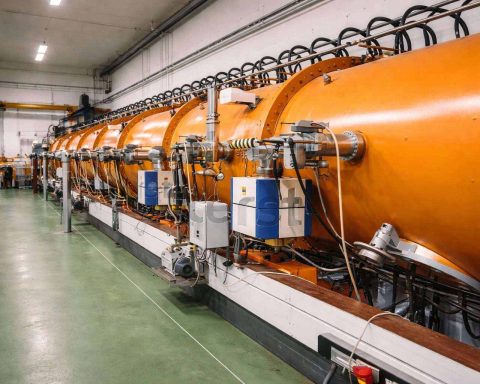
Darmstadt, Germany — February 5, 2026, 20:15 CET A fire broke out at the GSI Helmholtz Centre in Darmstadt, forcing officials to postpone a critical test phase for the FAIR particle accelerator project. Hesse science minister Timon Gremmels called it “a black day” and confirmed that the December testing schedule is now on hold indefinitely. Christian Wagner, operations manager for the Darmstadt fire department, said, “Fortunately, we have no casualties so far.” https://www.aa.com.tr/en/europe/fire-at-german-research-center-delays-major-particle-accelerator-project/3821476?utm_source=chatgpt.com
February 5, 2026
Singapore’s S$1 billion AI research bet: new push to keep pace with U.S., China by 2030

Singapore’s S$1 billion AI research bet: new push to keep pace with U.S., China by 2030

Singapore plans to pour over S$1 billion into public AI research by 2030, the government announced Saturday. The funding aims to boost national AI capabilities and encourage wider adoption among businesses. https://www.reuters.com/world/asia-pacific/singapore-invest-over-779-million-public-ai-research-through-2030-2026-01-24/ Funding arrives just as AI tools shift from demos to real-world use, while nations scramble to secure the computing power and talent needed to train and operate these models. The race remains dominated by U.S. and Chinese tech giants, with smaller economies looking to carve out niches.
January 24, 2026
Here’s what researchers reported, based on teens enrolled in the Adolescent Brain Cognitive Development (ABCD) Study:

Here’s what researchers reported, based on teens enrolled in the Adolescent Brain Cognitive Development (ABCD) Study:

The senior author, UW pediatrics professor Dr. Dimitri Christakis, argues the design of popular apps is part of the problem, calling out that they are “designed to be addictive”—and that the classroom cost isn’t just lost instructional time, but fewer opportunities for students to practice in-person social skills. A key context point from the research: most schools already have some kind of smartphone policy, but the existence of rules doesn’t automatically translate into less scrolling. The JAMA research letter notes that 99.7% of U.S. public school principals report having a smartphone policy, yet objectively measured use during school remains substantial.
January 12, 2026