
TSX:9984 18 August 2025 - 23 March 2026

AI Data Center Power Crisis Deepens After Google Warns U.S. Grid Can’t Keep Up

AI Data Center Power Crisis Deepens After Google Warns U.S. Grid Can’t Keep Up

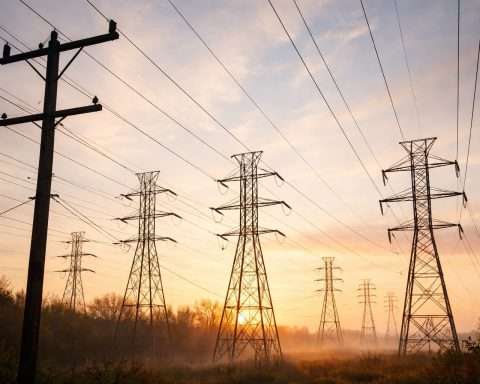
Google sounded the alarm Monday over what it sees as lagging U.S. electricity development, flagging power as an obstacle on par with semiconductors for the next generation of AI data centers. “We are concerned that we are not full throttle on energy,” said Alphabet and Google President Ruth Porat, speaking at CERAWeek in Houston. The squeeze is real now: big cloud players are scaling up computing muscle much faster than utilities can put up new grids and substations. U.S. Energy Information Administration data shows power demand has climbed 1.7% annually since 2020, after a long stretch of barely any change, thanks mostly to sprawling computing hubs. Looking ahead, the agency sees load picking up 1.9% in 2026, then 2.5% in
March 23, 2026
AI Boom Forces Urgent Energy Expansion as Google Warns of U.S. Power Crunch, Power Stocks Gain

AI Boom Forces Urgent Energy Expansion as Google Warns of U.S. Power Crunch, Power Stocks Gain

Google on Monday sounded the alarm: the U.S. isn’t adding electricity supply fast enough to keep up with artificial intelligence’s rapid growth, a constraint that’s already limiting where new data centers go. “We are not moving full throttle on energy,” said Ruth Porat, who serves as president and chief investment officer at both Alphabet and Google, speaking at the CERAWeek conference in Houston. Power is fast turning into a bottleneck. The U.S. Energy Information Administration projects electricity load growth of 1.9% in 2026, then 2.5% for 2027—coming off a new national demand record set in 2025. Texas’s ERCOT market leads the pack, along with the PJM grid spanning the Mid-Atlantic and Midwest. Some of the largest AI campuses now gulp
March 23, 2026
6G network

6G Revolution: Blazing Speeds, Global Tech Rivalries, and the Next Wireless Frontier

What is 6G? 6G is the sixth-generation mobile network technology poised to succeed 5G around the end of this decade. It promises unprecedented wireless performance – think data speeds up to 1 terabit per second and air-link latencies under a millisecond anz.peoplemattersglobal.com. In other words, downloading full-length movies or immersive VR content could happen in seconds, and network response might be near-instantaneous, enabling futuristic applications like real-time holographic calls and truly tactile remote control. While 5G marked a huge leap in connectivity, 6G is expected to build on 5G’s foundation with even faster speeds, lower latency, higher reliability, and massive device connectivity anz.peoplemattersglobal.com. Experts emphasize that 6G will evolve from 5G rather than completely replace it – “we should think
August 18, 2025