
Melbourne, May 15, 2026, 05:02 AEST
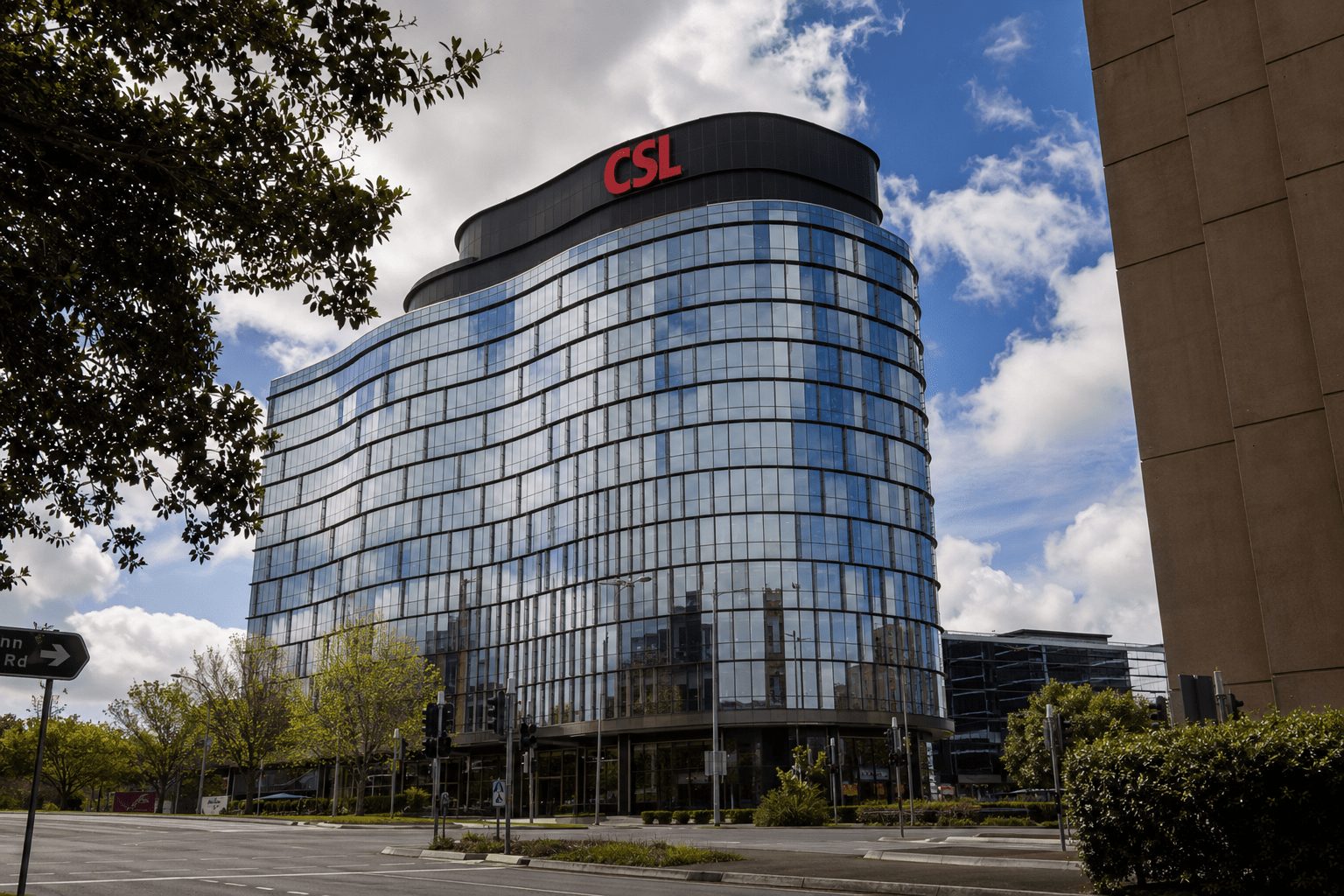
CSL Limited shares slipped again on Thursday, deepening the week’s losses for the Australian biotech after investors were rattled by a profit warning and upcoming writedowns. The stock wrapped up at A$97.26, off 1.55%, based on delayed quotes after the bell.
CSL’s stock is still stuck around where it was in early 2017 — a level not seen in years. Monday’s 90-day strategic review, led by interim CEO Gordon Naylor, only deepened the slump. Reuters said shares slid as much as 17.8% that day, touching A$98.590, a low not reached since Jan. 19, 2017.
CSL lowered its FY26 revenue projection to about US$15.2 billion and trimmed its NPATA guidance to roughly US$3.1 billion, both figures on a constant-currency basis that ignores exchange-rate swings. NPATA, the company’s adjusted profit metric, excludes amortisation of acquired intellectual property and major non-recurring items like restructuring and impairments.
The company is looking at roughly US$5 billion more in non-cash, pre-tax impairments over FY26 and FY27. These charges, which reduce the book value of assets, are tied to CSL Vifor intangible assets, certain products in the portfolio, and some under-utilized property, plant and equipment, according to CSL.
Naylor assured investors that CSL’s growth strategy is intact, but warned the “financial benefits will take longer.” On the call, he flagged setbacks in late-stage R&D and acknowledged some market-share losses, though he insisted there’s “no fundamental shift” in the group’s direction. Chief financial officer Ken Lim blamed “excess Ig inventory in the channel” for softer reported immunoglobulin sales in the U.S. Fierce Pharma
CSL isn’t getting much slack from the market. Mark Gardner, who runs MPC Markets, pointed out to Reuters that this is the second time in around six months they’ve lowered their outlook—“that pattern matters,” he said. Two downgrades in a row, Gardner noted, spark “legitimate questions” over how well management actually understands its own business. Sahm
CSL is flagging a set of near-term challenges. The company anticipates a hit of around US$300 million to revenue as U.S. immunoglobulin inventories return to normal levels. There’s another US$200 million expected from weaker albumin prices in China. Then there’s US$150 million tied to fallout from the Middle East conflict, updated Hemgenix forecasts, and more competition in iron therapies. Immunoglobulin, also known as Ig, is a plasma-derived antibody treatment for immune and neurological diseases.
Rivalry in this space is fierce. For immunoglobulins, CSL competes head-to-head with big names like Takeda Pharmaceutical, Grifols, and Octapharma—the sector remains tightly held. So when CSL slips up on inventory, pricing, or sales-force tactics, the consequences aren’t just internal missteps; the pressure from competitors magnifies every mistake.
Vifor keeps haunting investors. Back in 2021, CSL put $11.7 billion on the table for the Swiss player focused on iron deficiency and nephrology, touting it as a way to broaden and strengthen its growth platform. Now, with the latest writedown, that pitch is getting a hard second look.
CSL is in the midst of a leadership shakeup. The company reports that its hunt for a new permanent CEO is still underway. Chief commercial officer Andy Schmeltz will step down, citing personal reasons. Diego Sacristan is set to step into the chief commercial officer role for both CSL Behring and CSL Vifor as of July 1.
The reset isn’t over yet. Impairments still need more analysis, updates from the business, sign-off from external auditors and the board. Any fresh dips in U.S. channel inventory, China albumin pricing, or iron competition could shrink what’s left of the recovery story before full-year results arrive.
CSL insists there’s value left for shareholders, projecting revenue gains at CSL Behring in the second half. Management also sees CSL Seqirus—the vaccines arm—doing a bit better than it once forecast for FY26. Investors, though, are holding out for results, not fresh assurances.