
LONDON, April 18, 2026, 16:31 (BST)
- Dyson’s HushJet Mini Cool carried a $99.99 price tag and appeared out of stock on the company’s U.S. website.
- SharkNinja is taking a different tack with its $149.99 ChillPill—a wearable that combines a fan, mist feature, and a contact-cooling plate in a single device.
- Dyson’s airflow is getting early thumbs up in hands-on reviews; noise and limited battery life, though, still stand out as the key drawbacks.
Dyson’s $99.99 HushJet Mini Cool portable fan sold out on the U.S. site Saturday, a little more than a week since launch. “Notify me” buttons replaced the usual purchase option. The timing coincided with fresh hands-on reviews, including an April 18 head-to-head from Tom’s Guide, which stacked Dyson’s new entry up against SharkNinja’s pricier ChillPill. Dyson
Timing is key here. What used to be a simple, low-cost fix for heat waves has morphed—Dyson and SharkNinja are now pushing portable fans as branded, wearable gadgets, just as hotter spring temps and summer trips loom. Women’s Health, in the middle of an East Coast heat wave, noted that both Shark and Dyson have launched new personal cooling devices, targeting everything from daily commutes to workouts and outdoor gatherings.
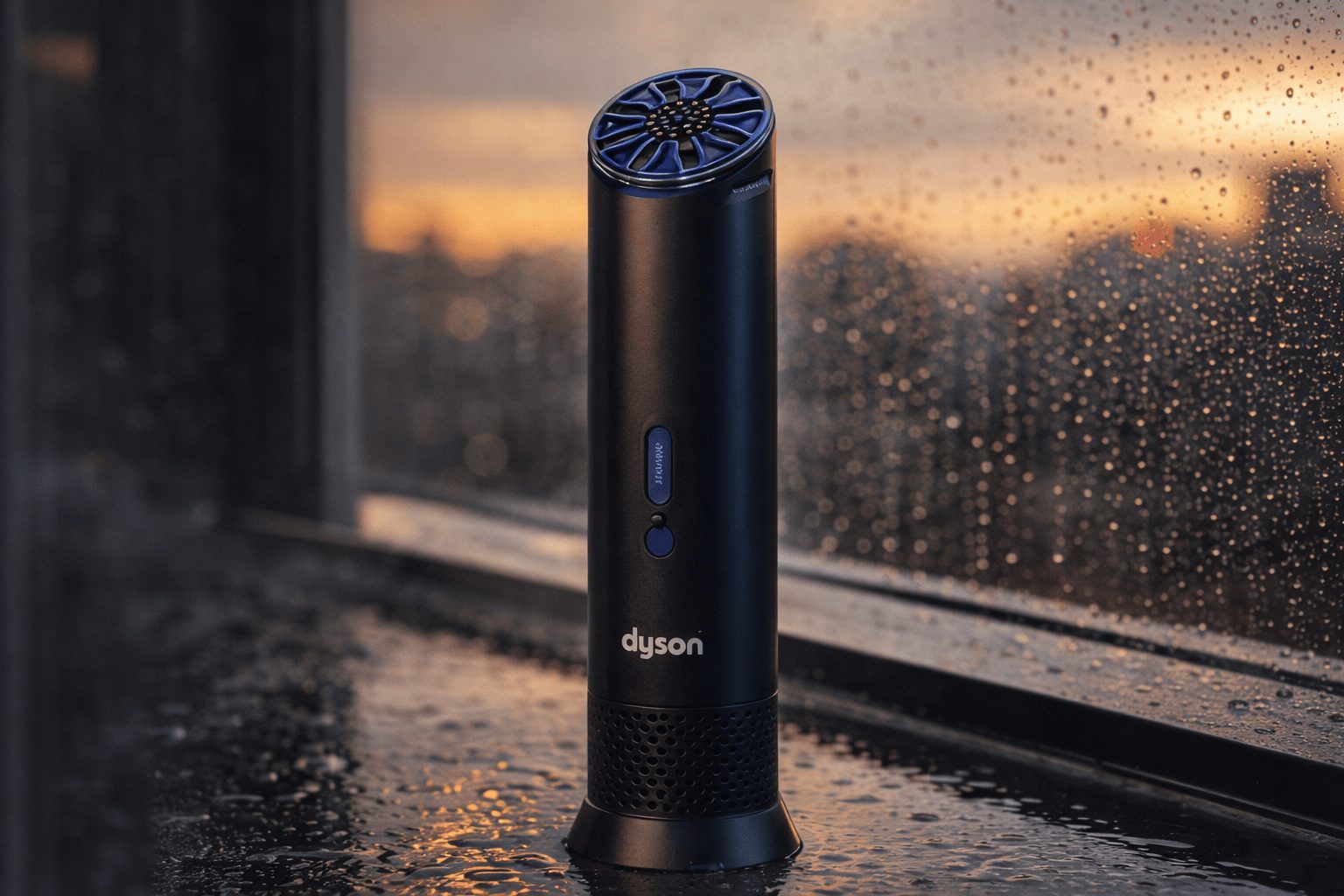
Dyson rolled out its first portable handheld fan, the HushJet Mini Cool, on April 9. The company touts a HushJet nozzle and honeycomb mesh design, which it says delivers concentrated airflow. Weighing in at 212 grams, the device runs on a brushless DC motor that spins up to 65,000 RPM. Airflow maxes out at 25 metres per second—about 55 miles per hour—in Boost mode, a high-power burst.
The fan is pitched as a three-in-one: handheld, desktop, or wearable. Buyers get five speed settings, USB-C charging, and a 5,000 mAh battery Dyson says lasts as much as six hours on the lowest speed. Sound? It’s rated from 52 dBA at the lowest up to 72.5 dBA in Boost. dBA measures perceived loudness for humans.
Dyson’s colour materials and finish engineer, Holly Holmes, described the new finishes as an effort to make “engineering personal.” The company is rolling out Stone/Blush first; Carnelian/Sky follows in May, and Ink/Cobalt arrives in June. Each fan ships with a lanyard, charging stand, USB-C cable, and travel pouch. Dyson expects to offer additional mounts and clips this summer. PR Newswire
BGR said on April 16 that the HushJet Mini Cool sold out “in about a week” after hitting the market. Dyson hasn’t said when other color variants will be available, according to the outlet, which also highlighted the device as one of the brand’s least expensive offerings—a notable detail for a company usually associated with pricier vacuums, hair dryers, and air purifiers. BGR
SharkNinja’s ChillPill enters the mix as the top challenger, rolling out in March with a $149.99 price tag. According to SharkNinja, the system marries a bladeless fan—offering 10 speed settings—with a dry-touch evaporative mist that cools with a fine spray, designed not to leave the skin wet. There’s also the InstaChill plate, which provides direct skin cooling. “Personal cooling hasn’t evolved” alongside modern lifestyles, SharkNinja chief commercial officer Neil Shah said. Sharkninja
Kate Kozuch, managing editor at Tom’s Guide, called Dyson the smarter and less expensive option for shoppers focused on fan performance, pointing to its stronger airflow and straightforward build. Shark, she noted, compensates for its weaker fan by adding misting and a cooling plate, features that bump its price roughly $50 higher than Dyson’s.
Still, it’s not exactly a flawless start for Dyson. Andrew Liszewski at The Verge found the HushJet Mini Cool offered more power than he’d anticipated, but wasn’t “quiet enough to earn the name Hush.” In his hands-on, Liszewski managed 62 minutes of battery life at the highest regular speed—a far cry from the six hours Dyson touts, which only applies at the lowest setting. The Verge
Price is likely the sticking point. Gear Patrol described the HushJet Mini Cool as cheap—if you’re comparing to Dyson’s lineup—but “wildly expensive for a portable fan,” which tracks in a market full of budget handhelds that cost much less. Dyson’s gamble? That people will pay $100 for design, portability, and the name. Gear Patrol
So far, the product has managed the basics: it grabbed attention and isn’t easy to find straight from Dyson. The next hurdle will be restocks and how summer demand holds up — then, of course, whether buyers end up seeing a high-end personal fan as worthwhile tech or just another quirky summer gadget.