
London, April 24, 2026, 16:08 BST
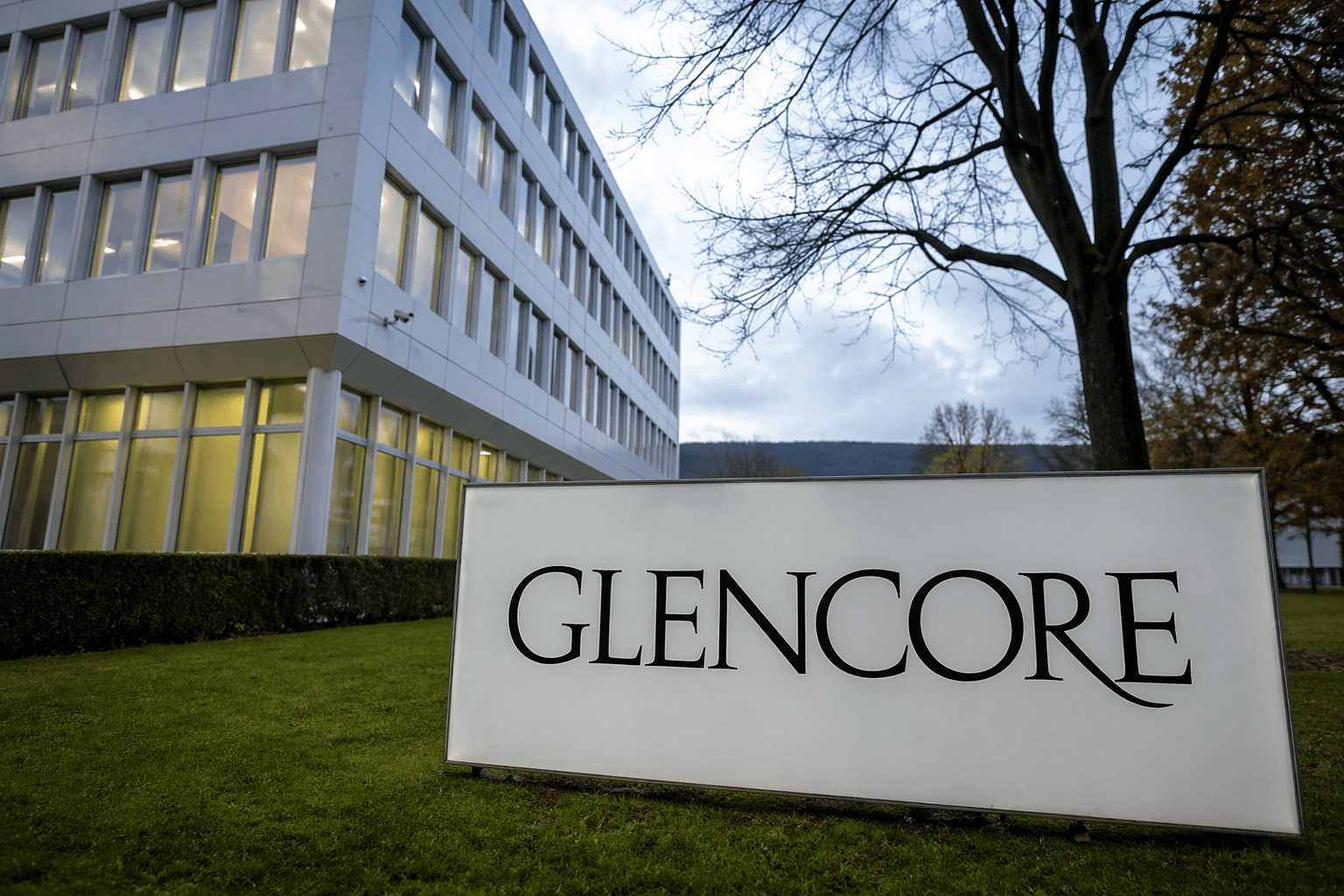
Shares of Glencore plc slipped to 555.10 pence in London by 14:40 GMT on Friday, down 7.40 pence. Traders are already eyeing the first-quarter production report set for April 30, when the company will break out mined volume figures.
This update is key for Glencore, with copper forming the backbone of its growth strategy. Back in December, the company laid out plans for base copper output to top 1 million tonnes by the close of 2028, aiming for roughly 1.6 million tonnes by 2035.
Right now, the market is holding up its end. On Wednesday, benchmark three-month copper on the London Metal Exchange—where most base metals change hands—jumped to $13,448.50 a metric ton. That’s the highest since Feb. 27, after news of a U.S.-Iran ceasefire extension nudged risk appetite higher.
Copper’s rally isn’t running on pure momentum. Goldman Sachs hasn’t budged on its 2026 forecast—still $12,650 per tonne, with a projected 490,000-ton surplus. But there’s a caveat: the bank points to potential sulphuric acid shortages, as disruptions at the Strait of Hormuz and China’s export ban threaten to squeeze supply. That acid is crucial for solvent extraction and electrowinning, a key copper-processing method.
Glencore has been leaning into the recovery theme lately. Back in February, Chief Executive Gary Nagle pointed to “clear momentum for our copper-led growth strategy.” Reuters noted a 6% drop in adjusted EBITDA, landing at $13.51 billion for 2025, and the company flagged a planned $2 billion return to shareholders. Glencore
April 30’s release faces an easy year-on-year comp. Glencore’s own-sourced copper output in last year’s first quarter was 167,900 tonnes—a 30% drop from the previous year. Nagle described that quarter as likely the trough for 2025.
The Congo story is in play too. Glencore’s full-year 2025 production report flagged that under the DRC’s cobalt quota system, the company will put copper output ahead of cobalt, but only when the numbers add up.
Rival miners have stepped up. Teck Resources notched a first-quarter profit beat on Thursday, driven by all-time high copper sales and firmer prices. Just a day earlier, BHP flagged that its full-year copper haul is tracking toward the top half of guidance. The message for Glencore: volume is shaping up to be as critical as price.
Rio Tinto isn’t in play here—just background noise. Back in February, Rio dropped its pursuit of Glencore, shelving what could have been a blockbuster merger for the world’s top mining giant. Jefferies’ Christopher LaFemina said at the time Glencore still had “various ways” to boost value, but noted that a straightforward premium all-share deal would have been the cleanest option. Reuters
First up for investors: copper grades and recoveries at mines in the DRC, Peru, and Chile. Coal and marketing updates are next on the checklist. Glencore notes it extracts and processes copper ore in South America, the DRC, and Australia, then markets the copper—both metal and concentrate—via its trading division.
Here’s the question: can Glencore squeeze more tonnes out of a hot copper market, or will it just be about snagging a higher price? That’s what next week’s report will put to the test.