
LONDON, July 1, 2026, 19:14 BST
- International Consolidated Airlines Group SA’s London CDI finished at 468.60p bid, 468.80p ask, down 1.82%. The FTSE 100 closed off 0.18%.
- IAG picked up 7.67 million shares between June 22 and June 26 as part of its €500 million buyback. The company now holds treasury stock equal to around 3.96% of issued share capital.
- Brent crude dropped 2.19% to $71.35. IAG’s May warning on fuel is still shaping the way traders see the market.
International Consolidated Airlines Group SA (LON:IAG; BME:IAG) dropped more than the wider UK market on Wednesday. Shares in the British Airways owner slid back into the range where it was buying back stock last week.
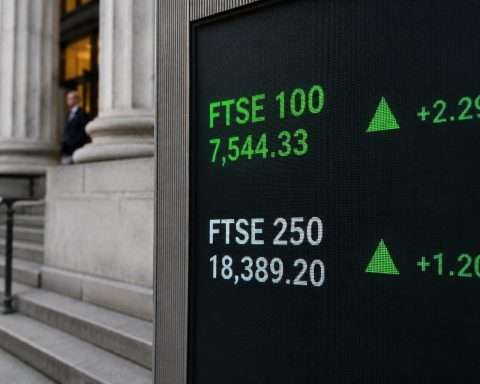
IAG’s London CDI finished at 468.60p/468.80p according to Hargreaves Lansdown, slipping 8.70p, or 1.82%. The FTSE 100 (INDEXFTSE:UKX) ended the day off 18.78 points, or 0.18%, at 10,478.34. IAG’s drop was about 10 times bigger than the main index move.
| July 1 snapshot | Last / quote | Move |
|---|---|---|
| IAG London CDI | 468.60p/468.80p | -1.82% |
| FTSE 100 | 10,478.34 | -0.18% |
| easyJet (LON:EZJ) | 559.00p/562.00p | +0.25% |
| Wizz Air (LON:WIZZ) | 1,175p/1,177p | -1.09% |
| Brent crude | $71.35/bbl | -2.19% |
IAG bought stock near recent highs, which stands out. The group said in an RNS on Monday it bought 7,671,926 shares between June 22 and June 26 as part of its €500 million buyback. London trades were done at £4.56 to £4.89, and Madrid trades at €5.24 to €5.66.
IAG was quoted at 468.8p on the offer Wednesday in London, putting the stock close to the middle of last week’s buyback range. Shares traded 4.9% under the 52-week high of 492.9p set on June 25. It’s a small pullback for a company still buying back stock to reduce its share count.
| Buyback read | Figure |
|---|---|
| Shares repurchased June 22-26 | 7,671,926 |
| Buyback weekly, percent of issued shares | 0.17% |
| Total treasury shares post-purchase | 182,536,360 |
| Treasury shares, percent of issued shares | 3.96% |
| Total issued shares, treasury included | 4,611,669,527 |
| London repurchase price range | £4.56-£4.89 |
London volume on Wednesday came in at 38.6 million shares. That’s over five times what the company picked up across both markets in last week’s buyback program. The pace makes the buyback meaningful over time, but it isn’t enough on its own to shift the price on a soft day.
Fuel is still giving airlines a break. Brent crude touched a more than four-month low on Wednesday as news of progress in U.S.-Iran talks eased fears about tight supply. Cheaper oil benefits the carriers, but IAG had already told investors back in May that it expects to pay about €9 billion for jet fuel in 2026, which is about €2 billion more than it will spend in 2025.
IAG CEO Luis Gallego said in May there were “no issues with fuel availability in our main markets.” Still, the group cut profit, free cash flow and capacity guidance. That’s one reason the stock can drop even when crude prices are down. Reuters
MAKO landed AU$28 million in new funding this week, it said June 30, with backing from IAG via IAGi Ventures. MAKO said IAG plans to run a Flightfilm trial with one of its airlines later this year. The new film aims to cut drag on planes, but it is not expected to change near-term earnings.
MAKO says its A320 version now in certification can cut 100,000 gallons of fuel a year and save $330,000 per aircraft, according to the company’s estimate. For a 100-plane fleet, that would be $33 million a year before considering installation, approval, or how much the planes actually use the fix. It’s not much next to IAG’s projected fuel costs, but gives investors a simple benchmark for valuing these kinds of operational changes.
Raza Ali, managing partner at IAGi Ventures, said IAG is “planning to test the technology later this year with one of our airlines.” MAKO is targeting A320 certification in the next year. MAKO
IAG is set to report its Q2 2026 event on July 31. Investors are watching to see if weaker crude prices, new fare steps, and capacity reductions have eased the risk flagged in May guidance, and if the buyback pace stays toward the top of its recent range.