MADISON, Wis., Jan 20, 2026, 07:17 CST
- Viruses that target bacteria evolved aboard the ISS and were later shown to combat certain UTI-causing E. coli strains more effectively
- Microgravity delayed early infections and caused distinct mutations in both the virus and the host
- Researchers note this work could advance phage therapy research, though scaling experiments in space still poses a significant challenge
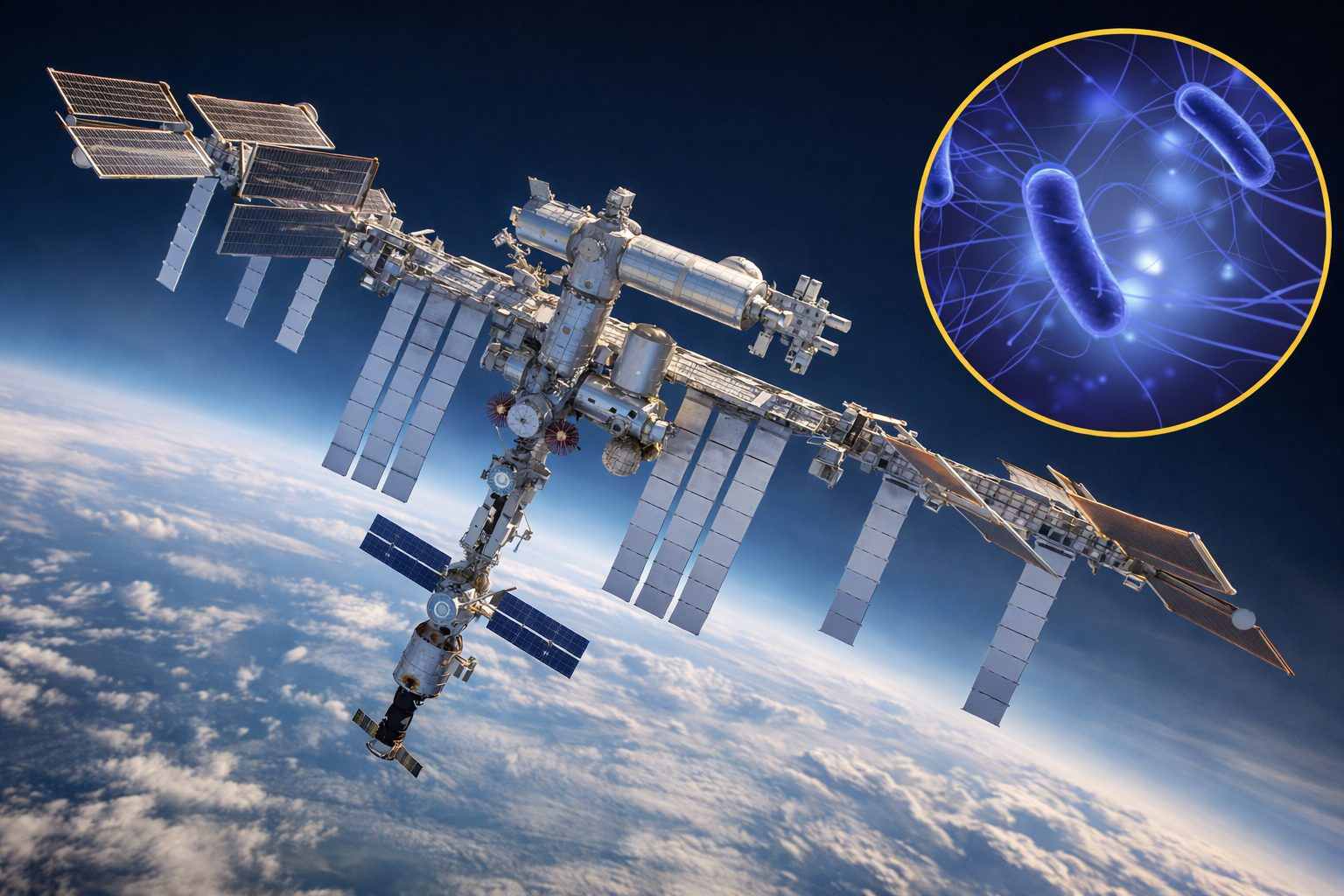
Viruses that kill bacteria, grown aboard the International Space Station, evolved into forms more effective against certain E. coli strains once brought back to Earth, researchers discovered.
As antibiotic resistance grows and treatment options for common infections dwindle, scientists are revisiting alternatives to traditional antibiotics.
This comes just as space agencies prepare for longer missions, where infections might be tougher to manage and microbes could evolve within a closed environment.
Researchers at the University of Wisconsin-Madison infected lab strains of Escherichia coli with the T7 bacteriophage and then incubated matched samples both on the ISS and on Earth. In the microgravity environment of space, the infections still developed, but the initial infection dynamics were notably different from those observed in Earth-based controls, according to a PLOS summary. Sciencedaily
The team traced the slower start to how liquids act in orbit, where gravity-driven mixing drops off and viruses and hosts bump into each other less frequently. This shifts the pressure: bacteria adapt to survive, and phages must become more efficient at attaching and infecting.
Genome sequencing revealed that bacteria and phages developed different mutations in orbit compared to Earth samples, with space-evolved phages showing changes tied to binding bacterial receptors. When brought back to Earth, these mutations enhanced their ability to attack uropathogenic E. coli — the strains behind urinary tract infections — which usually resist the wild-type T7, Live Science reported. Lead author Srivatsan Raman described it as “a serendipitous finding,” admitting, “We were not expecting” the ISS mutants to kill those pathogens. Microbiologist Charlie Mo, who wasn’t involved in the study, warned that researchers need to “factor in the cost” of sending samples to space or simulating microgravity. Livescience
The team employed deep mutational scanning, a high-throughput technique that examines how thousands of genetic mutations impact a protein’s function. Their focus was on the phage’s receptor-binding protein—the component that latches onto a bacterium before infection starts.
There’s a catch. In microgravity, the bacteria developed defenses, including changes that can make it tougher for a phage to attach. The study focused on just one phage-host pair. It’s still uncertain how often microgravity would produce helpful variants against other pathogens, or how cost-effective developing those variants for practical use would be.
Published on Jan. 13 in PLOS Biology, the open-access study monitored infections over hours and across a 23-day period aboard the ISS. It found that microgravity altered the evolutionary paths of both organisms, enabling the team to engineer T7 variants capable of infecting uropathogenic E. coli strains resistant to typical phages. The paper also acknowledged funding from the U.S. Defense Threat Reduction Agency and disclosed author affiliations with Synpha Biosciences and Rhodium Scientific Inc. Plos
Phage therapy has shifted from a niche concept to an expanding field in research and biotech, with companies harnessing virus-bacteria interactions to create targeted antibacterials. Key players in this space include Synpha Biosciences, Armata Pharmaceuticals, and Locus Biosciences. Synphabiosciences Armatapharma Locus Bio
The World Health Organization ranks antimicrobial resistance as one of the top threats to global public health, attributing 1.27 million deaths directly to bacterial drug resistance in 2019. Whether microgravity can become a regular tool to outsmart resistant bacteria remains uncertain. Still, this study introduces a new angle for researchers exploring phage therapies—and for mission planners considering how to manage microbes on long space journeys. Who