Tokyo, Feb 12, 2026, 20:22 JST — The market has closed.
- Kioxia (285A) jumped 12.4%, closing at 21,175 yen, following a strong forecast of higher revenue and profit for the March quarter
- The company highlighted how rising demand from data centers has pushed up selling prices across various applications
- The spotlight moves to Friday’s session, watching for follow-through and if memory peers echo the pricing tone
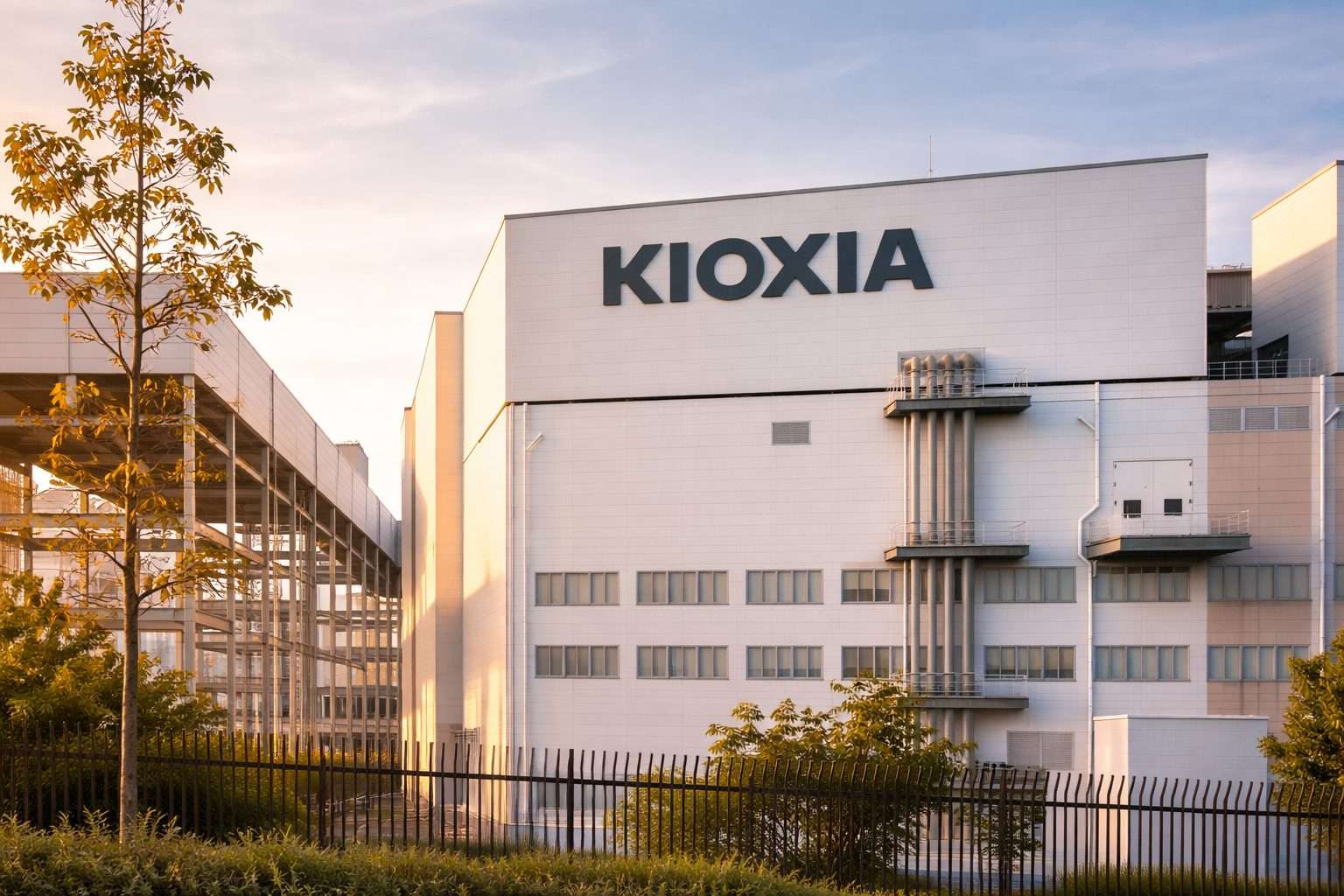
Shares of Kioxia Holdings Corp (285A.T) surged 12.4% to close at 21,175 yen on Thursday, following the flash-memory manufacturer’s upbeat forecast for revenue and profit in the March quarter. The stock fluctuated between 19,500 yen and 21,175 yen during the session, with around 36 million shares changing hands, finishing just shy of its recent peak.
This shift is significant since Kioxia operates in one of the market’s most volatile sectors. In memory chips, even a slight price change can rapidly swing profits—often catching investors off guard.
Kioxia’s comment on selling prices came just as traders searched for clues that the memory cycle might be shifting, boosted by AI server demand. NAND flash, the storage chip in phones and SSDs, faces a crowded market and is known for its volatility.
Kioxia reported revenue for the October-December quarter at 543.6 billion yen, driven by SSD & Storage sales hitting 300.4 billion yen and Smart Devices bringing in 186.3 billion. Higher average selling prices (ASPs) and increased shipments played a key role. Adjusted, or non-GAAP, operating profit stood at 144.7 billion yen. However, profit attributable for the nine months ending Dec. 31 dropped to 146.8 billion yen from 252.1 billion a year earlier. Looking ahead to January-March, Kioxia projects revenue between 845 billion and 935 billion yen, with operating profit forecasted at 436 billion to 526 billion yen. The company noted “selling prices across all applications” are expected to rise due to strong data-center demand, while also flagging roughly 12 billion yen in property taxes and about 3 billion yen in revenue tied to a Sandisk joint-venture extension. Eir Parts
Other memory stocks saw gains as well. Samsung Electronics jumped 6.4% and SK Hynix climbed 3.3% in Seoul, with Micron Technology surging 9.9% in U.S. trading on Wednesday, according to Investing.com. MS Hwang, research director at Counterpoint, noted, “With cleanroom space in short supply, adding new equipment is going to be tough.” Meanwhile, Joseph Wrenn from Mizuho said he remains “still very positive on the NAND market.” Investing
Kioxia started trading on the Tokyo Stock Exchange Prime Market on Dec. 18, 2024.
Kioxia offers guidance as a range instead of a fixed figure, pointing out that memory markets can shift within a single quarter. That choice of words is crucial, since traders often use the high and low ends as a forecast for where prices might actually settle.
Yet, that very cycle boosting profits can quickly backfire. A sharp drop in smartphone or PC orders, an unexpected spike in supply, or a currency shift can tighten margins and render quarter-ahead forecasts outdated in no time.
Friday’s Tokyo open (Feb. 13) will put the next test on the table, as investors eye if the post-results rally sticks around — and if early broker notes begin adjusting estimates to align with Kioxia’s updated March-quarter outlook.